Teen years are when hair stops being something your mom picks and starts being something that actually means something. The right cut at this stage is less about following rules and more about figuring out what kind of statement you want to make.
The options right now are genuinely exciting. From textured crops and messy fringes to clean fades with length on top, there has never been more room to play without looking like you tried too hard.
What separates a stylish teen haircut from a forgettable one comes down to fit. Fit to the face, fit to the hair type, and fit to the personality wearing it every single day.
Bold or understated, high maintenance or grab-and-go, the sweet spot is always the cut that feels like you rather than a version of someone else you found online.
These 18 haircuts cover the full range of what is working right now for teen guys. Fresh, current, and worth every minute in the chair.
Also read: 17 Mullet Fade Haircuts for Men With Edge
Classic Fade: Clean Lines and Timeless Appeal
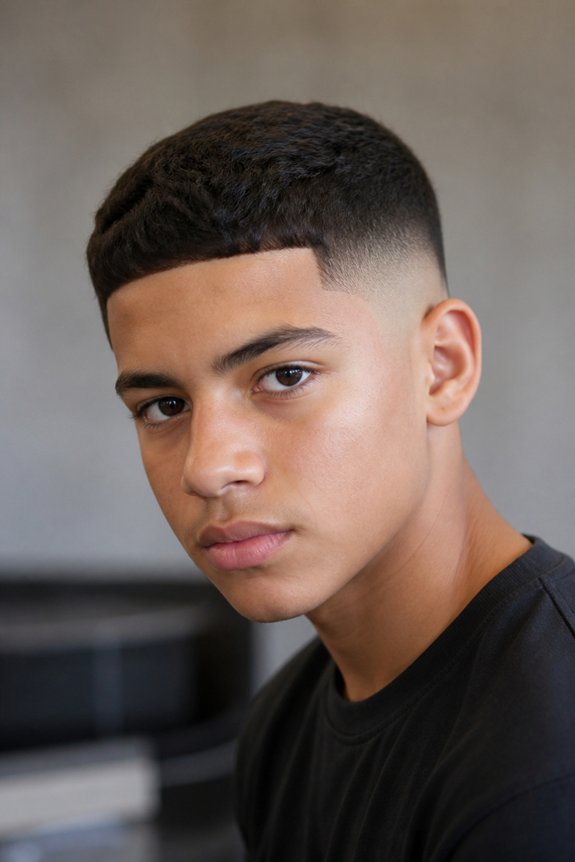
Want a haircut that works with almost any face shape? The classic fade is your answer. It’s basically hair that gradually gets shorter as it goes down, blending smoothly from longer on top to super short on the sides.
Here’s what makes it work: your barber uses different clipper guards to create those clean transitions. They’ll start with a longer guard on top and work down to shorter ones toward your ears and neck. Most barbers go with a 1.5 or 2 guard for that sweet spot where the fade really shows.
Keep your fade looking fresh with touch-ups every week or two. Between visits, use pomade or matte clay to style the longer hair on top. The real secret? Finding a barber who nails the blending. That’s what separates a sharp fade from one that looks rushed.
Taper Fade: Personalized Detail on the Sides
Here’s a completely different approach:
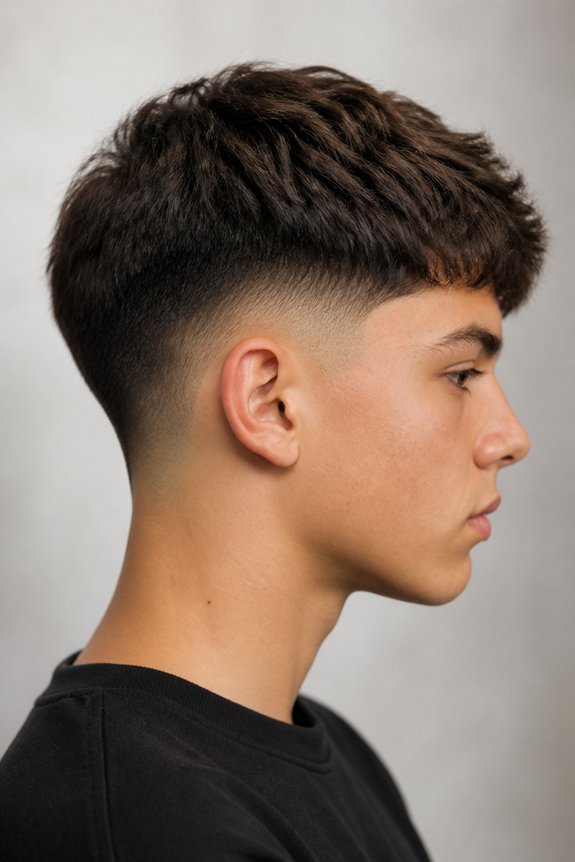
Smooth matters more than sharp. This is where the taper fade comes in. Unlike blunt cuts, this one gradually blends from longer on top to shorter near your ears and neck. The transition is the whole point. No harsh lines. Just polished dimension.
Your barber doesn’t use one guard and call it a day. They work with progressively shorter clipper guards, usually starting at a number two or three and building from there. The angle matters. The curve matters. They’re customizing it to your specific face shape. That’s what separates a generic taper from one that actually looks made for you.
This is the low-maintenance option. Grab a lightweight pomade or texturizing spray to bring out the dimension you’ve got. That’s it. No complicated routine. No overthinking required.
The real strength? It adapts. Longer and textured on top. Short and clean. Somewhere in between. Works with almost any hair type. Works with almost any face shape. Works whether you’re aiming for polish or casual. The taper just handles it.
Start with a barber who understands face shapes. Get the first cut right. Then maintain it every three to four weeks. The fade is what keeps everything looking intentional instead of just grown out.
Burst Fade: Curved Edges for Advanced Polish
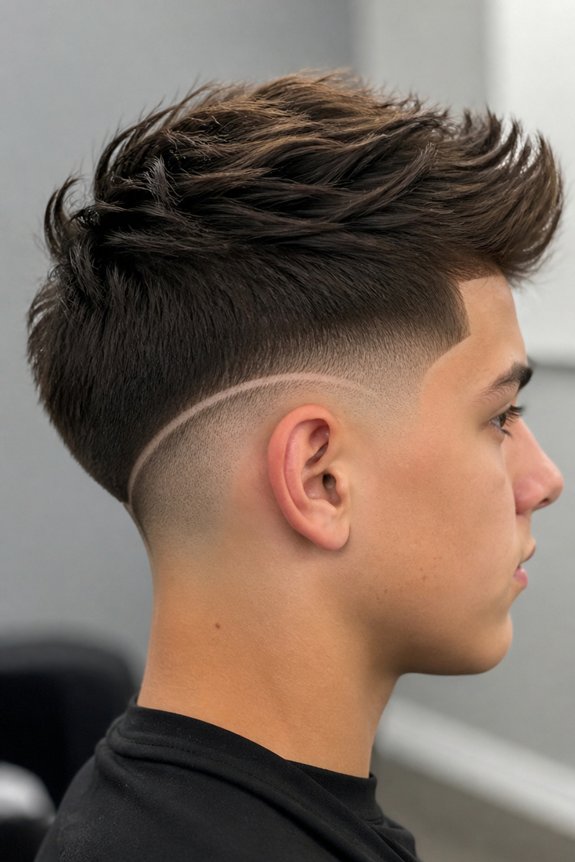
Ready to stand out from the standard taper crowd? A burst fade is your move. Instead of straight lines fading down, this style curves around the back of your head and ears. You get dimension, polish, and real visual interest.
Your barber needs to nail this one. They’ll gradually taper your hair while keeping those curved edges sharp. You’ll want longer hair on top so the contrast between lengths really pops. The curved shape follows your head naturally, which is what makes it look so clean.
Here’s the styling part that makes or breaks the look. Skip the shiny pomades and grab a matte product or clay-based paste instead. Work it through damp hair and push everything upward and back. You’ll get texture without that greasy shine. This cut works on most face shapes and hair types, so you’ve got solid options no matter what you’re working with.
Buzz Cut Fade: Ultimate Simplicity and Cleanliness
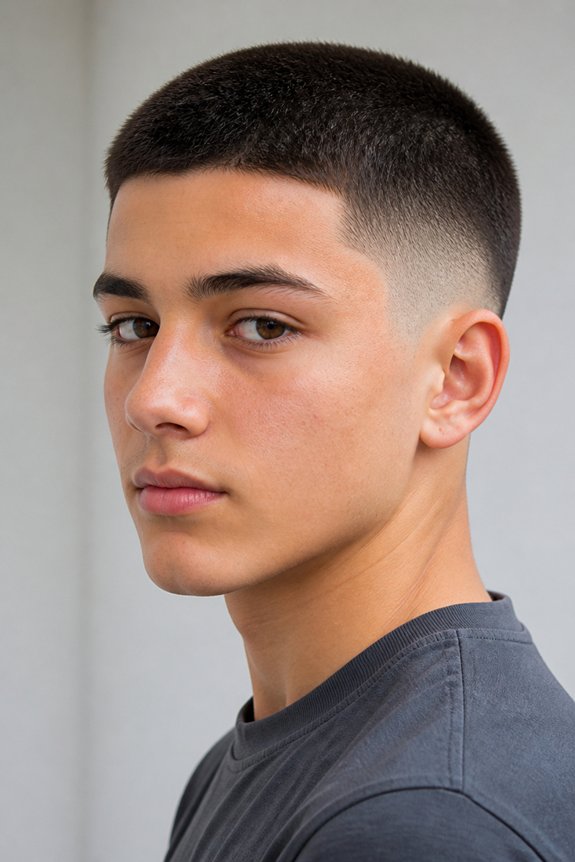
Genuine style doesn’t demand your morning. This is what the buzz cut fade delivers. Clean, tapered sides blend into slightly longer hair on top. The geometric precision looks impressive. The styling takes seconds.
Your barber handles the technical work. Clippers with guards between half and one and a half millimeters on the sides create that dramatic contrast. That’s where the visual impact lives. The precision is what matters. Everything else builds from there.
On top, a light pomade or matte clay adds texture and definition. Optional, really. The cut does most of the work by itself. You’re adding dimension, not creating it from nothing.
Here’s the reality: this style demands maintenance. Plan for trims every two to three weeks. Those fade lines blur quickly. You can’t just let it grow out and expect it to stay sharp. But two to three weeks is nothing. That’s the trade-off for looking intentional.
Who gravitates toward this? Anyone busy. Athletes. Students. People who value function without sacrificing style. Anyone tired of spending time on their hair. You get current-looking results without the fuss. The fade keeps everything looking purposeful even when you’re running late.
This cut answers one simple question: Can I look sharp without thinking about it constantly? Yes. This proves it.
Undercut: Sharp Contrast for Bold Personalities
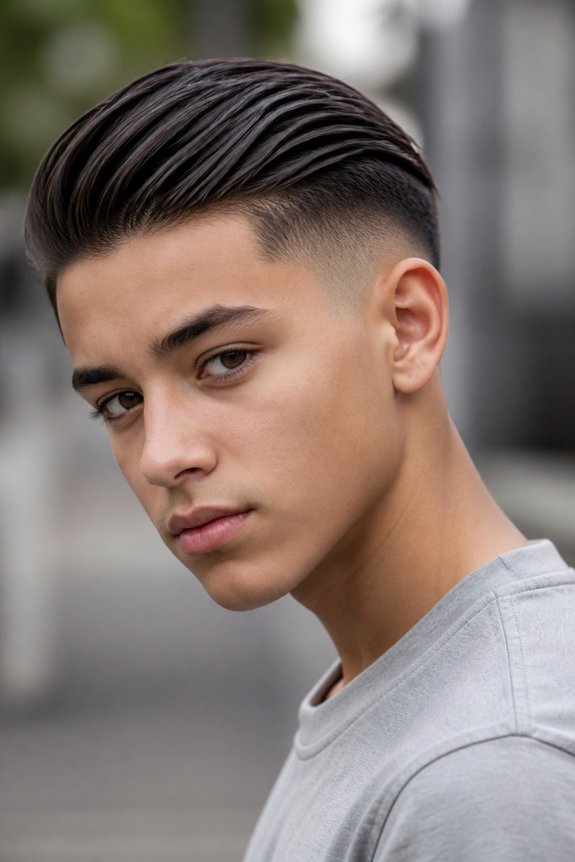
People notice this cut. That’s the deal you’re making when you commit to it. Longer hair on top, tight and clean fades on the sides. The contrast is intentional. The impact is real.
Thick, straight hair handles this best. If you’re working with something else, talk to your barber about adapting it. They’ll know whether the undercut concept translates to your hair type.
Here’s where most people miss the mark: styling. Pomade or clay-based products aren’t optional. Work product into damp hair. Blow-dry upward and backward. Build that voluminous shape. Skip this step and you just have long hair on your head. Do it right and you get bold presence.
Direction matters too. One cut, infinite moods. Slick it back when you’re in polished mode. Keep it textured and messy when you want to signal creativity. The same cut supports both. That’s the beauty of it.
Maintenance is non-negotiable though. Every three weeks. Sharp lines don’t maintain themselves. Tell your barber specifically: tight fades into disconnected length. That signature bold contrast only stays if you show up.
This isn’t the cut for someone looking to blend in. This is for standing out. Knowingly. Intentionally. Repeatedly.
Disconnected Undercut: Bold Contrast That Stands Out
Here’s a completely different angle:
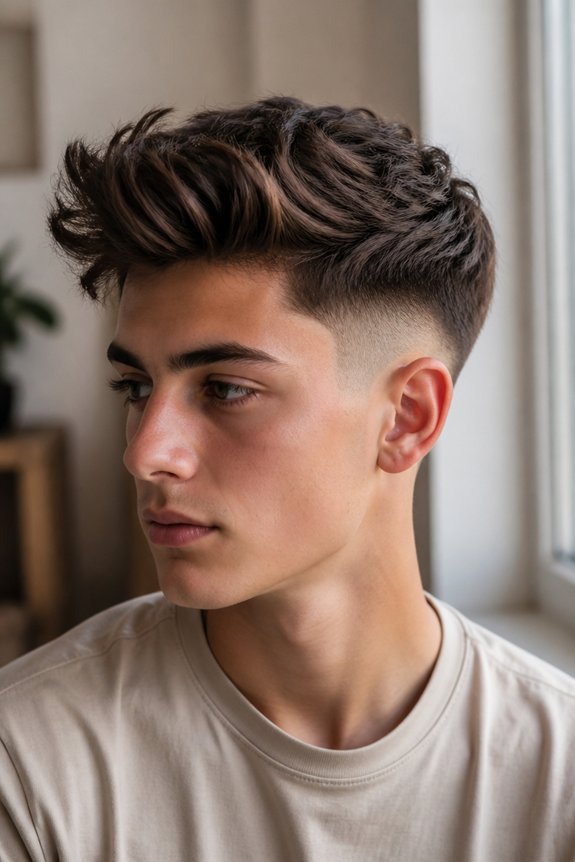
Not everyone can pull this off. But if you can, the disconnected undercut becomes your signature. Cropped sides with a clear, unapologetic gap between them and longer hair on top. It’s bold. It’s intentional. It says something.
The specifics matter here. Keep your sides at one to two millimeters. Leave three to four inches on top so you actually have something to work with. This ratio is what creates the visual punch. Get it wrong and the whole concept falls apart.
Every two weeks, you’re back in the barber chair. That disconnected line doesn’t stay crisp by accident. Maintenance is the cost of admission. Think of it less as upkeep and more as protecting your investment in standing out.
Styling demands confidence more than technique. Work pomade or clay through damp hair. Push your strands back or to the side. The key is commitment to that bold separation. No blending. No softening the edges. Half-measures kill this style. You’re either going for impact or you’re not.
This cut works for people ready to be noticed. Ready to own the space they take up. Ready to walk in and know they made a choice. A visible one. A deliberate one.
The payoff is presence. The cost is maintenance and nerve. Whether that trade-off works depends on who you are.
Slicked Undercut: Sleek Finish With Hidden Texture
Here’s a completely different angle:
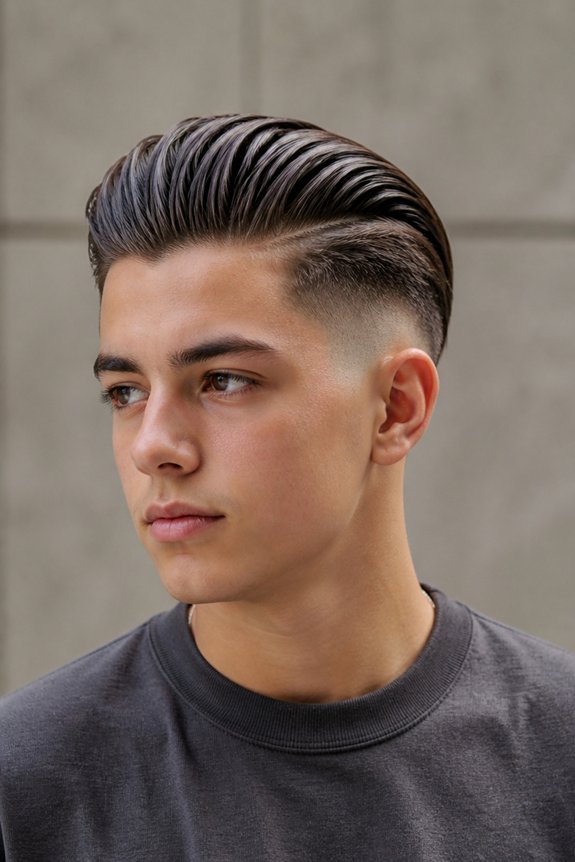
Your hair shouldn’t choose sides. This is where the slicked undercut makes sense. Clean, faded sides paired with longer hair on top. Style it sleek for the presentation. Tousle it up for everything else. One cut. Multiple versions of you.
The technical side matters less than the layers underneath. Most people focus on that polished surface. What actually makes it work is the subtle layering that lets your hair move. That’s what separates this from stiff and flat. That’s what gives you options.
Product choice becomes strategy here. You need lightweight pomade or gel that delivers shine without stiffness or weight. This sounds basic. It’s not. Bad product locks you in. Good product lets you shift between moods without starting over.
The reality of regular styling? It takes a toll on your hair. You’re working it constantly. Combing it back. Shifting it around. This demands healthier habits. Better conditioner. Maybe a weekly treatment. Your investment in looking adaptable costs you elsewhere.
Maintenance keeps the foundation sharp. Every three to four weeks, hit the barber. Those clean lines fade fast. Let them blur and you lose the whole visual anchor.
This cut asks something of you. Commitment to the routine. Commitment to product quality. Commitment to your hair’s health. But you get genuine flexibility in return. The same cut works for boardrooms and coffee shops and random Tuesday nights. That’s the payoff.
Crew Cut: Low-Maintenance and Always Sharp
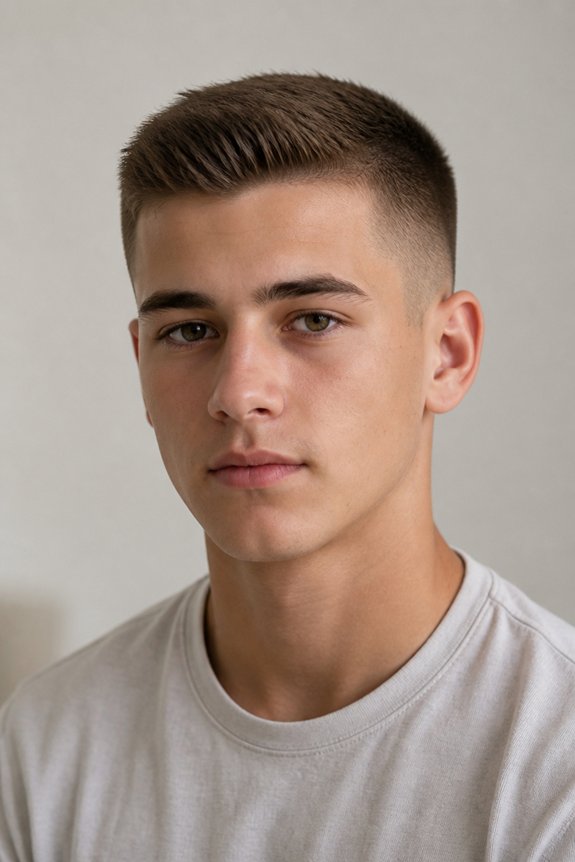
Tired of spending time styling your hair every morning? A crew cut might be exactly what you need. You get a sharp, polished look that works for school, sports, and hanging out with friends, all with minimal effort.
Here’s what makes it work: short, even sides with slightly longer hair on top (usually one to two inches). The best part? You only need a trim every three to four weeks to keep it looking fresh. Just apply a bit of pomade or matte clay to damp hair, comb it back, and you’re done. Your hair type and face shape don’t really matter either. This style adapts to pretty much anyone.
Spiky Crew: Volume and Edge Combined
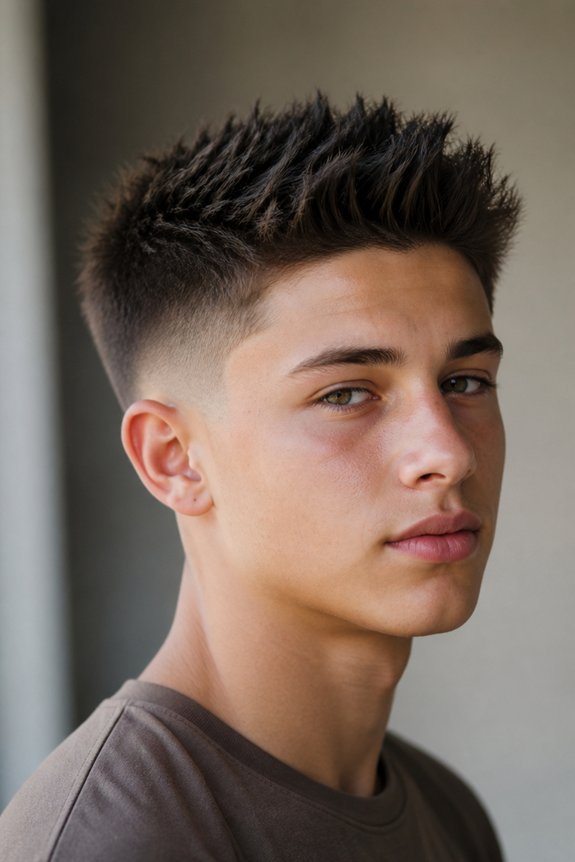
Most people kill this cut with the wrong product. That’s where it falls apart. You’ve got longer hair on top, around two to three inches, textured enough to catch light. Short, clean sides keep everything intentional. The foundation is solid. Then they slap on heavy gel and ruin it.
Matte clay or textured paste. That’s your lane. Work it through damp hair with your fingers. Push upward. Create separation and movement. You’re not sculpting here. You’re enhancing what’s already there. Your hair’s natural texture becomes the asset. Not the obstacle.
The spiky crew handles most scenarios. Most face shapes. Most hair types. It’s forgiving that way. But forgiving doesn’t mean hands-off. You still need trims every four to six weeks. Skip that window and you hit the overgrown phase fast. That’s where the edge disappears.
Here’s the thing: this style lives or dies on upkeep. Not complicated upkeep. Just consistent. Regular trims. Right product choice. Fingers, not combs. Simple stuff executed regularly. That’s literally all it takes.
You want personality without overthinking? This delivers. The texture does the talking. The cut does the heavy lifting. Your job is just keeping it from sliding into neglected territory.
That’s the whole deal.
Textured Crop: Effortless Style With Modern Edge
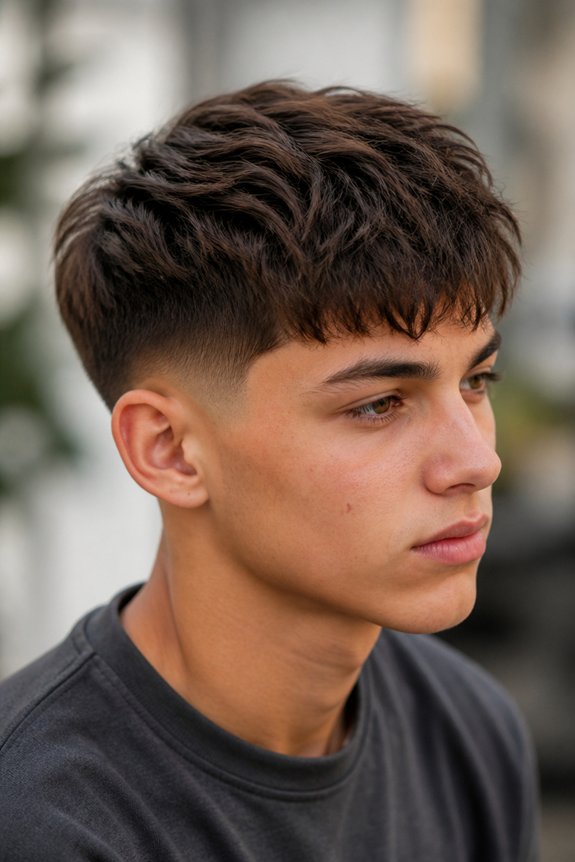
Point-cutting changes everything. Most barbers won’t bother. Most clients don’t ask. But the ones who do get something different. Shorter sides with longer, choppy layers on top. Each strand moves independently. No stiffness. No rigid geometry. Just texture that looks like it happened naturally.
This is what casual actually means. Not sloppy. Not lazy. Intentionally relaxed. That distinction matters.
Styling demands almost nothing from you. Matte clay or dry paste. One of those, that’s it. These products make each strand stand out without the shine that screams “I spent time on this.” You’re aiming for the opposite impression. Like you rolled out of bed looking like this.
But here’s the secret nobody admits: you didn’t. You chose the right barber. You chose the right technique. You chose the right product. Three deliberate choices create one effortless outcome.
Direction is yours to take. Tousle it up when you want volume. Sweep it to one side when you need polish. Keep it relaxed when you’re just living. The cut supports all of it. That’s the real flexibility here.
Trim every four to five weeks. Let the texture fade and you’re stuck in that weird overgrown phase. Regular maintenance is what keeps the “didn’t try” vibe alive.
The textured crop is for people who actually do care. But they care quietly.
Textured Fringe: Soft, Piece-y Look on Top
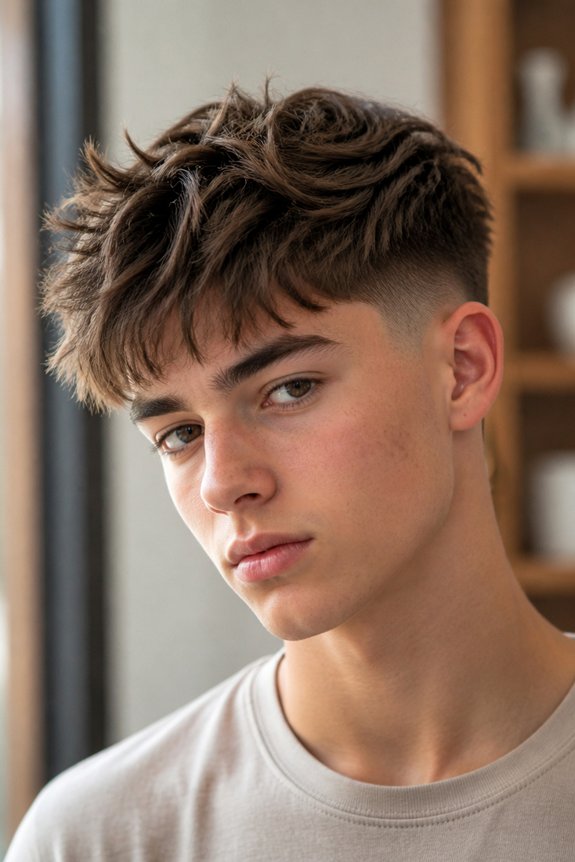
Bangs make people nervous. Textured fringe shouldn’t. This is the version that actually works because it moves. Longer than traditional styles, sitting around your eyebrows with choppy layers that feel piece-y and natural. You’re not committing to rigidity. You’re committing to texture.
Straight hair. Wavy hair. Curly hair. None of it matters. This style adapts to whatever you’ve got. The secret is asking your stylist for texturizing shears. That specific technique creates the signature choppy separation. Skip it and you just have longer bangs. Do it right and you get movement.
After that, minimal maintenance. Lightweight texturizing spray or matte clay keeps everything defined without weight. You’re not trying to tame anything. You’re enhancing what’s already happening naturally.
The geometry works in your favor. All that movement softens harsh angles. Works on round faces. Works on square faces. Works on narrow faces. The fringe does the heavy lifting by moving around your face rather than sitting static against it.
Here’s the flexibility: messy and casual one day. Smooth and polished the next. Same cut. Different intention. You shift the mood without changing the structure.
Pair it with tapered sides and you’ve got genuine balance. Nothing feels accidental. Nothing feels forced. Just fresh.
Trim every four to six weeks. Keep the layers sharp. Keep the fringe out of your eyes. That’s it. That’s the whole maintenance conversation.
Messy Quiff: Controlled Chaos That Works
Here’s a completely different angle:
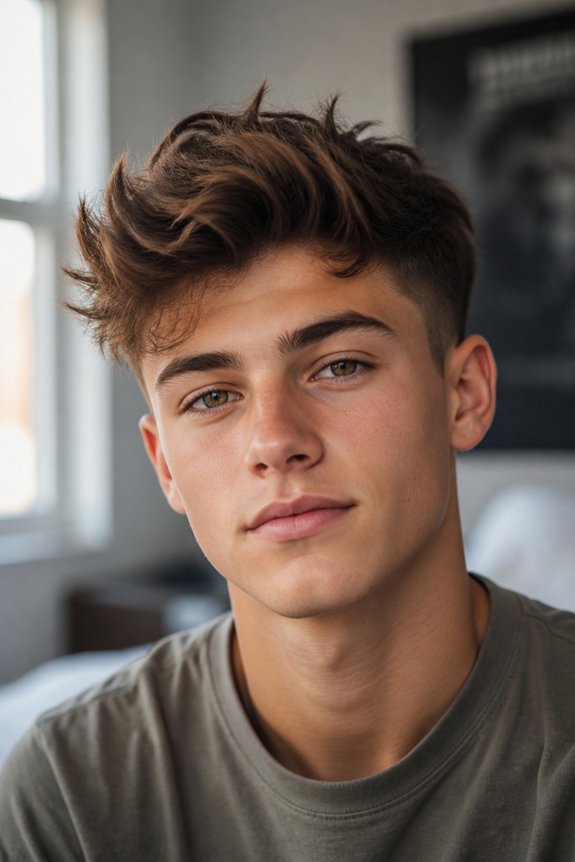
People assume this just happened. You rolled out of bed looking like this. Wrong. The messy quiff is calculated. Layering throughout the crown and front means your hair falls into place on purpose, not by accident. You’re working with your hair’s natural direction, not against it. Big difference.
Volume on top. Clean, tapered sides framing your face. The formula is simple. The execution requires strategy.
Clay or matte pomade becomes your tool. Work it through damp hair, pushing upward and backward. But here’s where most people miss it: you’re not sculpting a perfect shape. You’re giving your hair permission to move. The product is permission, not control.
Your hair type dictates the approach. Straight hair needs more grip. More product. More deliberate pushing. Wavy hair? Sea salt spray and you’re mostly done. Your hair does half the work for you. Embrace that.
The real magic lives in contradiction. Sharp, clean fade lines on the sides. Deliberately messy and lived-in on top. The contrast is what makes it work. Neglect either side and the whole thing collapses. One day polished. Next day intentionally undone. Same cut. Different mood. That flexibility is why people keep coming back.
Trim every four to five weeks. Keep those sides precise. Let the top do its thing. That balance is everything.
This style doesn’t scream effort. It whispers it. And that’s exactly the point.
Bro Flow: Longer Length With Textured Movement
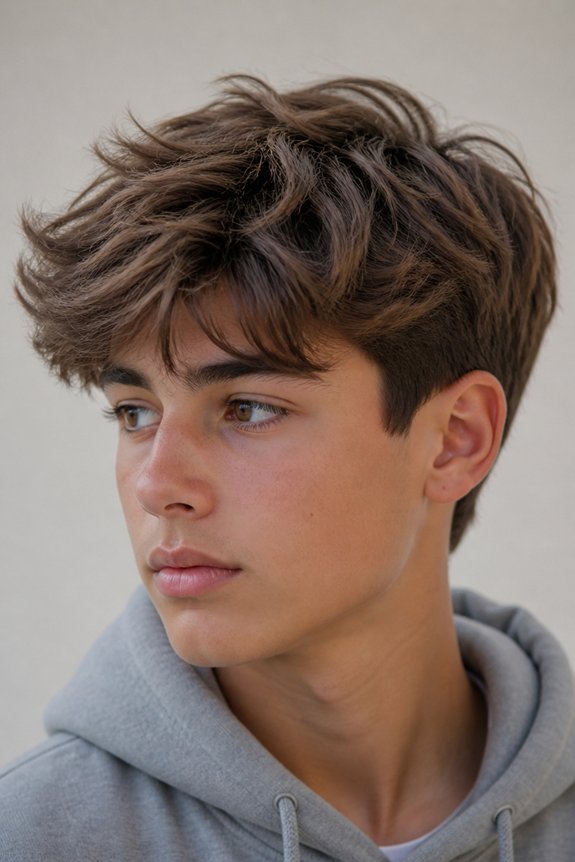
Grow out your hair and let gravity do half the work. The bro flow combines length with texture, creating movement that looks effortlessly cool. You’ll need patience more than constant maintenance.
Want to avoid that flat, heavy look? Ask your barber for shorter layers on top that gradually get longer toward the back. This strategy lets your hair move naturally without looking messy.
Styling products actually matter here. Grab a lightweight texturizing spray or sea salt spray to add grip and movement. A tiny dab of matte pomade gives you definition without that greasy weight.
Your hair texture plays a role too. Wavy or naturally textured hair shows off movement best, but this style works for you regardless. Plan on hitting your barber every six to eight weeks to keep the shape fresh and prevent bulky buildup.
Shaggy Layers: Effortless Length and Movement
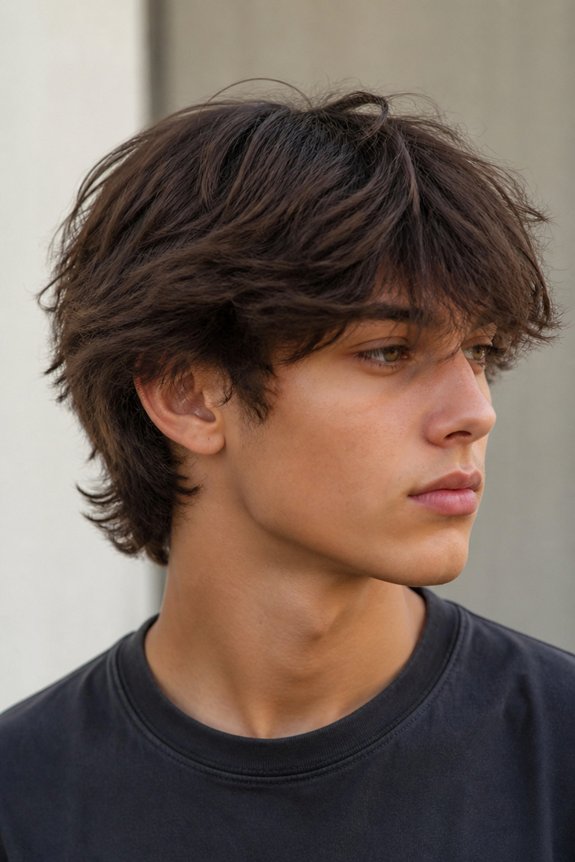
Want a haircut that looks cool without demanding daily styling? Shaggy layers might be your answer. This style gives you movement and texture while keeping things naturally imperfect and intentional.
Here’s how it works: your stylist cuts layers at different lengths to build lift at the crown and volume throughout. The longer pieces frame your face with soft, flowing lines. A quick spritz of sea salt spray brings out the texture and that piecy, undone vibe you’re going for. Most teens love this style because it actually looks better when it’s a little messy. It works on pretty much any hair type and face shape too.
Slicked Back: Polished Look for Any Occasion
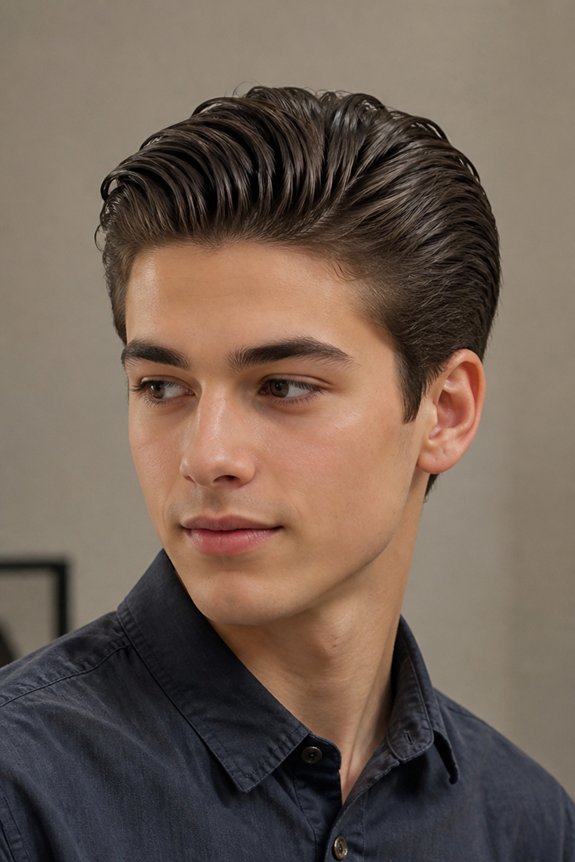
Five minutes before the interview, you’re in the bathroom checking one thing. The back. Did it hold? It did. This is what the slicked back style gives you. Confidence that lasts.
Strong-hold pomade or gel on damp hair. Fine-tooth comb. Everything goes straight back. The technique takes three minutes. The mental payoff is bigger.
Here’s what people don’t realize: this style isn’t about looking overdone. It’s the opposite. It’s about looking like you have your life together without announcing it loudly. Sharp. Intentional. Controlled. Those qualities communicate something.
Your hair type matters less than your product choice. Matte pomades give subtle shine if you want restraint. Glossy finishes if you want to own the shine. Either way, the foundation is the same. Consistency. Regular application. Knowing it’ll hold.
Mid-day touch-up? Only if you need it. Some people do. Some don’t. Depends on your hair and how much you’re moving around. The point is you have the option without panic.
This style works because it doesn’t demand constant attention. You get ready once. You stay ready. That’s the whole appeal. Job interviews. Regular Tuesdays. Client meetings. Everything in between. One approach handles it all.
The slicked back style is for people who understand that discipline looks like effortlessness. They’re not the same thing. But they look identical from the outside.
Pompadour: Retro Vibes With Modern Execution
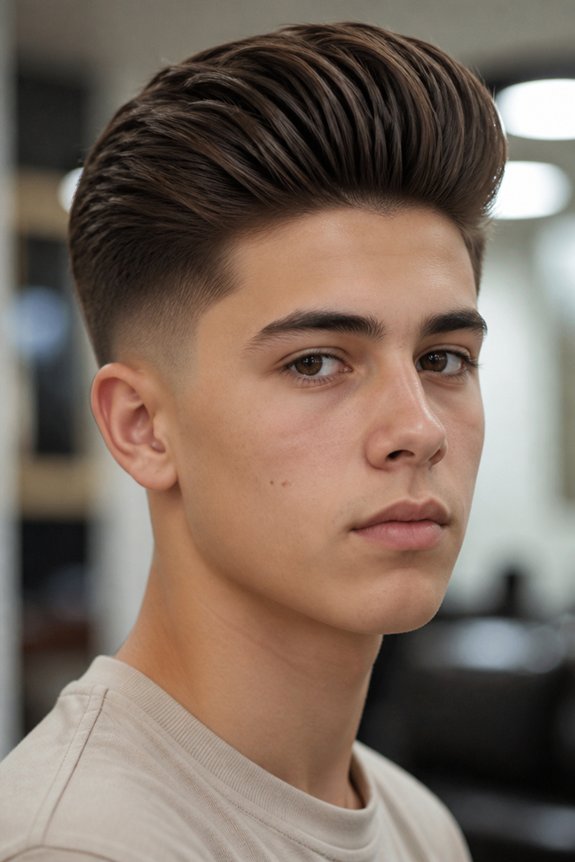
Want a hairstyle that turns heads without looking like you’re stuck in the 1950s? The pompadour does exactly that. You get serious volume on top with clean, tapered sides that work for almost any face shape.
The key is texture. You don’t want slicked-back hair anymore. Instead, you’re going for a piece-y, textured look that feels current. Start with damp hair and blow-dry upward and backward to build that volume. A lightweight pomade like Baxter of California keeps things light, while volumizing clay adds grip and separation between strands. Comb through after styling to define each piece.
Your barber needs to nail the cut itself. Longer hair on top that gradually fades into the sides creates the contrast that makes this style pop. That precision matters way more than any product you could use.
Curtains Haircut: Center Part for Versatile Styling
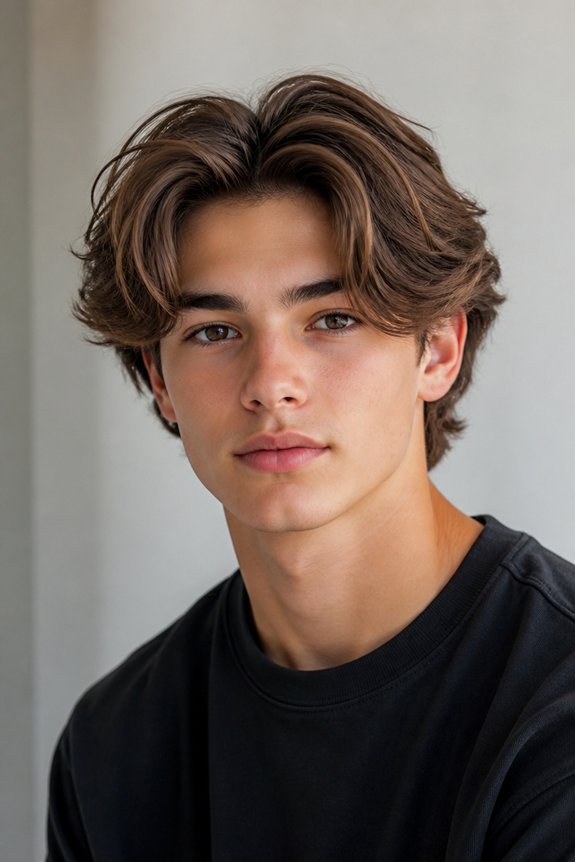
The curtains cut came back because it actually solves something. Volume on both sides. Center part that lets your hair fall naturally away from your forehead. No fighting your hair’s direction. No forcing a shape that doesn’t exist. Just working with what grows.
Most people mess this up by going too short. Two to three inches around the crown and sides. That’s the range. Less than that and you lose the movement. More than that and it stops looking intentional. Your stylist needs to understand this window specifically.
The layers do the real work. Textured layers, not blunt cuts. Blunt just looks thick. Layered actually moves. That’s the difference between something that sits on your head and something that flows away from it.
Styling sits somewhere between effort and laziness. You’re not blow-drying this for twenty minutes. But you’re not just walking out the door either. Lightweight texturizing paste through damp strands while you direct the hair away from the center part. Maybe three minutes tops.
The payoff is adaptability. Casual hangouts one day. Polished occasions the next. The cut supports both moods without requiring a restyle. That’s the magic. Not multiple versions of the same cut. One cut that genuinely works across contexts.
Face shapes don’t matter here. Round, oval, square, rectangular. The width and volume from both sides balances most proportions naturally. That’s why this cut keeps resurging. It just works.
The curtains style is for anyone tired of high-maintenance hair but unwilling to look like they stopped trying.
High and Tight: Sharp, Confident Look
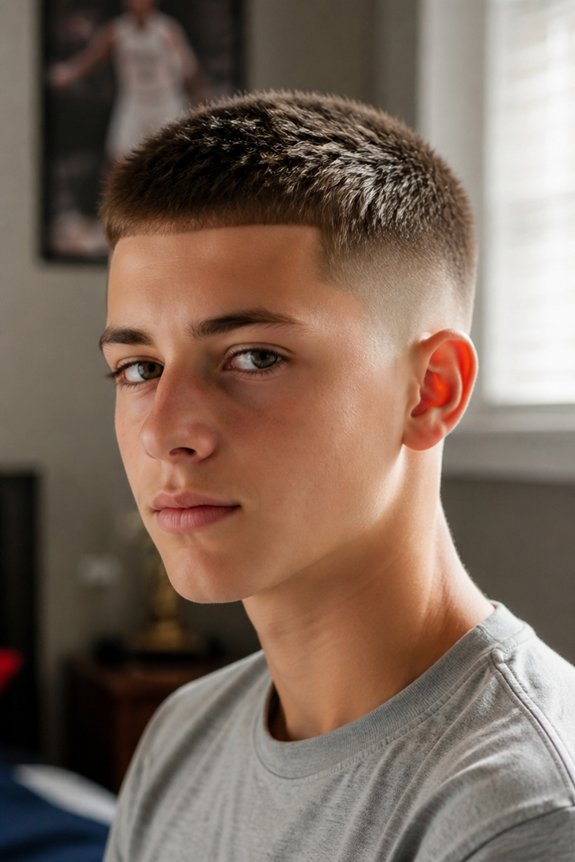
Here’s a completely different angle:
This is the trade-off. Three to four weeks between trims. That’s non-negotiable. Sides and back fade almost to skin. Those lines blur fast. You let them slide and the whole aesthetic collapses into something generic.
But here’s what you get in return: thirty seconds. That’s your morning commitment. Apply matte pomade or clay. Done. You’ve got options on top while everything underneath stays clean and intentional. Straight hair. Wavy hair. Both work equally well.
The high and tight doesn’t ask much of you. It asks for consistency instead. Show up every three to four weeks. That’s the deal. You do that and you look polished and mature without the styling theatre most cuts demand.
Here’s where it gets interesting. This cut works because it’s honest. No tricks. No layering disguises. No texturizing to hide thinning. Just clean geometry and proportion. Your barber either cuts it sharp or they don’t. There’s nowhere to hide.
Most people underestimate how much this matters. They book trims sporadically. They skip appointments. The fade grows out unevenly. Suddenly it just looks like you haven’t had a haircut. Not intentional. Not sharp. Just neglected.
But commit to the schedule? You get presence. Not loud. Not flashy. Just the kind of clean that signals you’ve got your life sorted.
That’s the whole thing. Consistency over complexity.
Frequently Asked Questions
How Often Should Teen Boys Get Haircuts to Maintain Their Style?
Teen boys should typically get haircuts every 4-6 weeks to maintain their chosen style effectively. This frequency depends on hair growth rate and specific style requirements. Regular trims prevent overgrowth and keep the haircut looking fresh and intentional.
What Hair Products Work Best for Holding Different Teen Boy Haircut Styles?
Pomades work well for slicked styles, clays excel for textured looks, and gels suit spiky designs. One should consider hair type and style preference when selecting products. Water-based options offer easier washout, while cream-based formulas provide longer-lasting hold.
How Can Teens With Curly or Textured Hair Adapt These Haircut Styles?
Teens with curly or textured hair should request longer lengths on top to showcase natural texture while keeping sides tapered. They benefit from moisture-rich products and regular trims every 3-4 weeks. Embracing texture rather than fighting it creates distinctive, stylish looks suited to their hair type.
What’s the Best Way to Ask a Barber for a Specific Haircut?
A picture speaks louder than words. Bringing visual references—whether photos or style magazines—serves as a bridge between imagination and reality. One should clearly describe desired length, texture, and fade patterns while remaining open to professional recommendations based on individual hair type.
How Do I Style My Hair at Home Between Professional Haircut Appointments?
One can maintain styling between appointments by using quality hair products suited to one’s hair type. Investing in a blow dryer, styling cream, or pomade helps achieve desired looks. Regular washing and conditioning preserves the cut’s shape effectively.
Conclusion
The journey through teen boy haircuts reveals something unexpected: style transcends mere appearance. Each cut—from the fade’s precision to the pompadour’s boldness—communicates identity and confidence. Yet mastery requires more than scissors. Proper maintenance with quality pomades and regular trims sustains that fresh aesthetic. As trends evolve, one truth remains constant: the right haircut, paired with genuine self-assurance, transforms how teens present themselves to the world.