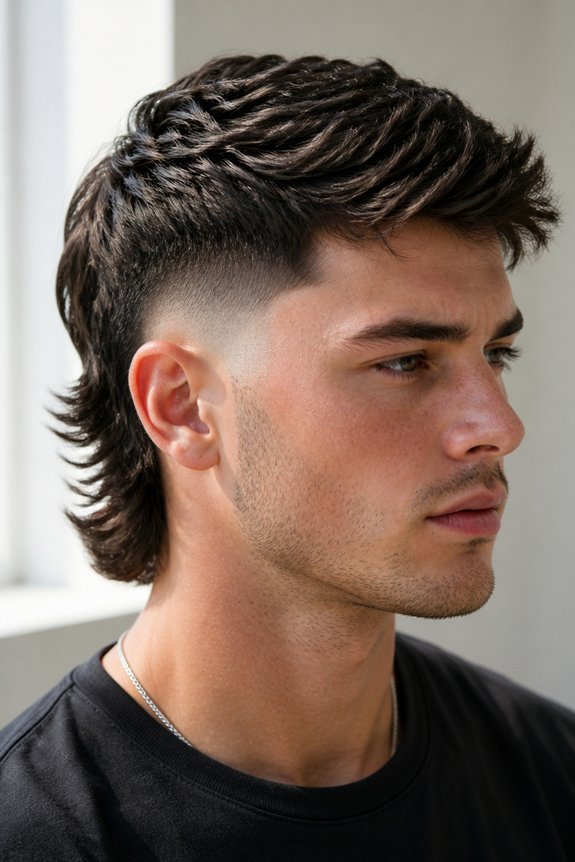
Mullet Fade hybrid cut brings together sharp, faded sides with plenty of volume in the back, creating a look that feels both edgy and refined. It’s the kind of style that works if you’re willing to commit to the maintenance.
The beauty of the mullet fade lies in its flexibility. High fades, low fades, undercut variations, skin fades – each one shifts the whole vibe of the cut. What looks rebellious on one person might feel polished on another, depending on how your barber executes those transitions and proportions. Hair texture plays a role too, since thicker hair holds volume differently than finer strands.
Getting this cut to actually look sharp requires the right tools and products. Quality pomades matter more than you’d think, and precision clippers make the difference between a clean fade and a sloppy one.
The contrast between those crisp sides and the fuller back section is what really sells the aesthetic.
Finding your version of the mullet fade comes down to honest conversations with your barber about your hair type and daily life. If you’re willing to style it regularly and keep up with fade maintenance every few weeks, this cut rewards that effort with serious personality.
The Classic High Fade Mullet
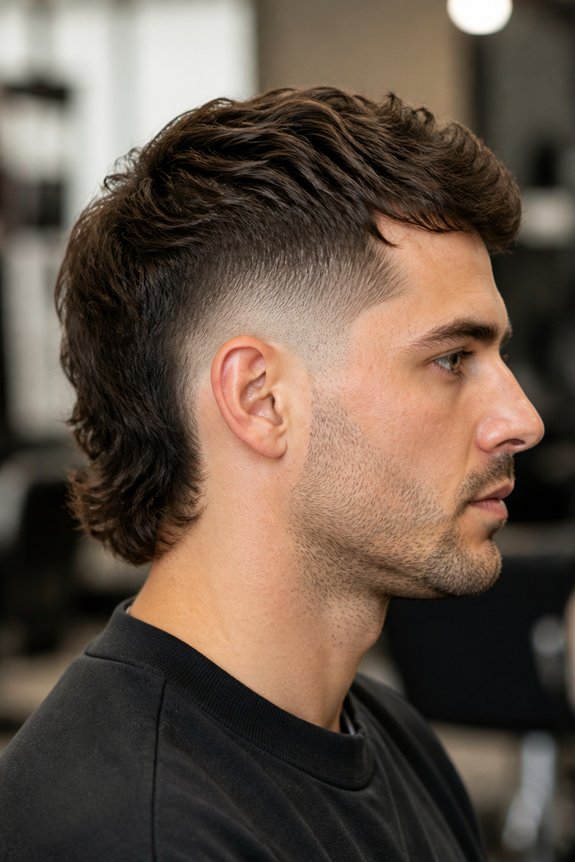
The high fade mullet looks sharp and modern but still feels bold. You get clean, tapered sides that blend seamlessly from skin to longer hair on top and back.
Your barber will start with clippers at a grade 0.5 or 1 to create that dramatic contrast you’re after. The top stays full, around two to three inches, while the back flows into traditional mullet length. This creates real dimension and personality.
Styling matters here. You’ll want quality pomade or clay to keep everything in place and add texture. Weekly trims help maintain those sharp lines, and using a good shampoo for textured hair keeps it looking fresh between visits.
This style works best if you have straight to wavy hair. It gives you contemporary edge without losing that classic masculine feel. If you’re ready for something that stands out, this could be your next move.
Also read: 17 Mullet Fade Haircuts for Men With Edge
Modern Undercut Mullet With Sharp Separation
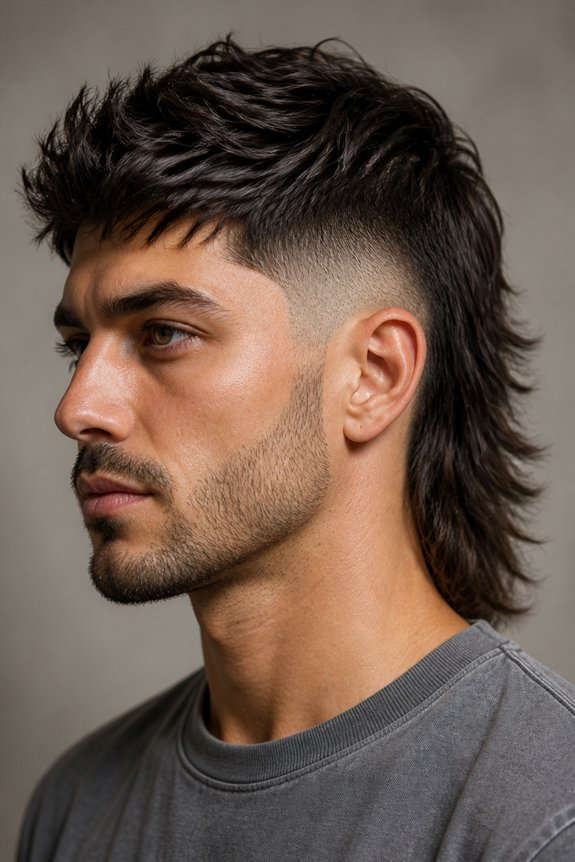
You’re getting faded sides that fade clean to skin at the temples, while your back stays long and voluminous. The real magic happens in that dramatic separation between the two sections.
Getting this right takes real precision. Your barber needs to blend those sides flawlessly so there’s no awkward transition zone. Ask them to keep those lines crisp and intentional. That’s what makes this style feel modern instead of dated.
Here’s what keeps it looking fresh: pomades and matte clay are your best friends for that back section. They hold everything without the greasy shine. Add a texturizing spray if you want extra grip and definition throughout the day.
You’ll need a trim every three weeks to keep those fades sharp. Skip that timeline and the whole look falls apart. But stick with it, and you’ve got an edgy, architectural style that demands attention and shows you care about your appearance.
Textured Crop Top With Extended Back
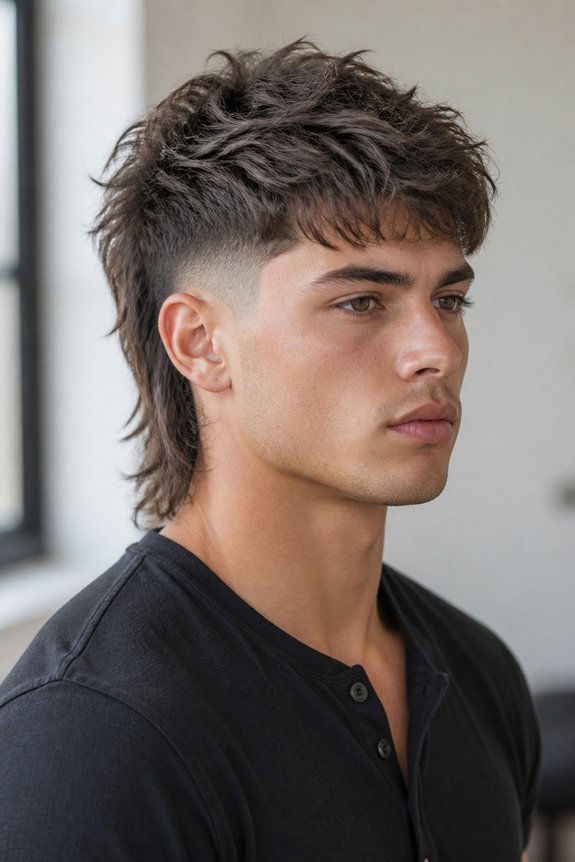
The textured looks effortless but actually has serious style You get short, choppy layers up top that blend into an extended back section, giving you movement and dimension without looking overdone.
Here’s what makes it work: your barber fades the sides close while keeping the crown full. This contrast is what creates that modern look you’re after. If you have thicker hair, you’re in luck because this cut was basically made for you.
Getting the style right takes barely any time. Blow-dry your hair upward using your fingers to build texture, then comb your product through. A matte clay or texture paste will enhance that tousled feel and keep things separated. You want each layer distinct and visible, not clumpy.
The back is where you can get creative. You can slick it down for a polished vibe or keep it textured to match the top. Either way works. Just commit to a trim every four weeks so your shape stays sharp and defined.
Slicked-Back Mullet With Sleek Fade
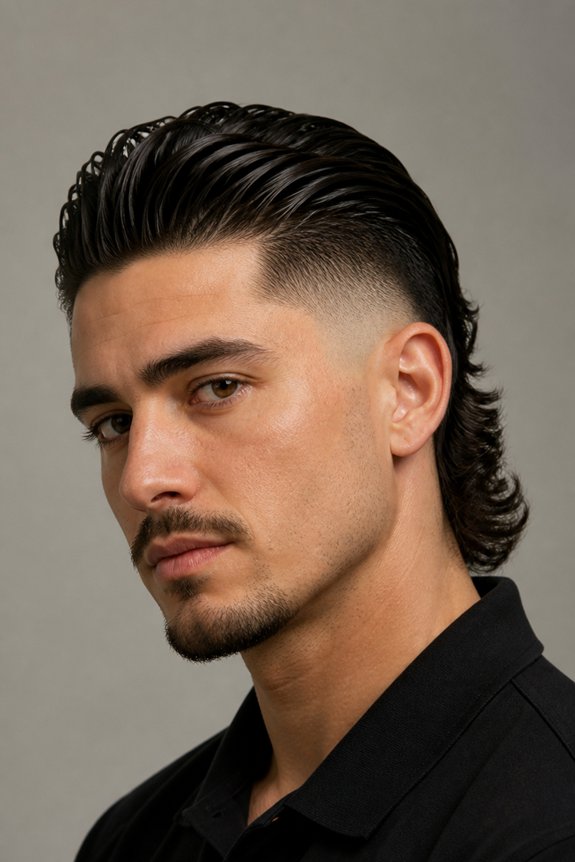
The slicked-back mullet looks polished on top but keeps things interesting in the back. You get sharp fades on the sides with sleek styling up front, then length and volume where it matters.
For the top, you’ll need a strong pomade or gel. Apply it to damp hair and you’re done. Your barber will keep the sides short with precise fades that blend from your temple down to your ear. The contrast between that smooth finish and the longer back is what makes this cut stand out.
The back is where you have fun. It extends past your shoulders, giving you real movement and edge. You’ll want trims every four to six weeks to keep those fade lines sharp and everything looking intentional rather than messy.
This style works because it feels both professional and bold at the same time. Once you get your product routine down, styling takes almost no effort each day.
Curly Top Mullet for Dense Hair
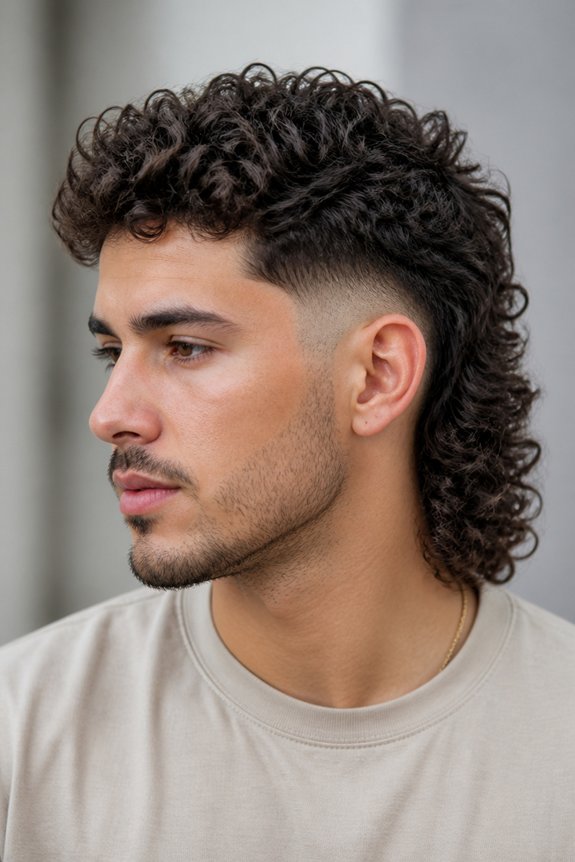
If want a hairstyle that actually works with your thick hair instead of against it then the curly top mullet is your answer. You keep the volume up top where your curls can shine, while the fade on the sides and back stays sharp and clean.
Here’s what makes it work: apply a curl-defining cream or lightweight mousse to damp hair, then let it air dry. This keeps your curls looking bouncy without that weighed-down feeling. The fade, usually mid or high, creates a bold contrast that makes the whole look pop.
Your curls need a little love to stay looking fresh. Grab moisturizing products made for curly hair and trim every three to four weeks. This keeps the shape tight and prevents frizz from taking over. You’ll get modern style without fighting your natural texture.
Shaggy Layered Mullet Fade
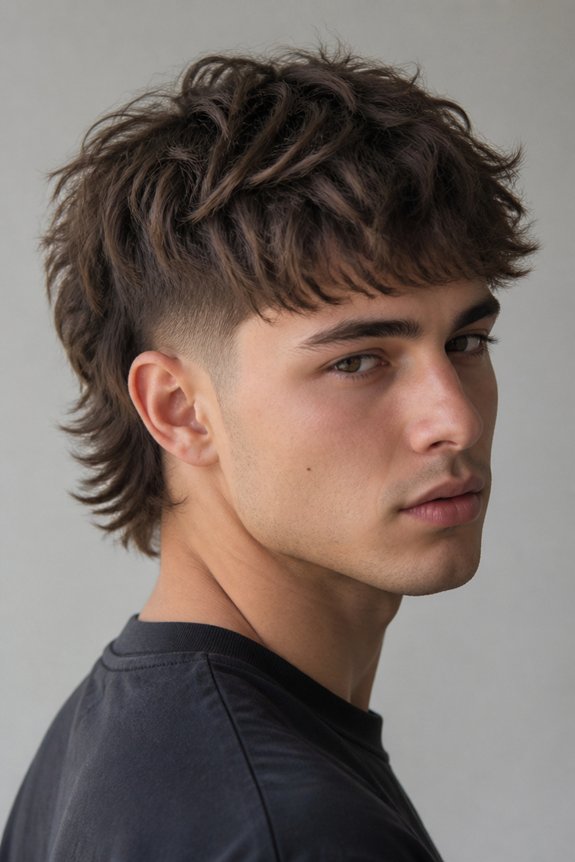
The shaggy layered mullet fade blends the clean, tapered sides you love with textured layers on top. It’s bold without being over the top.
Your stylist will use texturizing shears to create soft, separated layers across your crown. The sides stay short and faded while the back extends longer, giving you that signature mullet vibe. If you’ve got medium to thick hair, this cut works especially well for you.
Styling takes just a few minutes. Grab a lightweight texturizing paste and work it through damp hair using your fingers. You’ll get that piece-y, dimensional look without looking stiff. Push some volume toward the front and sides for contrast.
Plan on getting trimmed every three to four weeks. Regular trims keep those layers sharp and prevent the whole thing from looking shaggy in a messy way rather than intentional.
Blonde Highlights Mullet Fade
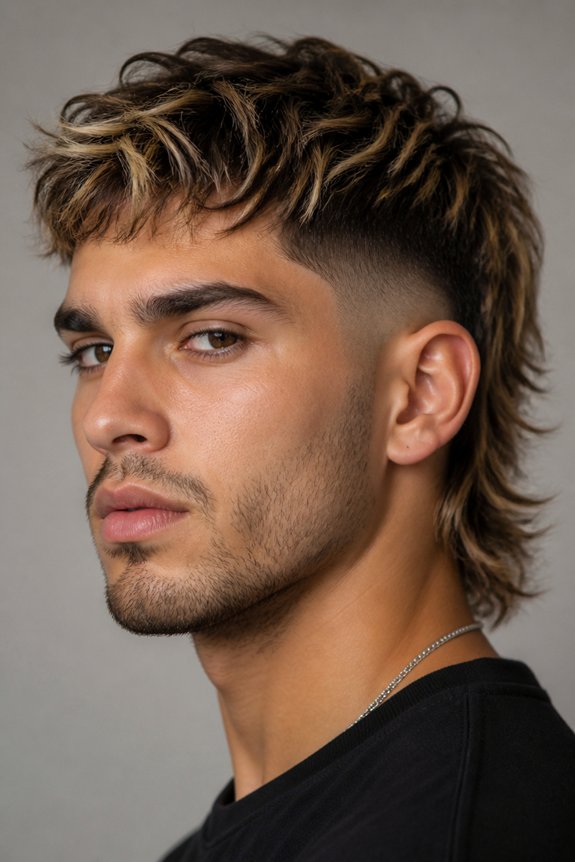
Blonde Highlights Mullet Fade add dimension and make the contrast between your short sides and longer back pop instantly.
Your stylist will use balayage to place lighter tones strategically around your face and crown. This keeps the highlights natural-looking without stealing focus from your clean fade lines.
Here’s the real talk: maintenance matters. You’ll need quality products like Olaplex No. 4 Shampoo and Fanola No Yellow Conditioner to keep your blonde vibrant and healthy. Skip the cheap stuff and your color will fade fast.
Plan for touch-ups every four to six weeks. This keeps your highlights sharp and intentional as your hair grows out. It’s the difference between a stunning look and a messy one.
Sharp Hard-Part Mullet With Fade
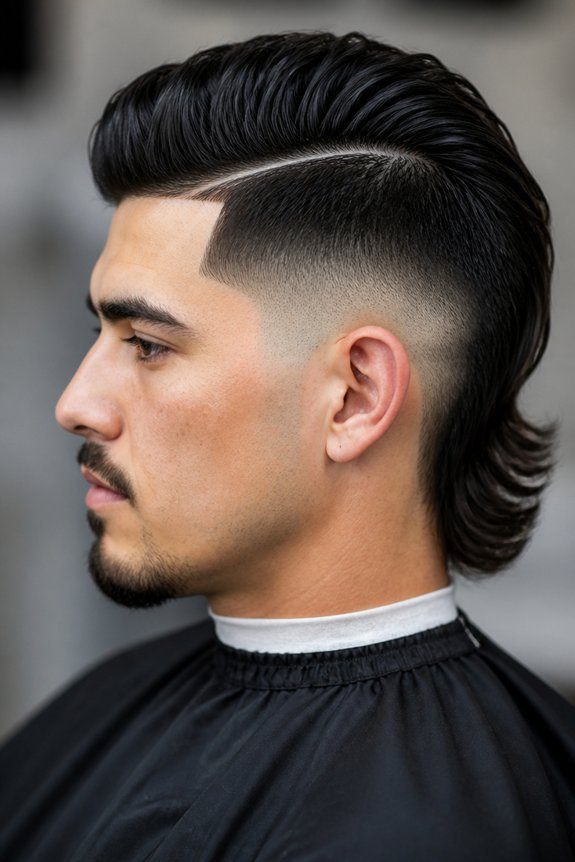
Want a cut that says you’re detail-oriented and bold? A sharp hard-part mullet delivers exactly that. The hard part creates a clean line between your top and sides, giving your whole look structure and purpose.
Your barber will use clippers to fade from skin level up, blending smoothly into the longer hair at your crown. This takes skill and a steady hand. The real payoff? A look that’s modern and controlled at the same time.
Grab a matte pomade or clay to style it. These products hold that hard part crisp while keeping texture on top. You’ll want to book a trim every three to four weeks to keep the fade sharp and clean.
This cut works best if you’re willing to commit to regular maintenance and comfortable standing out. It’s not fussy, but it does demand attention.
Extended Back Mullet Fade for Thick Hair
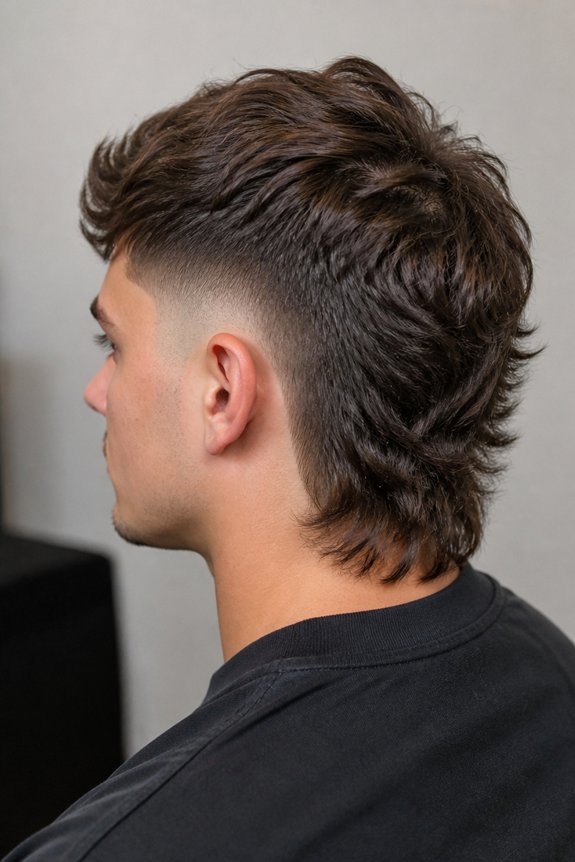
Got thick hair and want to actually use it to your advantage? The extended back mullet fade is perfect for you. You get sharp, faded sides paired with real length in the back, so there’s serious contrast and movement happening.
Your barber will fade the sides down to skin or keep them short, then let the length build as it moves toward your neck. This creates dimension that looks different depending on how you move. The trick is using texturizing shears on the back so you keep volume without that heavy, bulky feeling.
For styling, you’ll want a medium-hold pomade that doesn’t drag your hair down. Apply it to damp hair and blow-dry to get the texture right. This style works if you want something modern with that classic mullet edge.
Also Read: 17 Low Taper Fade Haircuts for Men
Also Read: 17 French Crop Hairstyles for Men
Deliberately Undone Mullet With Choppy Layers
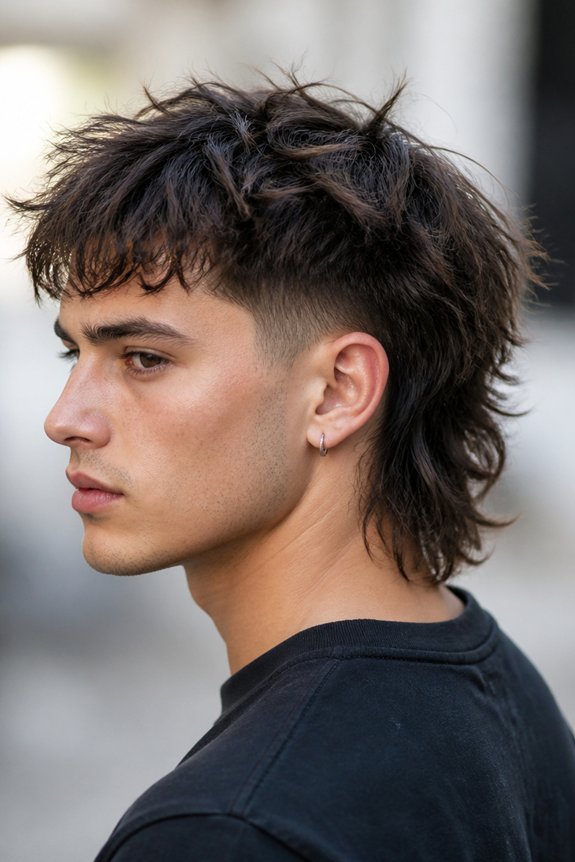
Want a mullet that looks effortlessly cool instead of overly styled? The choppy layer approach is your answer. You’re basically flipping the script on traditional mullets by keeping the front neat and letting the back go wild with texture.
Here’s what makes it work. Your front stays short and clean. Your sides fade sharp to the skin. The back is where the magic happens with jagged, uneven cuts that look naturally dimensional. This style looks best if you have medium to thick hair. Point-cutting techniques are what stylists use to build that texture and prevent the heavy, dated vibe.
After you get the cut, use a texturizing paste or sea salt spray to separate those choppy layers. You’ll get that deliberately tousled look without spending forever styling each morning. The catch? Precision actually matters here. Even though you’re going for imperfection, your barber needs skill to pull it off. Plan on trims every four to six weeks to keep those choppy layers defined and fresh.
Skin Fade Mullet With High Contrast
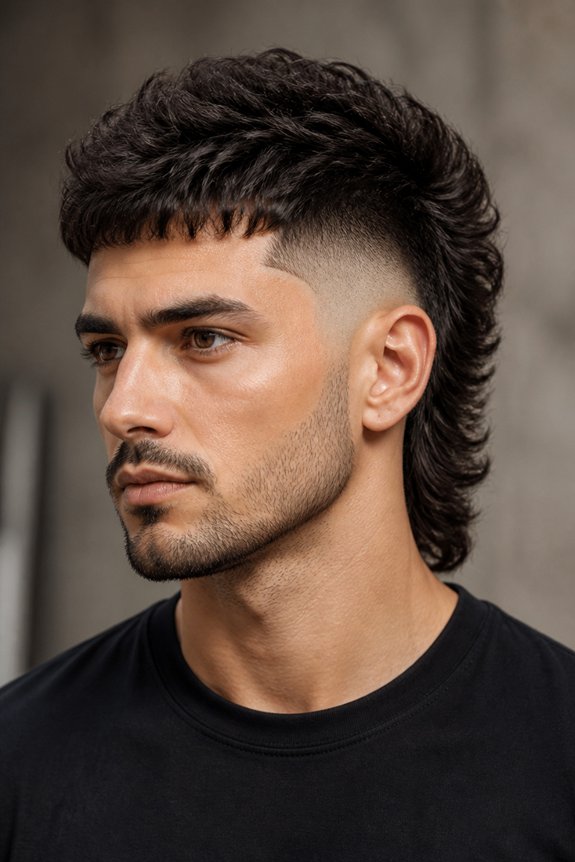
Want a haircut that turns heads? The skin fade mullet delivers serious style with its sharp contrast. You get super clean, short sides paired with longer hair on top that flows into real length at your neck.
What makes it work is the drama. Those crisp lines between the fade and the length create an edgy vibe that’s hard to ignore. Your barber will use clippers on the shortest settings for the sides, then gradually blend upward for that seamless fade.
Styling is where you make it your own. Work matte pomade or clay through damp hair, focusing on the top section. Blow-dry while pushing everything backward to build texture and definition.
Pick the right product and you’re golden. Grab a solid pomade that keeps things sharp without looking greasy. This keeps your cut looking fresh all day, not weighed down or dull.
Curved Fade Mullet With Extended Back
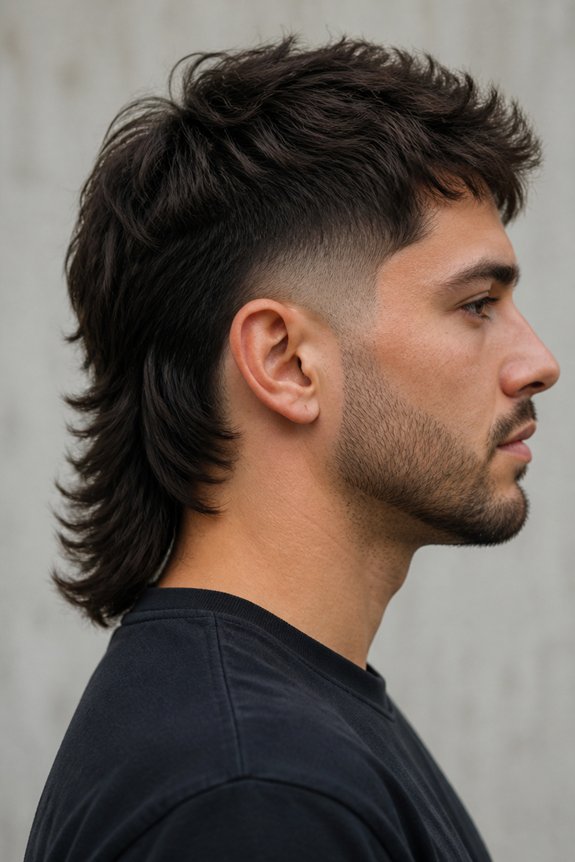
Want a mullet that doesn’t feel dated? A curved fade softens the whole look with smooth, rounded lines instead of sharp edges. Your sides blend naturally from short hair down to skin, giving you dimension that actually looks modern.
Your stylist will use clippers with different guard settings to follow your head’s natural shape. This technique works for most face types because it subtly brings out your bone structure. The longer back stays around 3-4 inches and flows right from that fade.
Keep your back trimmed every 4-6 weeks so it stays shaped and doesn’t get too thick. A light texturizing paste gives you definition without making your hair feel heavy or greasy. You get that modern edge while keeping some classic vibes, which is why this style works so well right now.
Mohawk-Inspired Mullet Fade
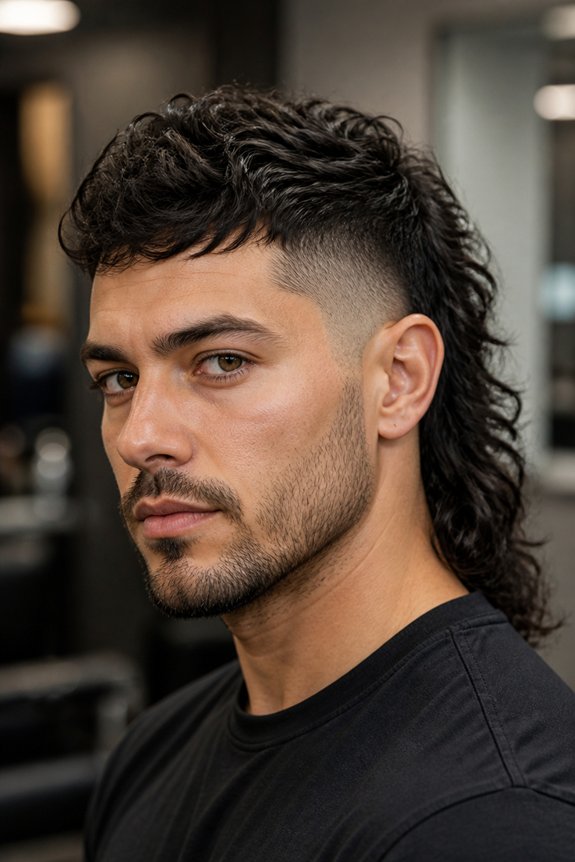
Ready to make a real statement? This cut takes the classic mullet and cranks up the attitude with a bold mohawk top. You get tight fades on the sides that fade right to your skin, then serious height and volume up top where it counts.
Your barber will keep the crown around two inches and taper it upward to build that iconic mohawk ridge. The back stays long and flows past your shoulders, giving you that signature mullet contrast. Plan on maintenance every three weeks to keep those fades sharp and clean.
The styling part matters just as much as the cut. You’ll want matte clay or fiber pomade to add texture and definition without looking shiny. Work it through damp hair, pushing upward to create separation and movement. This style works best if you’re confident wearing something that turns heads.
Subtle Mullet Fade for Conservative Styles
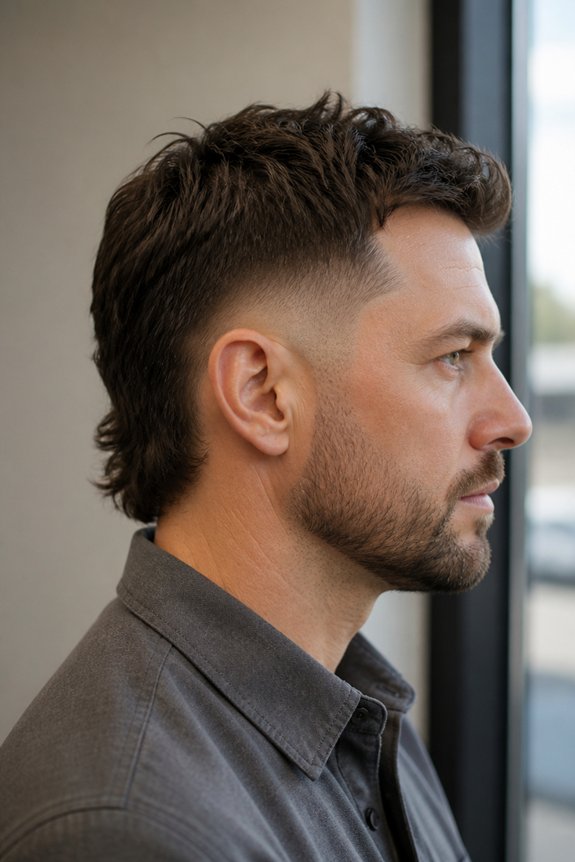
Want a mullet that actually works in a boardroom? The subtle version is your answer. You get the professional front you need for work while keeping character in the back. It’s all about balance, not extremes.
Ask your stylist for a gradual fade down to a #0.5 or #1. This gives you clean, sharp edges without looking edgy. The back stays longer than the sides but stays neat and controlled. A lightweight pomade like Baxter of California Clay Pomade keeps everything looking polished through your entire day.
Spiky Top Mullet Fade
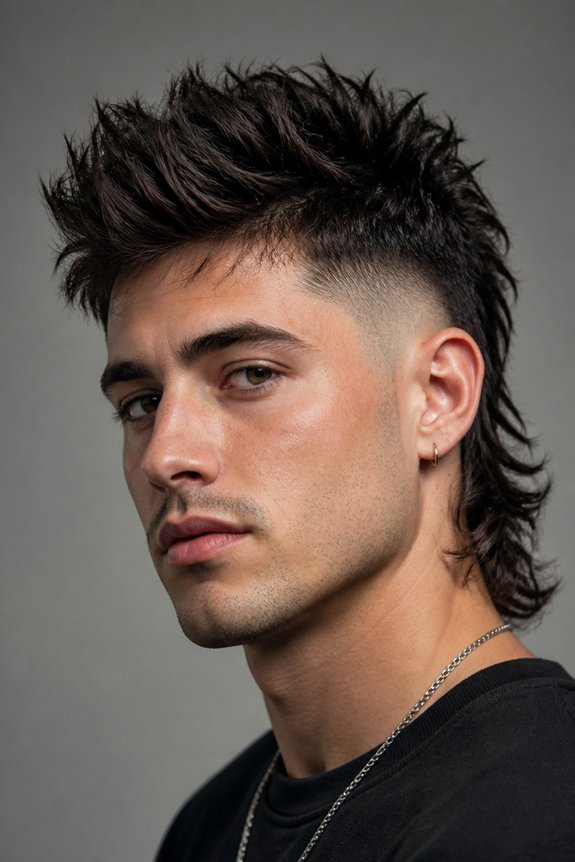
Want a cut that works for the office and the weekend? The spiky top mullet fade delivers exactly that. You get texture and volume where it matters, with clean faded sides that keep things sharp.
Your stylist will use texturizing shears to build separation between strands instead of making blunt cuts. This creates those spikes you’re after. Ask for the fade to start around mid-temple and drop down to skin level. That contrast between your voluminous crown and the tapered sides is what makes this cut stand out.
Keep a lightweight pomade or clay nearby. These products hold your spikes without flattening them down. You’ll need a trim every three weeks to keep the fade crisp and your spikes defined. The maintenance pays off when you see how sharp you look.
Neon Line-Work Mullet With Custom Design
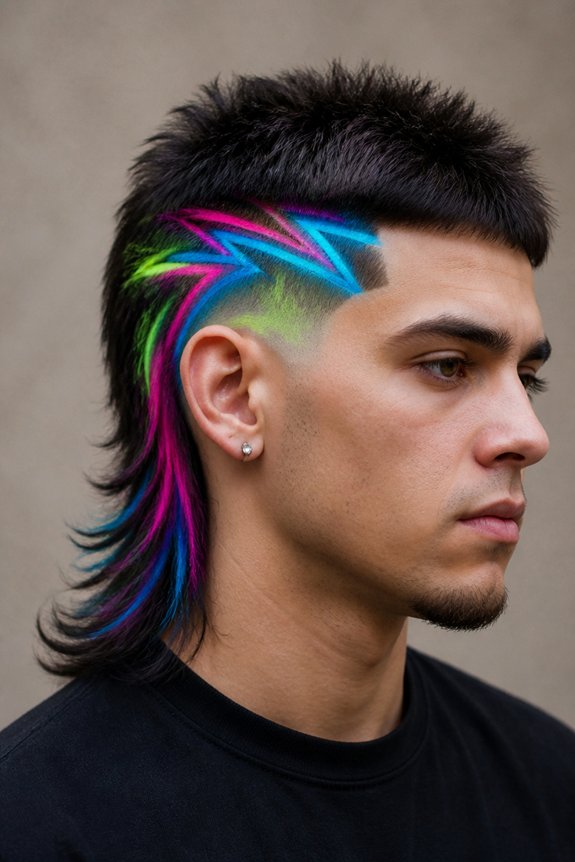
Want to turn your mullet into actual artwork? Custom line-work designs are the way to do it. Your barber uses precision stenciling and neon-colored clippers to create geometric patterns along the sides and back. Think sharp angles, lightning bolts, or abstract shapes that actually fit your face.
The magic happens through multiple passes with different guard lengths. Each layer adds depth and makes those lines pop. You’ll need to commit to touch-ups every two to three weeks since hair grows back and blurs your design.
Keep your investment sharp by using quality clippers like Andis or Wahl. Ask your barber about edge sharpeners for maintaining definition between visits. Good aftercare matters too. Proper washing and conditioning keep those neon colors vibrant way longer than if you just ignore them.
Also Read: 16 Mid Fade Haircut Ideas for Men
Also Read: 15 Low Fade Haircut Ideas for Men That Look Clean and Cool
How to Style and Maintain Your Mullet Fade
Want your fade to look fresh all week? Your daily routine matters just as much as that barber visit. Use a quality pomade or matte clay to keep those geometric lines sharp while adding texture to your longer back sections. Work the product through damp hair with your fingers, pushing from roots to ends.
Keep those edges crisp by getting trims every two to three weeks. This means hitting up your barber regularly to maintain clean lines around your temples and neckline. Between appointments, a clipper guard helps you tidy up any stray growth yourself.
Shampooing twice a week stops product from building up and dulling your custom design. Rinse with cool water to seal your hair cuticles and make that linework really pop. Don’t skip conditioning the longer mullet sections either, or you’ll end up with dryness and frizz that kills your styling definition.
Frequently Asked Questions
How Often Should I Get My Mullet Fade Trimmed to Maintain the Style?
One should visit a barber every 3-4 weeks to maintain a mullet fade’s sharp appearance. Regular trims preserve the fade’s clean lines, keep the top voluminous, and guarantee the back’s length remains intentional and stylish.
What Hair Products Work Best for Holding a Mullet Fade Throughout the Day?
Some believe pomades make hair greasy—quality formulas now provide strong hold without that shine. Matte clay, volumizing paste, and fiber-based products work best, offering all-day grip while maintaining the style’s clean, edgy aesthetic throughout daily wear.
Is a Mullet Fade Appropriate for Professional Workplace Environments?
A mullet fade’s appropriateness depends on workplace culture. Conservative industries like finance or law typically discourage this style, while creative fields may embrace it. Professionals should consider their specific office environment and industry standards before adopting this bold haircut.
Can I Get a Mullet Fade if My Hair Is Thinning or Receding?
A mullet fade can work for thinning or receding hair, though it requires careful consideration. Shorter lengths on top and sides minimize the appearance of hair loss while maintaining the style’s edgy aesthetic. Consulting a skilled barber is essential for best results.
How Long Does It Take to Grow Out a Mullet Fade Initially?
Growing out a mullet fade typically requires three to four months for ideal results. During this period, the sides remain faded while the back develops sufficient length and texture. Regular trims every four to six weeks maintain the style’s definition and shape throughout the growth process.
Conclusion
Mullet fades continue dominating men’s grooming trends. A 2023 barbering survey found 62% of stylists report increased mullet requests among ages 18-35. The style’s resurgence reflects broader fashion cycles favoring bold self-expression. Whether choosing subtle fades or statement designs, men embrace this cut’s versatility. Professional maintenance using quality products like pomades and texturizing creams guarantees longevity. The mullet fade represents more than nostalgia—it signals confidence in contemporary masculinity.