Walk into any barbershop these days, and you’ll spot it: the French crop. This cut has taken over for a reason. It flatters most face shapes, works with different hair types, and gives you that effortless-but-polished vibe.
The beauty of this style lies in its flexibility. You can go for a textured top with clean faded sides, or try a modern undercut version if you want something sharper. Some men love how low-maintenance it can be, while others use it as a canvas for more intentional styling.
There’s something satisfying about finding a haircut that actually fits your life.
Whether you’re after minimal fuss or a more refined look, the French crop adapts to what you need. The real fun part is discovering which of the many variations feels most like you.
The options genuinely are endless here. Seventeen different takes on this classic prove that one simple idea can branch out in countless directions.
All you need to do is find the one that clicks.
Classic French Crop: The Timeless Foundation
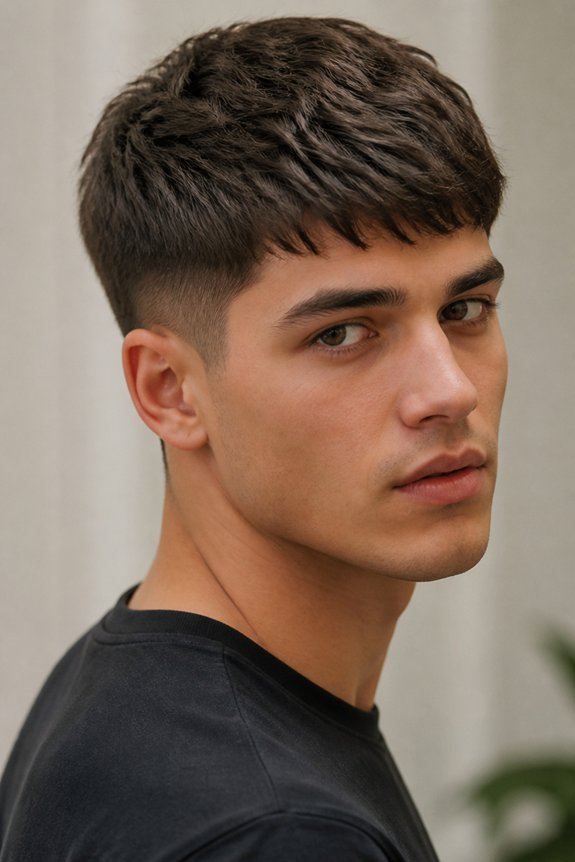
Want a haircut that looks sharp without demanding hours of styling time? The French crop might be your answer. This cut keeps your sides and back short and faded while leaving enough length on top to actually style.
Here’s what makes it work: your barber will use clippers to fade the sides down to skin level, then switch to scissors for the textured top. The front angles down slightly, which creates natural dimension on most face shapes. You’ll style it with a matte product like pomade or clay that gives you hold without that greasy shine.
This cut thrives on straight to wavy hair, so check if your texture matches. Plan for a trim every three to four weeks to keep that fade looking crisp. Think of it as the reliable foundation that adapts whether you’re heading to the office or grabbing drinks with friends.
Also read: 15 Low Fade Haircut Ideas for Men That Look Clean and Cool
Textured French Crop With Longer Top
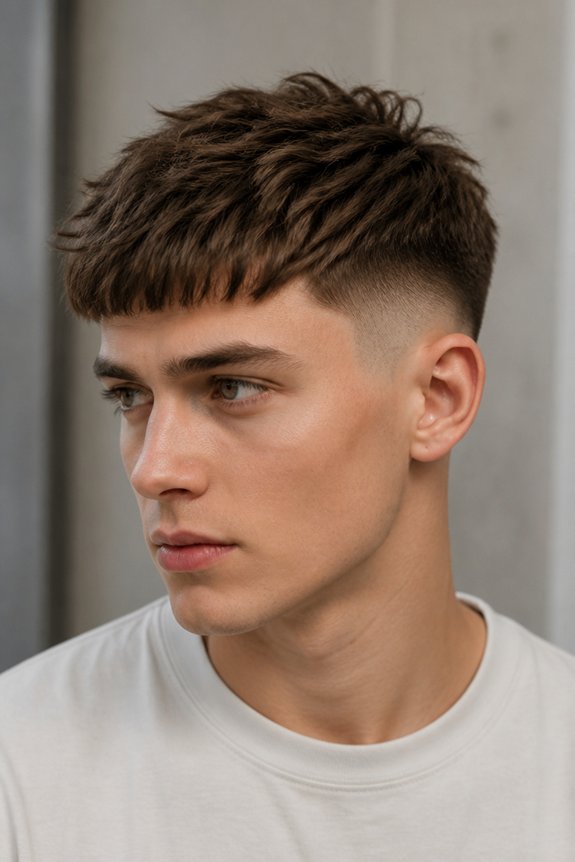
Want more styling flexibility without ditching the French crop you love? Try growing out the top to two or three inches while keeping the sides tight. You’ll get movement and dimension that transforms the whole look.
Here’s the key: ask your barber to point-cut and texturize the top instead of blunt-cutting it. This creates natural separation between strands so you get real volume, not just length. A lightweight styling cream works best because it gives you hold without making your hair feel stiff or heavy.
You’ll need trims every three weeks to keep the shape from getting messy. This maintenance keeps everything sharp and intentional. When you style it, work the product through damp hair and push strands backward and slightly upward. The result feels polished but still relaxed, perfect for work or casual settings.
Low Fade French Crop for Clean Lines
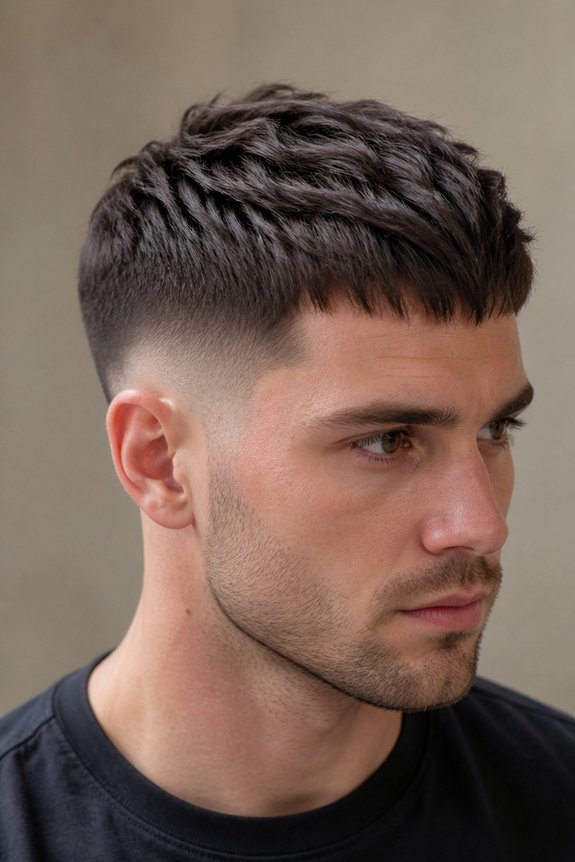
Want a sharper look that actually works with your face shape? The low fade French crop is your answer. You get clean, precise lines on the sides and back while keeping enough length on top to add texture and movement.
Here’s what makes it work: a quality clipper like Andis or Wahl blends shorter lengths smoothly into your longer top. You’re looking at two to three inches up front. Your barber gradually shifts between guard sizes so there are no hard lines. The result feels polished without looking overdone.
Styling is simple. Use a matte pomade or clay on damp hair and work it upward and outward. Skip anything shiny. You’ll get all-day hold that looks natural. To keep those clean lines sharp, book a trim every three to four weeks. That’s it.
French Crop With Hard Part
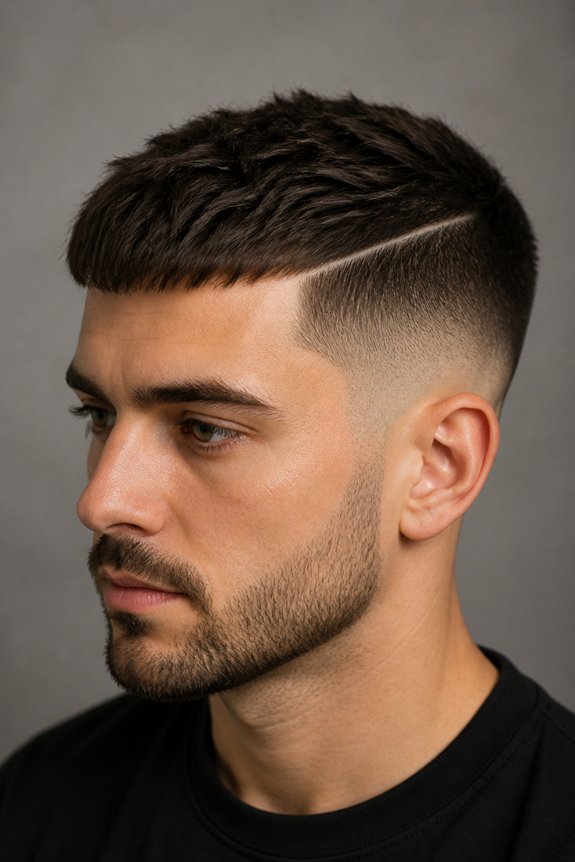
Want to take your French crop from casual to sharp? A hard part is exactly what you need. This clean line carved along your side creates serious definition and makes the whole style look intentional and polished.
Your barber will use a straight razor or clippers to cut that line right at skin level. It takes a steady hand, so find someone experienced with this technique. Once it’s done, you’ll notice how the crisp line draws your eye upward and really shows off the crop’s volume.
Styling is straightforward. Work pomade or clay into damp hair and comb it back with a bit of texture. The key is maintenance: get weekly trims to keep that line looking fresh and sharp. A lightweight spray like Oribe Superfine holds everything in place without making your hair feel heavy or stiff.
Also Read: 17 Medium Length Hairstyles for Men
Also Read: 16 Mid Taper Fade Haircut Ideas for Men
Messy French Crop: Minimal Styling Required
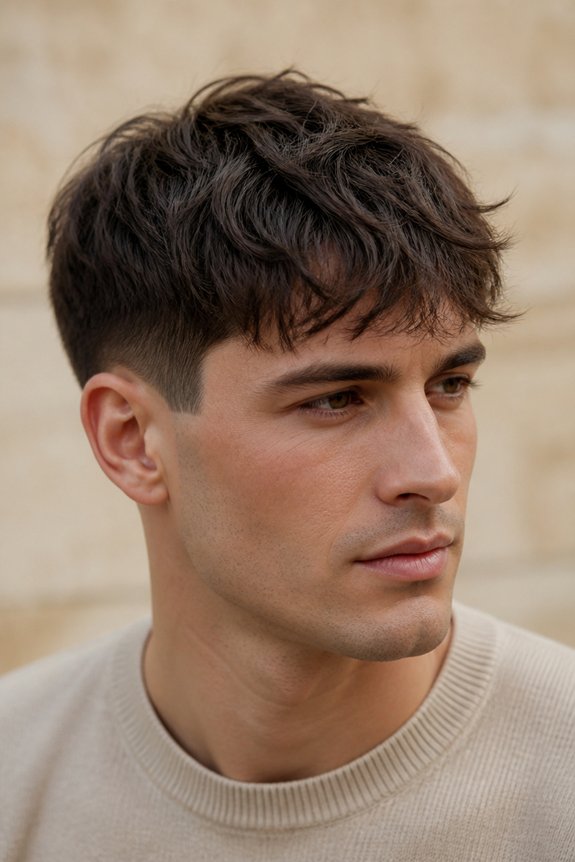
Does your hair have a mind of its own? The messy French crop works with that, not against it. You get a sharp look without spending time perfecting every strand.
Start with damp hair and grab a lightweight texturizing paste or matte clay. Work it upward with your fingertips, focusing on creating separation between strands. You’re aiming for that controlled, textured vibe, not a polished finish.
The best part? You only need a trim every four to six weeks. This cut adapts to most hair types and face shapes, so it works whether you have thick waves or fine straight hair. You get the polish of good grooming without the daily effort or overthinking it.
Bearded French Crop
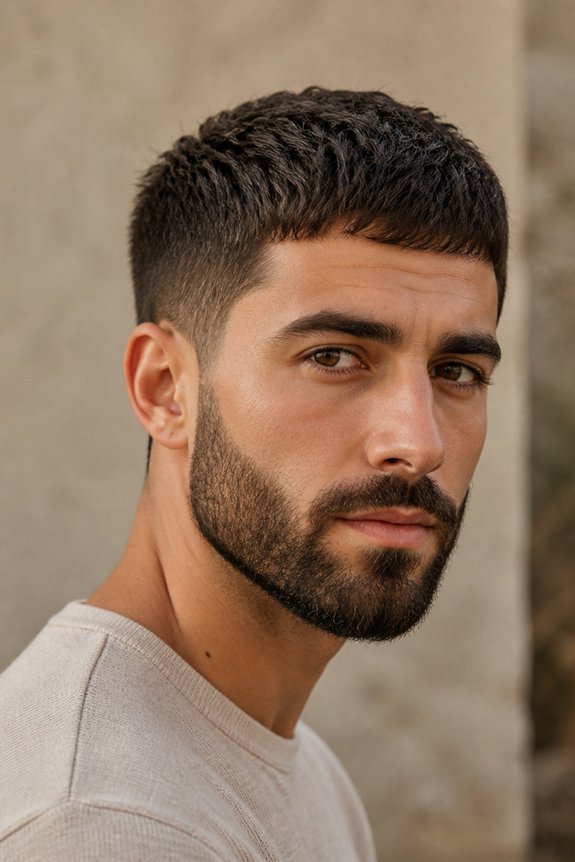
Want to look sharp without spending hours on styling? A beard paired with a French crop does exactly that. The facial hair softens the cropped top’s hard lines while keeping everything looking intentional and polished.
Your beard needs real maintenance though. Invest in a quality beard oil to keep whiskers soft and defined. Trim it weekly with precision clippers so your jawline stays visible and clean. Keep the top around two to three inches long and textured, not slicked back.
Here’s the trick: apply matte pomade to damp hair. This gives you natural texture without that greasy, overdone look. The beard anchors the whole style, so don’t skip the grooming routine. Consistency is what makes this look work.
Also Read: 16 Mid Fade Haircut Ideas for Men
Also Read: 15 Low Fade Haircut Ideas for Men That Look Clean and Cool
Blonde French Crop for Contrast and Dimension
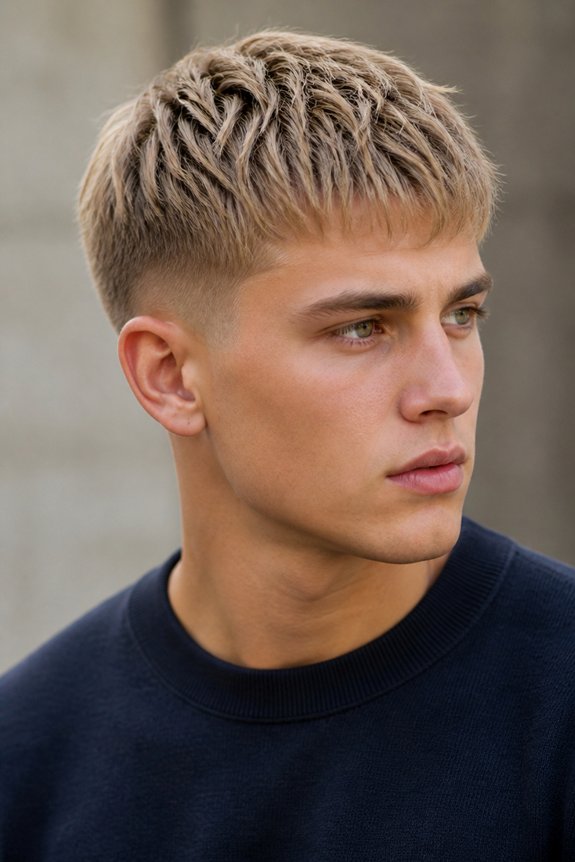
Want a French crop that really stands out? Going blonde is your answer. The lightened tones instantly make the style pop, and darker roots add depth so it doesn’t look flat or one-dimensional.
Use quality products like Wella or Schwarzkopf to get consistent results. Timing matters since bleach can damage your hair if left too long. Cooler blonde shades work better on most skin tones than brassy yellows.
Here’s the trick: don’t bleach everything uniformly. Leave slightly darker sections around the sides and crown. This creates texture and movement while framing your face better.
Keep your blonde looking fresh with a toning shampoo once a week. Get trims every three weeks to maintain that sharp, crisp definition the style needs. You’ll find the daily styling effort is minimal once you’ve got the cut right.
Curly Hair French Crop: Working With Texture
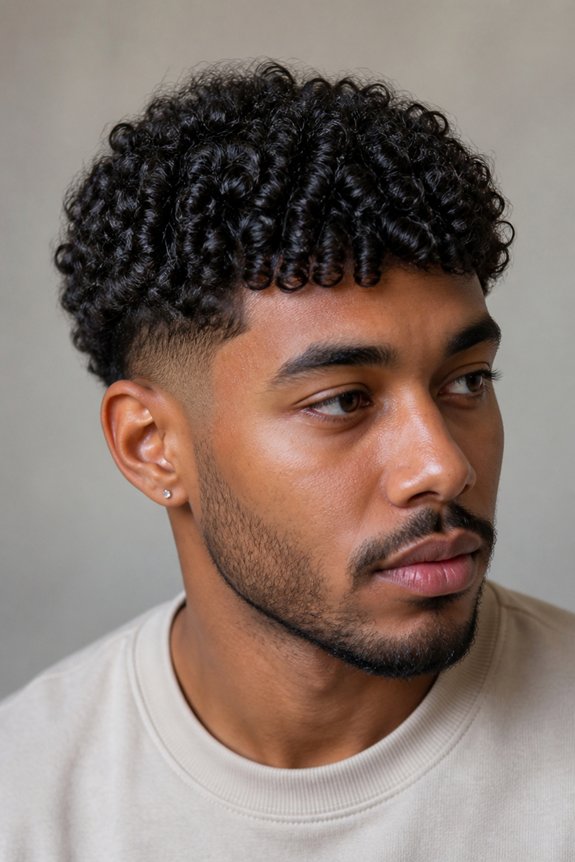
Think curly hair and French crop don’t mix? They actually do. Your curls give you natural volume at the crown, which is exactly what this cut needs to look sharp. The trick is letting your texture work for you instead of fighting it.
When you visit your stylist, have them cut your hair while it’s dry. Wet curls shrink unpredictably, and you don’t want surprises once you style at home. Grab a lightweight curl cream or texturizing paste instead of heavy pomades. Heavy products flatten everything you’re trying to showcase.
Here’s your styling routine: work product into damp hair with a scrunching motion, then use a blow dryer on low heat with a diffuser. This keeps your curls defined while maintaining the crop’s clean lines. Aim for a trim every three to four weeks so your cut stays intentional and proportioned.
French Crop Undercut: Sharp Definition
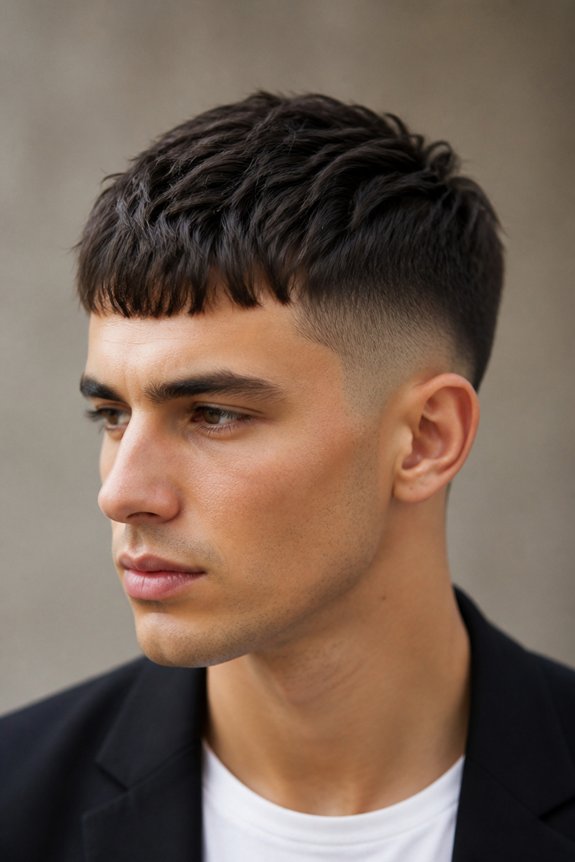
Want a haircut that actually turns heads? The French crop undercut delivers serious style with those crisp, clean lines. You get short textured hair on top that transitions into faded or shaved sides, creating real visual punch.
Here’s what makes it work: your barber uses precise clipper guards to create that sharp separation. The top stays around two to three inches long, giving you room to style it different ways. Matte clay or fiber paste works best since it adds texture without that greasy shine.
You’ll need to commit to maintenance every two to three weeks if you want those lines to stay razor-sharp. It’s the price of keeping this look polished and put-together.
The styling part is simple. Work product through damp hair using your fingertips and push everything upward for volume. You end up with something that feels modern and edgy but still refined, perfect if you want definition without looking over the top.
Sleek French Crop: The Gentleman’s Approach
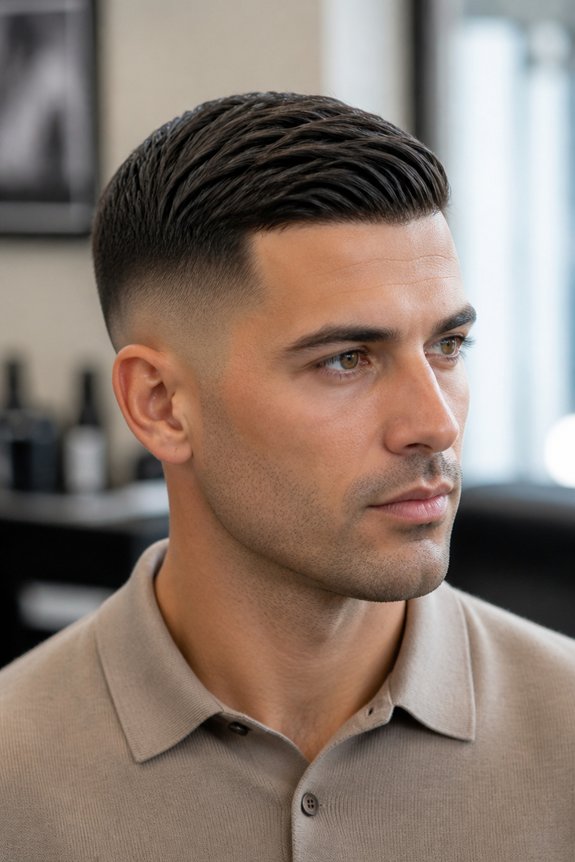
Want a haircut that looks polished without trying too hard? The sleek French crop is your answer. You’ll get clean lines and controlled texture with hair that’s slightly longer on top, around two to three inches, then tapers smoothly down the sides and back.
Styling is simple once you know the trick. Grab a lightweight pomade or matte clay and apply it to damp hair. Brush everything upward and back with a fine-tooth comb. You don’t need much product, which keeps your hair feeling natural.
The key difference here is the blending. Your barber should create a soft, gradual fade instead of a harsh line between lengths. This works better for most face shapes and looks less severe.
You’ll need a quick trim every week or so to keep things sharp. Daily styling takes just a few minutes once you get the technique down. It works perfectly whether you’re heading to the office or out casually.
Taper Fade French Crop: The Gradual Blend
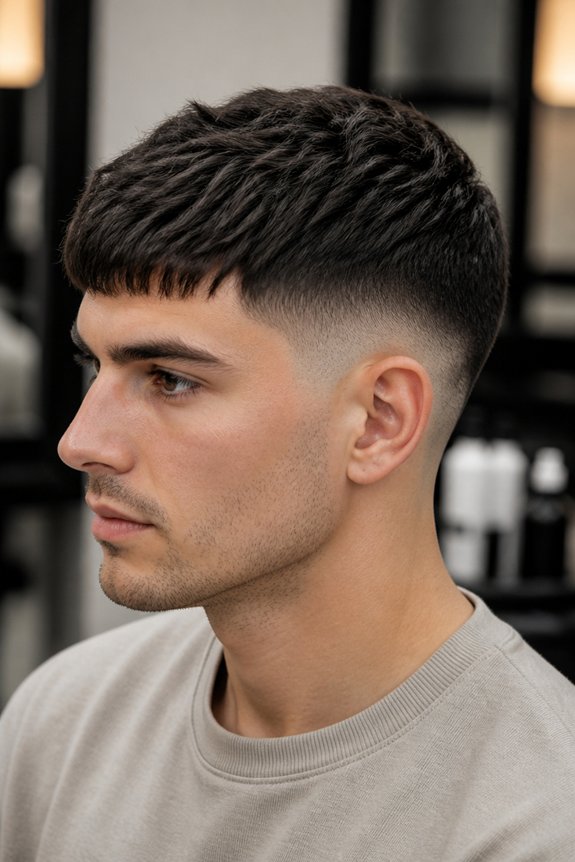
Want a haircut that looks sharp without being too extreme? A taper fade French crop gives you that smooth, polished look. Instead of your hair dropping off suddenly at the sides, it gradually gets shorter as it moves down your head.
Your barber will keep the top longer (around two to three inches) and use multiple clipper grades to blend everything seamlessly. This takes patience, but it’s worth it. The result? A cut that works with most face shapes and looks professional in any setting.
Here’s what makes styling easy. You can slick it back for a formal vibe or mess it up for something casual. Just grab a quality pomade or styling cream to keep everything in place. Hit up your barber every three weeks to keep those clean lines sharp and maintain that gradient effect.
French Crop With Skin Fade and Line Designs
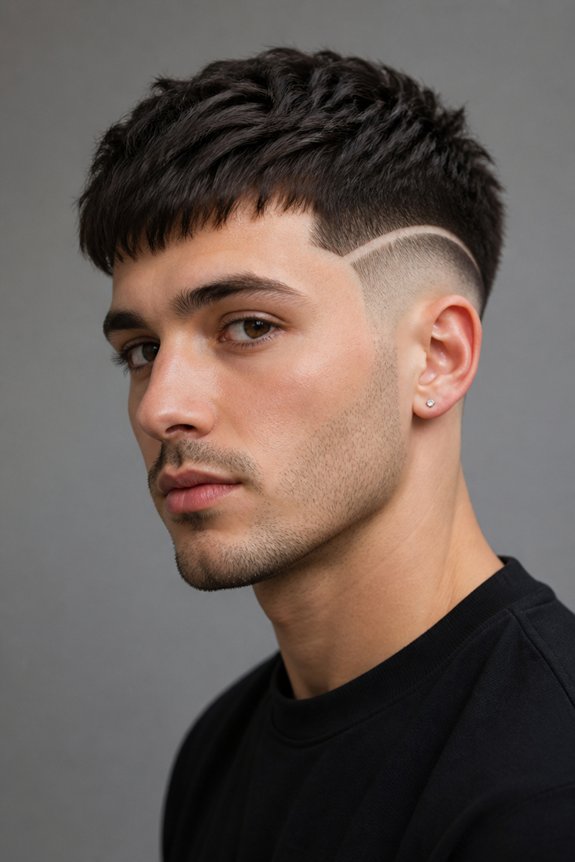
Want a haircut that really stands out? A skin fade French crop is your answer. This style goes beyond subtle. You get completely bare sides and back paired with textured hair on top, creating serious contrast and edge.
The look requires commitment though. You’ll need to visit your barber every two to three weeks to keep those sharp lines crisp. During styling, pomade or clay works best to define that textured top and maintain the modern vibe.
Here’s where it gets fun: line designs. Many barbers add geometric patterns along your nape or temples. These carved details transform the cut from standard to signature. It’s a way to show off your personal style and let your barber flex their artistry.
This cut suits you if you’re ready for something bold and contemporary. The maintenance is real, but so is the impact. You’ll definitely turn heads.
Thick Hair French Crop: Volume Management
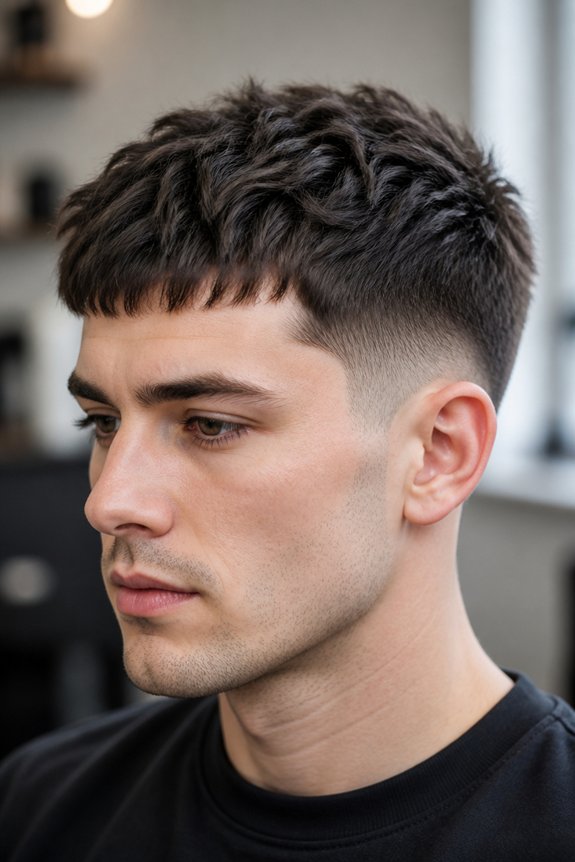
Got thick hair and worried your French crop will look like a helmet? You’re not alone. The key is removing bulk without losing the length and movement that makes this cut work.
Ask your barber to use texturizing shears instead of regular clippers on top. This thins out density while keeping your hair looking natural and textured. Blow dry your damp hair before styling to create flow and prevent that dense, flat appearance. Trim every three to four weeks to keep the shape sharp.
When it comes to products, skip the heavy creams. Lightweight pomades and matte clays are your friends because they won’t weigh down your strands. Use less product than you think you need. Work it through the fringe with your fingers, then style systematically. This stops clumping and spreads everything evenly without looking overdone.
Fine Hair French Crop: Building Dimension
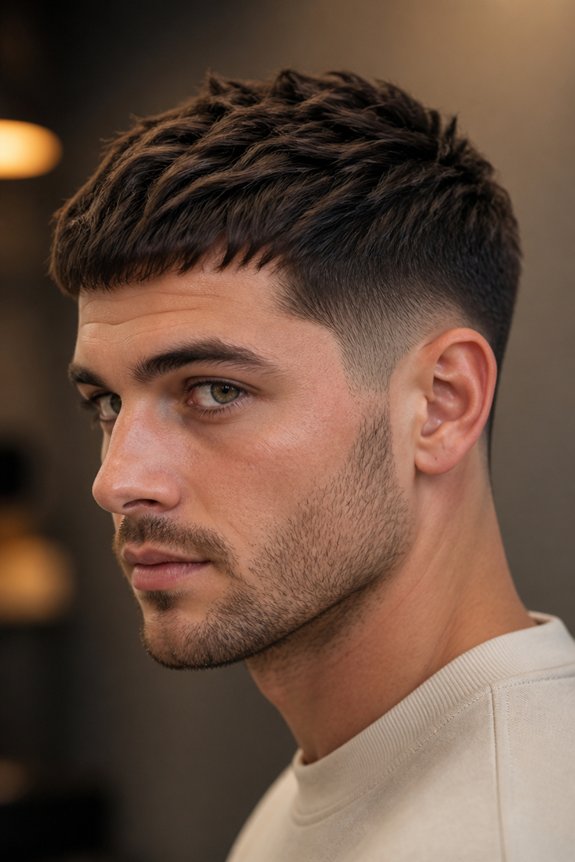
Does your fine hair always look flat no matter what you do? The secret isn’t cutting away more hair. Instead, you need to work with what you have by creating texture and movement.
Ask your stylist for choppy, disconnected layers throughout the crop. Short layers on top do the heavy lifting here, giving you dimension without that weighed-down feeling. Skip the pomade and reach for a texturizing clay instead. It grips your hair without flattening it out.
Your blow-dry technique matters just as much as the cut. Blow upward into the roots to maximize volume from the start. Between washes, a lightweight sea salt spray keeps texture and grip going strong. Stick with matte finish products like American Crew Fiber, which deliver style without adding shine that makes thin hair look even thinner.
Grey French Crop: Embracing Salt-and-Pepper
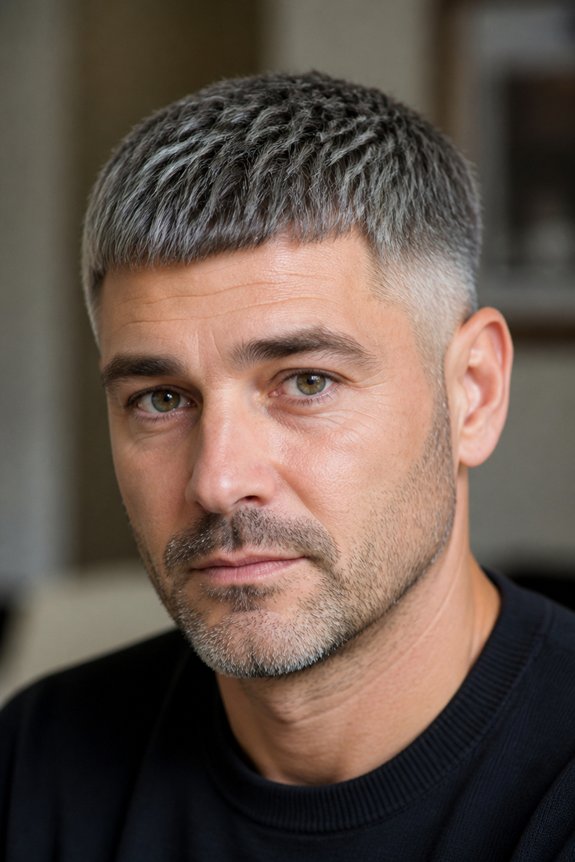
Thinking about letting your grey show? A French crop actually makes this easier than you’d expect. Your salt-and-pepper tones create natural texture without needing any color work. The short crown and tapered sides let that silvering shine through beautifully.
Keep your grey looking fresh with a purple-toning shampoo like Kérastase Fusio-Dose or Osmo Silverising Shampoo. These neutralize any yellowing that sneaks in. Pair it with a texturizing paste for medium hold to define your tousled crown while keeping the sides sharp.
You’ll want trims every three to four weeks because grey hair texture shifts as it comes in. Let your barber leave slightly longer pieces on top so those natural color variations actually stand out. This makes the whole look feel intentional, not like you’re compromising on style.
French Crop Pompadour Fusion: Extra Height

Want serious height without looking like you’re trying too hard? The French crop pompadour fusion gives you that effortless drama. You’re basically combining the textured, short sides of a French crop with real volume on top.
Your barber will layer the longer hair on top so it moves naturally and separates easily. Ask them to keep about 2-3 inches of length up there for the best lift. The sides stay tight, so everything focuses on that crown height.
Getting the styling right makes all the difference. Start with a lightweight volumizing mousse on damp roots to build that foundation. Then use a medium-hold pomade to define your texture without flattening things down.
When you blow-dry, push the heat upward and backward using your fingers. This builds volume that actually lasts through your day instead of falling flat by noon. It’s a small technique change that really matters.
High Fade French Crop for Modern Edge
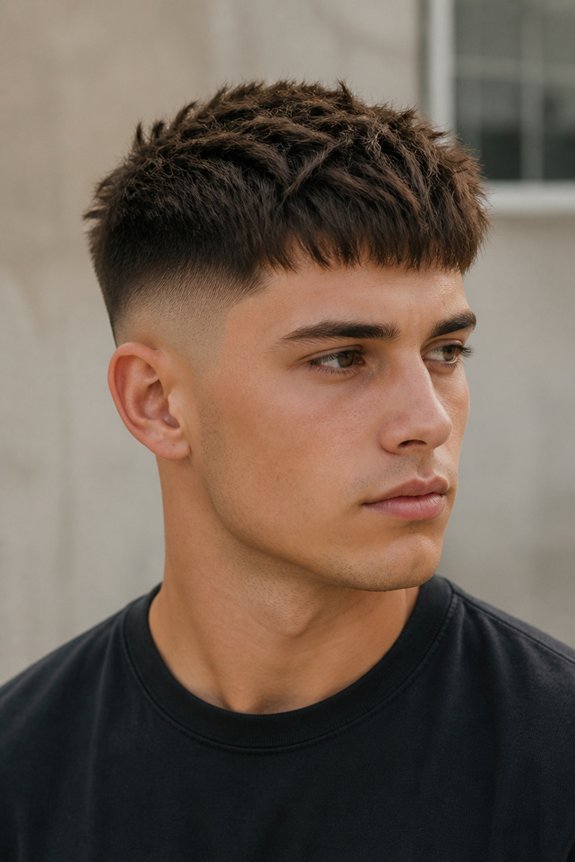
Want a haircut that looks sharp without requiring daily styling effort? The high fade French crop might be your answer. You get a clean, faded undercut paired with textured styling on top. The result is serious contrast that catches attention.
Here’s what makes it work. Your barber fades the sides and back low, then tapers everything upward for clean lines. The top stays longer and textured, giving you that modern crop vibe. You’ll need a lightweight pomade or clay to bring out the texture without making your hair feel stiff. American Crew Fiber and similar products do the job perfectly.
The best part? You can style it polished for work or keep it casual on weekends. Just run some product through with your fingers and you’re done. Expect to visit your barber every three to four weeks to keep those edges crisp and fresh. Your face shape doesn’t matter either. This cut complements most guys and instantly adds edge to your overall look.
Frequently Asked Questions
How Often Should I Get My French Crop Haircut Trimmed to Maintain the Style?
A French crop requires trimming every three to four weeks to maintain its distinctive shape and clean lines. Regular visits to a barber guarantee the style remains sharp and the textured top stays properly blended with the shorter sides.
What Hair Products Work Best for Styling and Holding a French Crop Throughout the Day?
Like Odysseus steering through treacherous waters, one must select the right tools for styling success. Pomades, matte clays, and lightweight waxes work best, offering strong hold without excessive shine while maintaining the style’s textured, tousled appearance throughout the day.
Can I Transition From Another Hairstyle to a French Crop, and How Long Does It Take?
One can shift to a French crop from most hairstyles. The timeline typically requires 4-8 weeks of regular trims every 2-3 weeks, allowing the stylist to gradually shape the hair into the desired textured, voluminous style.
Is the French Crop Suitable for All Face Shapes, or Are There Limitations?
Like Michelangelo selecting marble, one must choose wisely. The French crop suits most face shapes, particularly rectangular and oval faces. However, those with round or square faces may find it less flattering, as it emphasizes width rather than length.
How Do I Communicate the Exact French Crop Style I Want to My Barber?
One should bring reference photos showing the desired length, texture, and fade style. Clear communication about specific measurements, styling preferences, and maintenance requirements guarantees the barber delivers the exact French crop vision desired.
Conclusion
The French crop remains timeless across centuries of barbering evolution, adapting seamlessly to modern preferences. Whether choosing classic texture or contemporary fades, men can achieve sophisticated versatility through this foundational style. Using quality pomades and regular trims every three weeks maintains sharp definition. The French crop’s enduring appeal stems from its balance between effortless charm and polished refinement, making it an accessible yet distinguished choice for any man seeking dependable style.