Braiding hair is one of those skills that looks complicated but becomes intuitive with a little practice. The real foundation is not technique but preparation, since clean, lightly conditioned hair holds tension far better than freshly washed or oily strands.
Starting with a simple three-strand braid builds the muscle memory needed for everything else. Keeping consistent tension throughout each pass is what separates a polished result from a loose, uneven one.
French and fishtail braids follow the same core logic but introduce new sections gradually. Most beginners rush this stage, which causes the braid to lose shape before reaching the ends.
Patience matters more than natural talent here. A few slow, deliberate practice sessions will produce better results than dozens of rushed attempts on uncooperative hair.
Also read: How to Style Curly Hair: Tips for Defined Frizz-Free Curls
Prepare Your Hair for Braiding
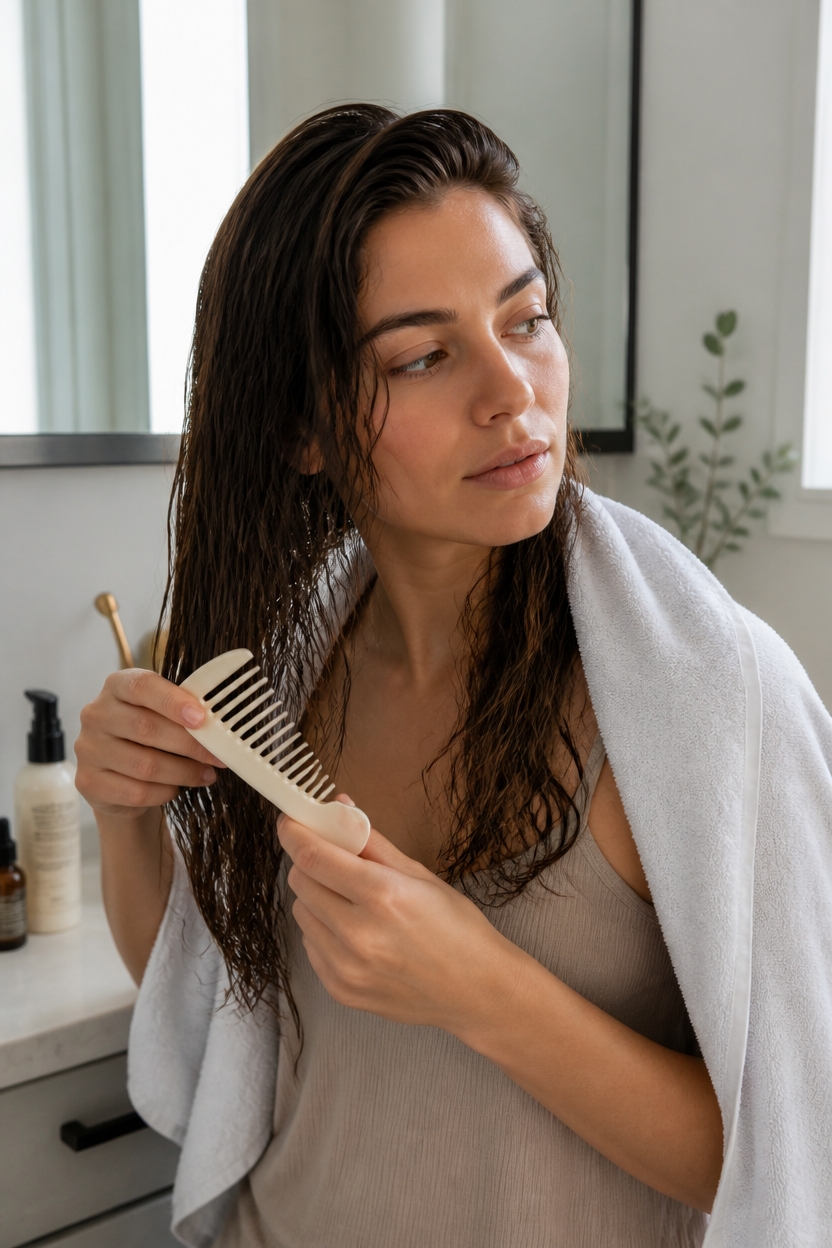
Before attempting any braid style, the hair must be properly prepared to guarantee exceptional results and longevity.
Start by washing with a sulfate-free shampoo and conditioning treatment designed for your hair type. Towel-dry gently without aggressive rubbing.
Apply a leave-in conditioner or detangling spray to damp strands, working through from mid-length to ends.
Blow-dry completely for smoother braiding. Use a paddle brush to eliminate all knots systematically.
For added grip and texture, spritz lightweight texturizing spray throughout.
Section hair into workable portions using clips.
Consider applying a small amount of edge control to your hairline for polished, frizz-free sections.
These preparation steps guarantee tangle-free, manageable hair ready for any braiding technique.
Master the Three-Strand Braid
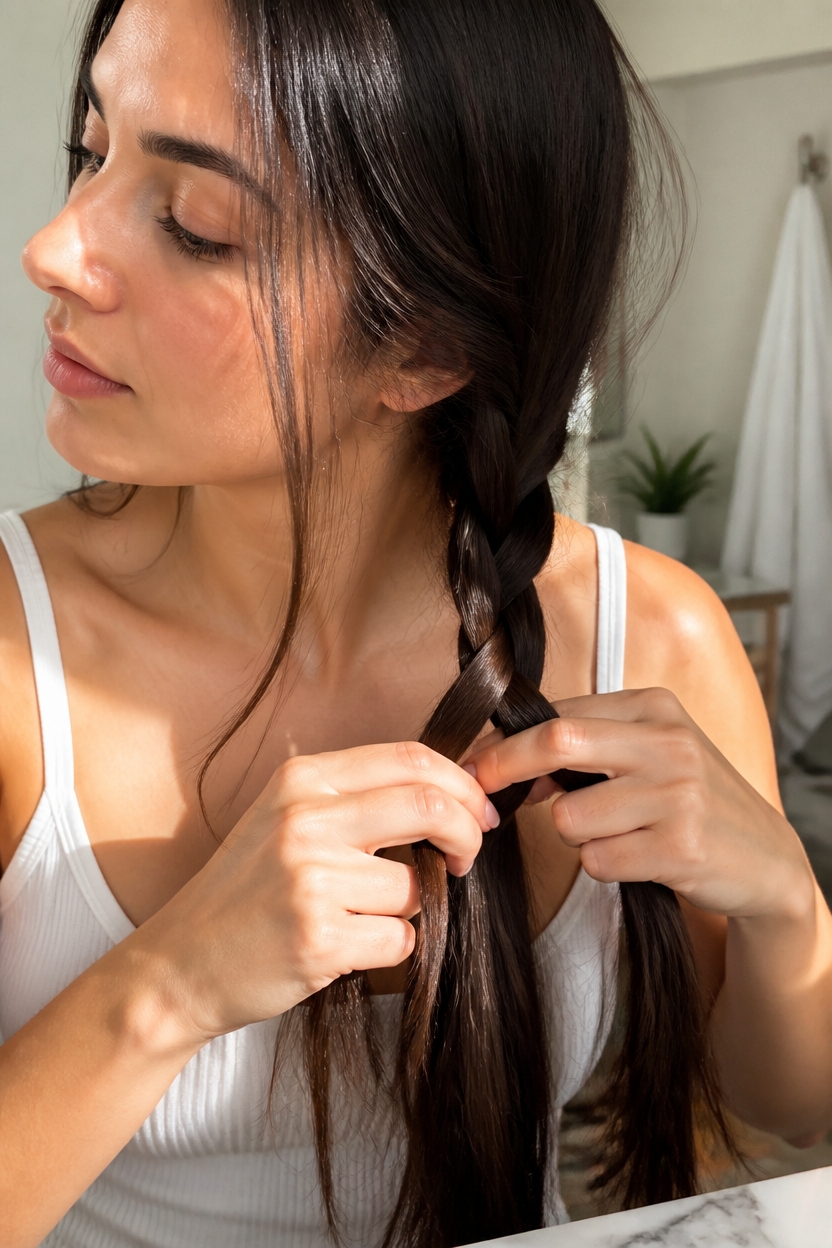
The foundation of all braid mastery begins with understanding the three-strand technique, the building block from which countless styles emerge.
Beginners should divide clean, detangled hair into three equal sections at the crown. Cross the right section over the center, then the left over the new center, maintaining consistent tension throughout. This alternating pattern creates the classic braid structure.
Professional stylists recommend using lightweight leave-in conditioner to reduce frizz and improve grip. Keep sections evenly sized for balanced, polished results. The braid should feel snug but not uncomfortably tight against the scalp.
Practice accelerates muscle memory. Most learners master basic execution within five to ten attempts.
As confidence builds, experimenting with thicker or thinner sections opens possibilities for varied textures and visual interest, transforming foundational technique into personal style expression.
Create a French Braid
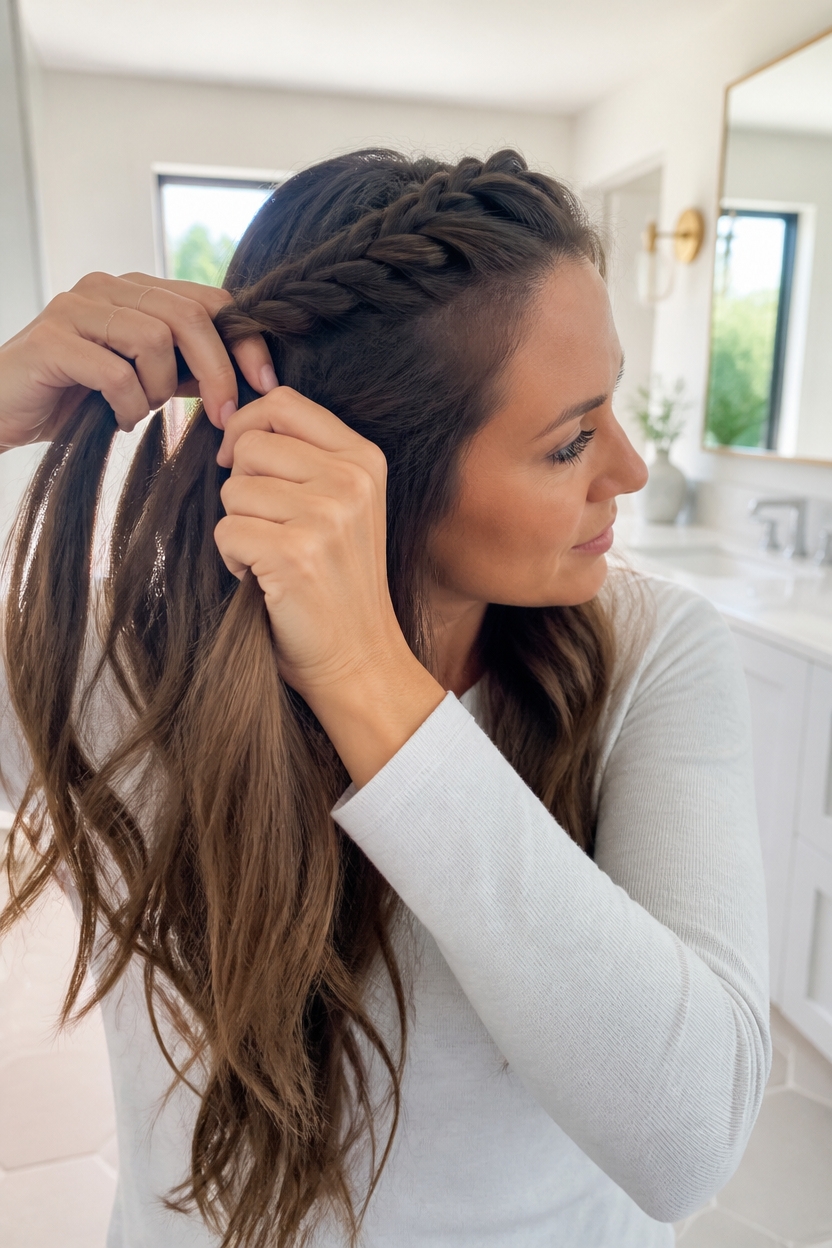
Once the three-strand foundation becomes second nature, French braiding takes technique deeper by incorporating new hair throughout the process. This advanced method creates an elegant, polished look that works for casual and formal occasions.
Begin at the crown with three small sections. Cross the right strand over the center, then the left over center, mirroring the basic braid. The key difference: add new hair to each side section before crossing. Gradually incorporate more strands as you work downward, creating that signature dimensional appearance.
Keep tension consistent and even. Loose sections appear sloppy; overly tight braids risk hair breakage. Use a lightweight smoothing cream to tame flyaways and enhance definition throughout the braid.
Practice makes perfect. Most beginners master French braiding within two weeks of regular practice.
Try a Fishtail Braid
Fishtail braids deliver an intricate, textured look that appears complicated but relies on a simpler two-section technique than traditional braids.
Begin with two equal sections at the crown. Take a thin strand from the outer edge of the left section and cross it over to join the right section. Repeat on the opposite side, alternating continuously.
The crossing motion creates those signature diagonal weaves resembling fish scales. For best results, use a lightweight texturizing spray before braiding. This enhances grip without weighing hair down.
Gently pull sections apart post-braid to amplify dimension and volume.
Fishtail braids work beautifully on second-day hair, which provides natural texture and hold. Secure the finished braid with clear elastics for a polished appearance that works for casual or formal occasions alike.
Troubleshoot Uneven, Loose, and Slipping Braids
Even experienced braiders encounter common issues that compromise braid integrity and appearance. Uneven sections create a lopsided look that detracts from the overall style. To prevent this, braiders should divide hair into equal parts before beginning.
Loose braids slip downward throughout the day, requiring constant adjustment. Securing the base with elastic bands keeps braids firmly in place. Tension consistency matters, so maintain equal pressure on each section.
Slipping occurs when hair lacks grip or styling product. Texturizing spray adds friction between strands, improving hold considerably. Apply product to damp hair before braiding for ideal results.
Practice strengthens muscle memory and coordination. Recording yourself braiding reveals technique flaws. Review footage to identify where tension falters.
Tighter braids demand more skill but deliver professional results that last throughout the day.
Finish Your Braid Without Elastic Damage
After perfecting tension and securing your braid’s foundation, the final step demands equal attention. Traditional elastic bands can damage hair by creating stress points and breakage. Instead, consider silk scrunchies or coated hair ties that distribute pressure evenly across strands without snagging delicate ends.
For a polished finish, secure the braid’s tail using a small elastic, then wrap a thin section of hair around the base to conceal it completely. This technique eliminates visible elastics while protecting hair integrity.
Experts recommend applying a lightweight leave-in conditioner to braid ends before securing, creating a smoother surface that resists breakage.
For special occasions, decorative bobby pins or hair clips offer damage-free alternatives. Threading ribbon through braids provides both aesthetic appeal and gentle hold without elastic tension.
Choose Braid Styles for Your Hair Type
Different hair textures require different braiding approaches. Fine, delicate hair needs lightweight styles like Dutch braids that won’t cause breakage or tension alopecia.
Thicker, coarser textures can handle more complex patterns, including fishtail or four-strand braids without strain.
Curly and textured hair benefits from protective braiding methods that maintain moisture and definition. Looser braids preserve curl patterns while fighting frizz.
Box braids work exceptionally well for kinky textures, offering longevity and low manipulation.
Straight hair accepts intricate designs beautifully. Crown braids and elaborate cornrows showcase precision and dimension on sleek strands.
Wavy hair sits between categories, tolerating both delicate and structured styles effectively.
Matching braid complexity to hair type prevents damage while maximizing aesthetic potential and styling longevity.
Reduce Frizz and Refresh Braids Over Multiple Days
Most braids can easily last three to seven days with proper maintenance and strategic revitalizing techniques. Applying dry shampoo to the roots absorbs excess oil and restores volume between washes. A light hairspray mist controls flyaways without creating stiffness or buildup.
Silk pillowcases reduce friction that causes frizz during sleep, preserving braid definition overnight.
For rejuvenating tired braids, gently misting with water and smoothing with a small-tooth comb reactivates texture. Adding decorative elements like small clips or threading thin ribbons through sections instantly refreshes appearance.
Moisturizing sprays designed for braided styles prevent dryness without weighing down strands. This approach extends wear time while maintaining polished, intentional styling throughout the week.
Prevent Breakage and Scalp Tension Between Styles
While maintaining braids over several days keeps styles looking fresh, giving hair adequate rest between braiding sessions prevents cumulative damage that weakens strands and causes scalp discomfort. Hair needs recovery time to redistribute natural oils and repair micro-damage from tension.
Space braiding sessions at least one week apart for ideal scalp health. During rest days, use lightweight leave-in conditioners like SheaMoisture Raw Shea Butter to nourish stressed areas. Gentle detangling with wide-tooth combs prevents breakage when removing old braids.
Scalp massages with fingertips increase blood circulation and reduce inflammation from tight styles. Regular scalp stimulation strengthens follicles and improves overall hair resilience.
Vary braid placement locations with each new style to distribute tension evenly across the scalp.
Frequently Asked Questions
How Long Does It Take to Learn Braiding Skills for Beginners?
Beginners typically develop basic braiding competency within two to four weeks of consistent daily practice. Mastering complex techniques like fishtail or Dutch braids generally requires six to twelve weeks. Natural aptitude and practice frequency greatly influence individual learning timelines.
Can I Braid My Hair if It’s Wet or Should It Be Completely Dry?
Like a freshly wrung sponge, wet hair becomes too slippery and fragile for effective braiding. Experts recommend waiting until hair is completely dry or slightly damp, ensuring better grip, control, and braid longevity while minimizing breakage and frizz.
What Products Help With Grip and Control While Braiding Slippery Hair?
Texturizing sprays, dry shampoo, and anti-frizz creams enhance grip when braiding slippery hair. Lightweight oils and sea salt sprays provide traction without weighing strands down. One should apply products sparingly to avoid excess buildup that compromises braid longevity.
How Often Should I Wash My Hair After Wearing Braids?
As the saying goes, “an ounce of prevention is worth a pound of cure.” One should wash hair every two to three weeks while wearing braids, then deep condition thoroughly after removal. This prevents buildup, scalp irritation, and maintains hair health during the protective styling period.
Are There Age-Appropriate Braiding Styles for Children Versus Adults?
Yes, braiding styles differ by age. Children typically wear simple, playful braids like pigtails or basic three-strand braids for practicality and comfort. Adults often choose sophisticated styles such as French braids, fishtail braids, or intricate updos that reflect personal aesthetic preferences and professional settings.
Conclusion
Braiding transforms everyday hair into polished styles. Studies show that 68% of people who master basic braiding techniques report increased confidence in their appearance. With consistent practice using quality products like leave-in conditioners and flexible hair ties, anyone can achieve salon-worthy results at home. The journey from beginner to skilled braider takes dedication, but the versatility gained makes every effort worthwhile for long-term hair health and styling freedom.