The mirror reveals what a good haircut can do. The mid taper fade has become a go-to choice for men because it actually works. Whether you’ve got thick hair, thin hair, a round face, or sharp angles, this cut adapts to what you’re working with. The real magic is in how it blends shorter sides with length on top, creating clean lines that feel both polished and effortless.
Finding your perfect version comes down to a few key decisions. How short do you want the sides? Should your top be dramatically longer or just moderately fuller? These choices matter because they change how the cut looks and how much effort you’ll need to style it each morning. A pomade will give you shine and hold, while clay or texture paste keeps things more relaxed and natural looking.
There’s something satisfying about a fade that suits your lifestyle. If you’re someone who likes minimal fuss, a simpler taper with a shorter top takes less maintenance. Meanwhile, if you enjoy experimenting with different looks, a longer top and deeper fade opens up more styling possibilities.
The sixteen approaches we’re exploring show just how flexible this cut really is. What matters most is understanding how each element works together. Fade depth, top length, and your choice of products all affect the final result.
Once you see how these pieces fit together, picking the right variation becomes much easier. That’s when you’ll truly understand why the mid taper fade has earned its place as a modern classic.
Classic Short Crop Fade
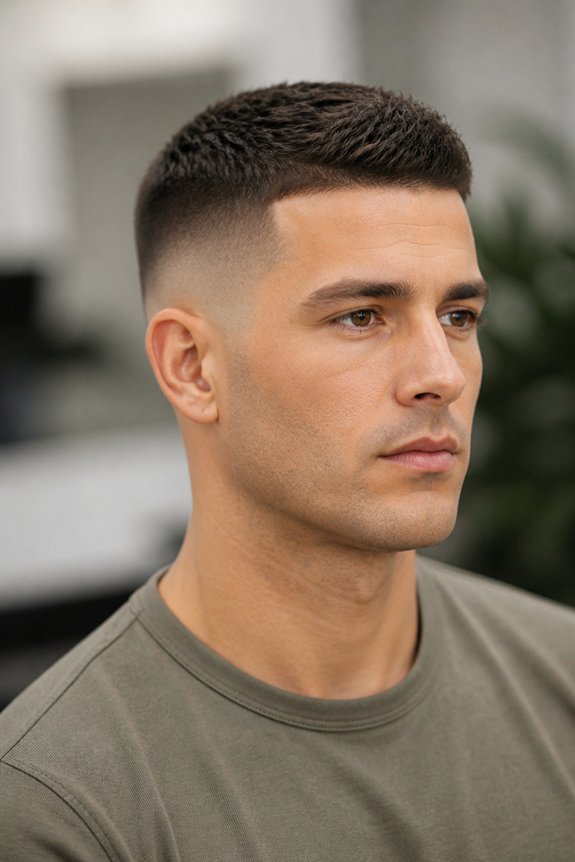
Want a haircut that works for almost any face shape? The crop fade might be your answer. You get closely cropped hair on top, usually one to two inches, that gradually fades into shorter sides and back. This smooth transition creates dimension without looking choppy or disconnected.
Your barber will use different clipper guard sizes to build that signature gradient. They start with a longer guard on top and work down with progressively shorter ones. Ask for products like pomade or matte clay to style it. These give you texture and hold without looking stiff.
Keep this cut sharp by visiting your barber every three to four weeks. The clean lines deserve maintenance to stay looking fresh. You’ll find this style works in the office, at a casual hangout, or anywhere in between.
Also read: 15 Low Fade Haircut Ideas for Men That Look Clean and Cool
Textured Top Fade
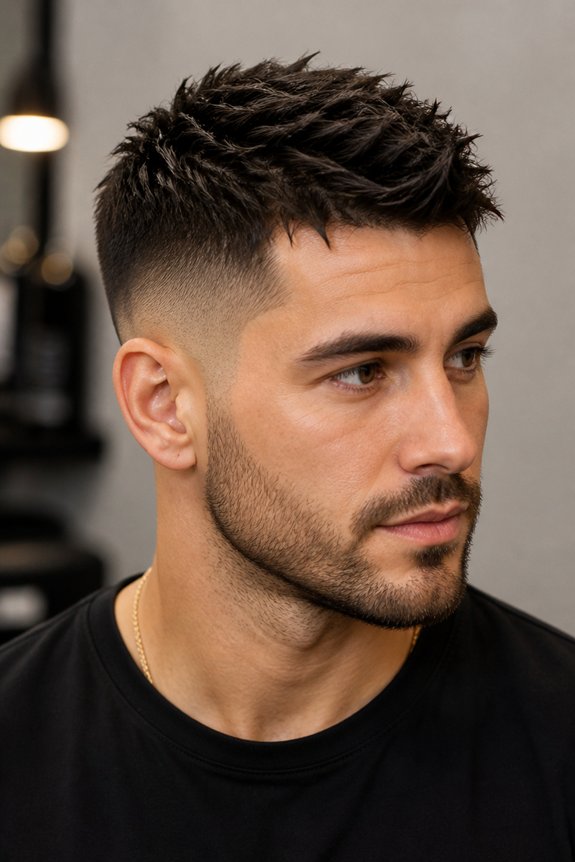
Want a style that looks effortless but actually takes some skill? The Textured Top Fade is your answer. You keep about one to two inches of length on top with tapered sides, then layer in shorter pieces at the crown to build movement and dimension.
Here’s what makes it work: blow-dry your hair while applying pomade or matte clay, working the product through with your fingers. This separates each strand and gives you that natural, lived-in texture. The shorter layers do the heavy lifting for volume, so you don’t need a ton of length to pull it off.
This cut suits almost any face shape and hair type. You just need to hit your barber every three weeks to keep those clean lines sharp. The best part? It works whether your hair is straight, wavy, or curly, as long as you embrace what you naturally have instead of fighting it.
Also Read: 17 Medium Length Hairstyles for Men
Also Read: 16 Mid Taper Fade Haircut Ideas for Men
Slicked Back Look
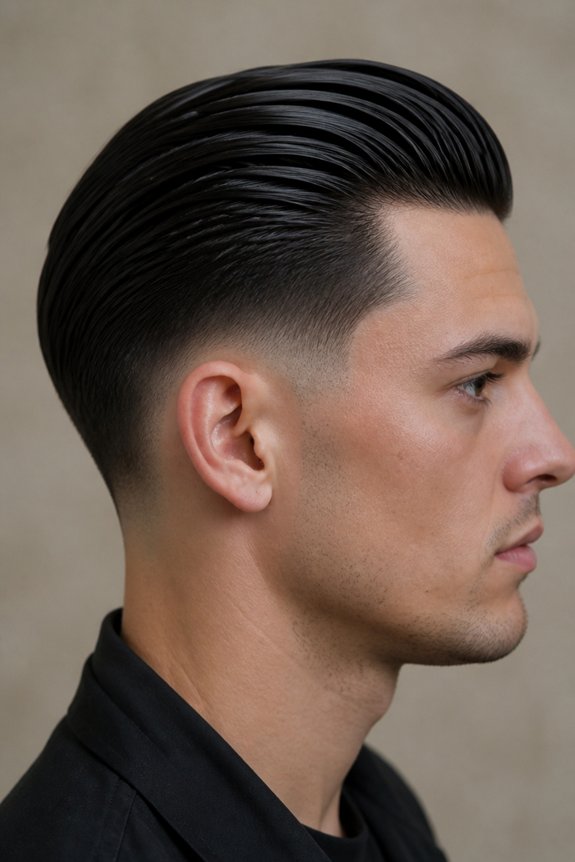
Want a style that looks sharp without being fussy? The slicked-back look is your answer. Start by combing your hair straight back and upward while it’s still damp. A mid taper fade gives you the clean foundation this style needs to really shine.
Work a strong-hold pomade or gel through your hair from roots to ends. Use steady strokes and a fine-tooth comb to smooth out flyaways and create crisp lines. The trick is keeping volume at your crown while everything else stays sleek and polished.
Stay on top of maintenance to keep this look fresh. Get weekly trims so your edges stay sharp and your fade stays blended properly. A light spritz of hairspray after styling locks everything in place without making your hair stiff or crunchy.
This style works everywhere, from the office to casual hangouts. Grab quality pomades that won’t leave buildup. Your hair will thank you, and you’ll spend less time fixing bad hair days.
Messy Quiff Style
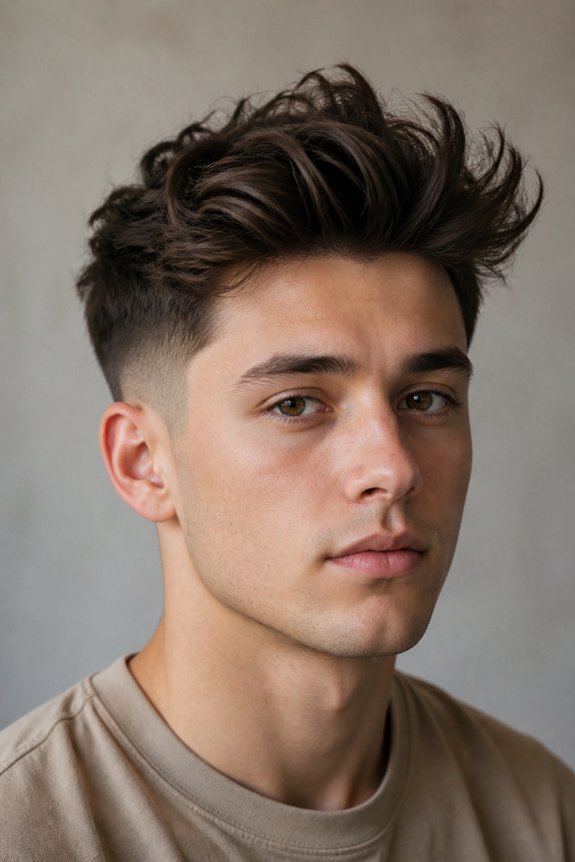
Messy Quiff Style
Want a hairstyle that looks effortlessly cool without trying too hard? The messy quiff is your answer. You get texture and movement on top while keeping the sides clean with a mid fade.
Start with damp hair and work in a matte pomade or clay. Brush everything backward and upward, then mess it up a bit on purpose. That intentional tousle is what makes it work. Your matte product choice keeps you from looking greasy, which matters way more than you’d think.
This style actually works for most hair types and face shapes. The beauty is that it looks put-together while still feeling relaxed. You’re getting that approachable confidence without spending hours perfecting every strand.
Undercut Evolution
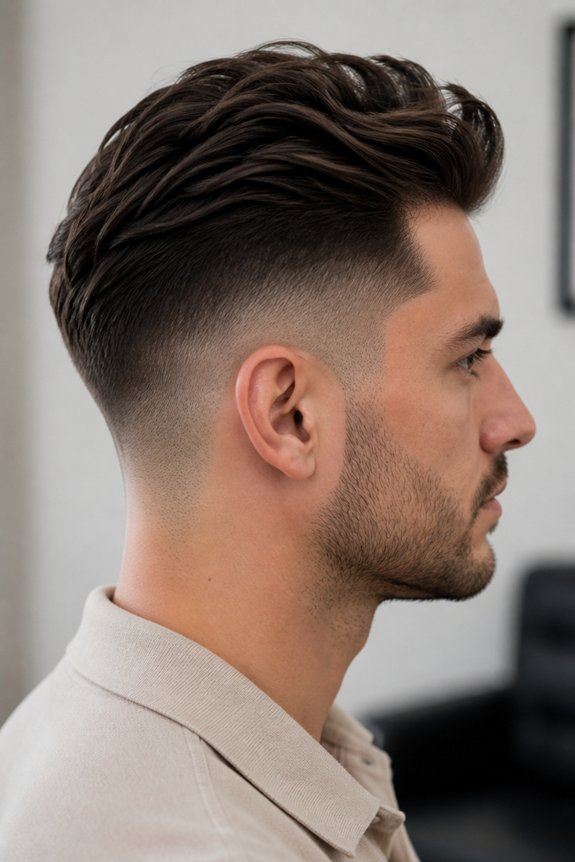
Undercut Evolution
Want a haircut that really stands out? The undercut takes everything bold about a mid fade and cranks it up. You get dramatically short sides paired with noticeably longer hair on top, creating serious visual contrast that catches attention.
This style shines if you have thick or textured hair. The length difference gives you room to work with and shows off natural texture beautifully.
Ready to style it? You’ll need a texturizing pomade or matte clay to keep things looking sharp. Apply product to damp hair so it doesn’t flatten out. This keeps your sides crisp while maintaining volume on top.
The beauty here is flexibility. You can slick it back for a polished look, tousle it for something casual, or go full volume depending on where you’re headed.
A mid taper fade pairs perfectly with this cut. Instead of harsh lines between lengths, you get gradual blending that softens the overall vibe. You keep that modern edge and clean definition without the abruptness of a traditional undercut.
Curly Texture Fade
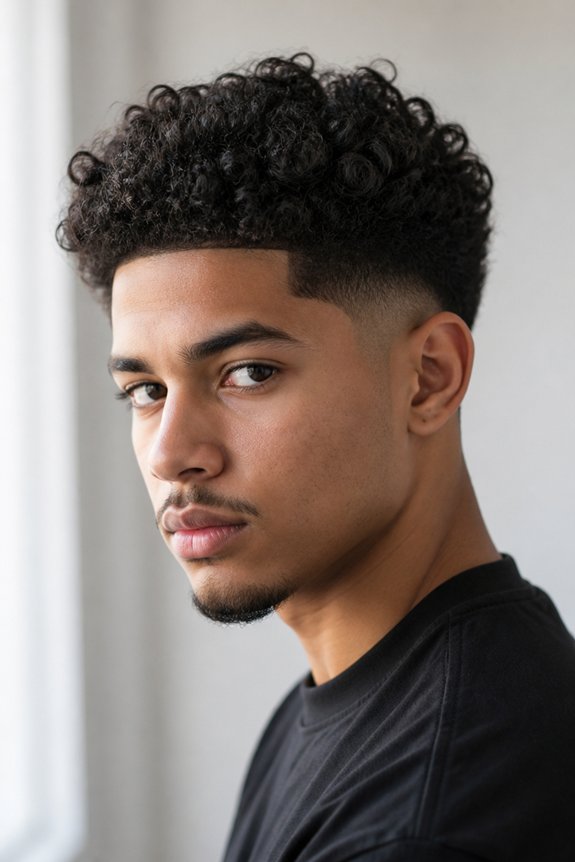
Want your curls to actually stand out instead of blend in? A mid taper fade is your answer. The contrast between your tapered sides and textured top creates that dimension straighter hair just can’t pull off.
Here’s what makes it work: your curl definition becomes the star when everything else is clean and minimal. Keep your top longer so those curls have room to do their thing. Trim every three to four weeks to maintain sharp lines on the sides while letting that texture flourish up top.
The right product makes all the difference. Apply a lightweight curl cream to damp hair and you’ll enhance your natural wave pattern without flattening it. Skip heavy products that weigh you down. Finish with a light hold pomade for control and you’re set for the day without spending time styling every morning.
Also Read: 17 Low Taper Fade Haircuts for Men
Also Read: 17 French Crop Hairstyles for Men
The Pompadour Approach
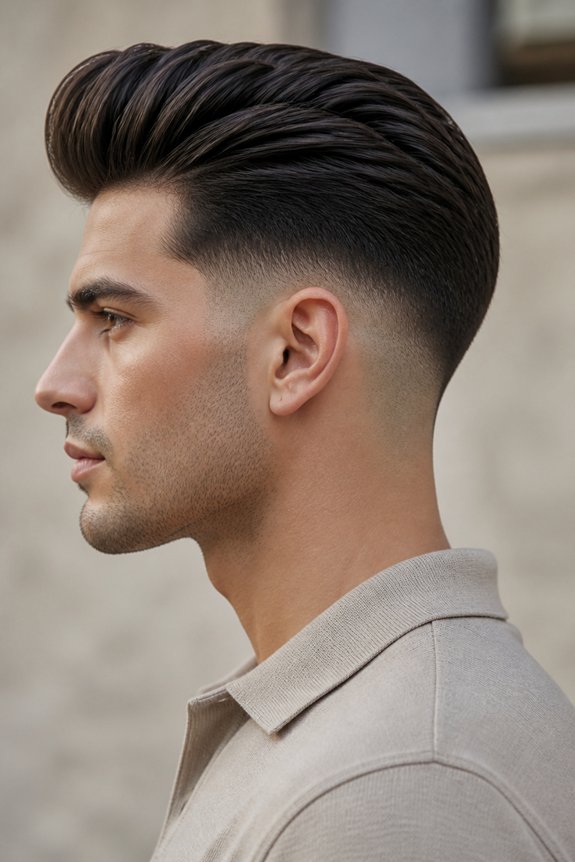
Want a haircut that looks sharp without screaming “high maintenance”? The pompadour fade might be your answer. You’ll need about three to four inches on top, with sides that gradually fade down to skin. It’s a look that works because it balances height with clean lines.
Getting the volume right is half the battle. Grab a volumizing shampoo and a lightweight pomade so your hair lifts without feeling greasy. Products like American Crew Fiber give you that texture without weighing you down. The key is using just enough product to shape without stiffening everything up.
Your barber needs to nail the precision here. Ask for a side part to show off the pompadour’s shape, and keep that fade sharp for real contrast. Hit the chair every three to four weeks so you don’t end up with that awkward in-between phase where nothing looks quite right.
This style actually works for most face shapes. If you have a rounder face, the height helps elongate it. Broader features? The structured fade balances things out nicely. You get something polished and flexible enough to dress up or down.
Buzz Top With Gradual Fade
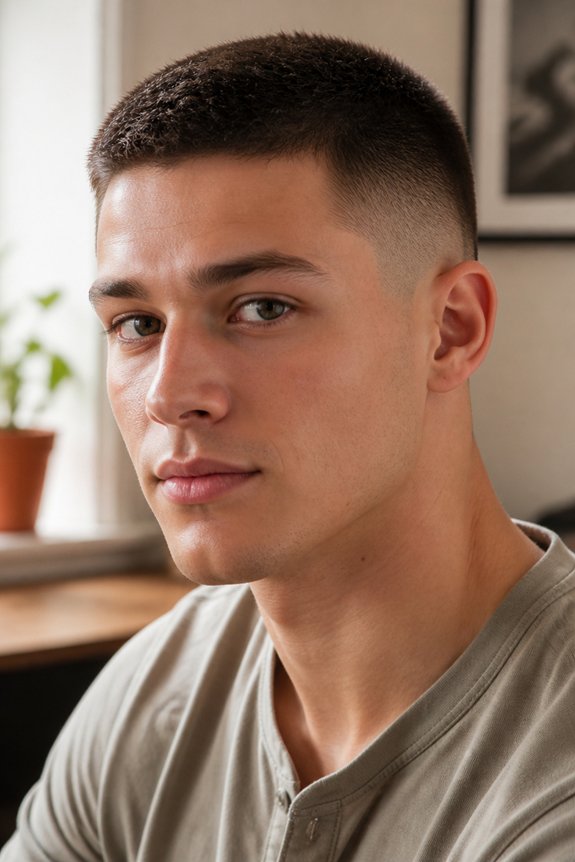
Want a sharp look that doesn’t demand hours of upkeep? The buzz top with gradual fade is your answer. You get short clipped hair on top (around two to three inches) that smoothly transitions into shorter sides without any harsh lines.
Here’s what makes it work: your barber uses different clipper guard sizes to blend everything seamlessly. They start with a longer setting near your temples and gradually go shorter as they move down toward your neck. This keeps things looking polished while staying super easy to maintain.
Styling is refreshingly simple. A tiny bit of light pomade or matte cream is all you need to add texture. Skip heavy products that’ll flatten your hair. This cut plays well with most hair types and face shapes.
One bonus? It looks good even when it’s growing out. You won’t wake up looking unkempt after a few weeks. Just schedule a touch-up whenever you feel like refreshing it.
Also Read: 15 Low Fade Haircut Ideas for Men That Look Clean and Cool
Side Part Definition
Side Part Definition
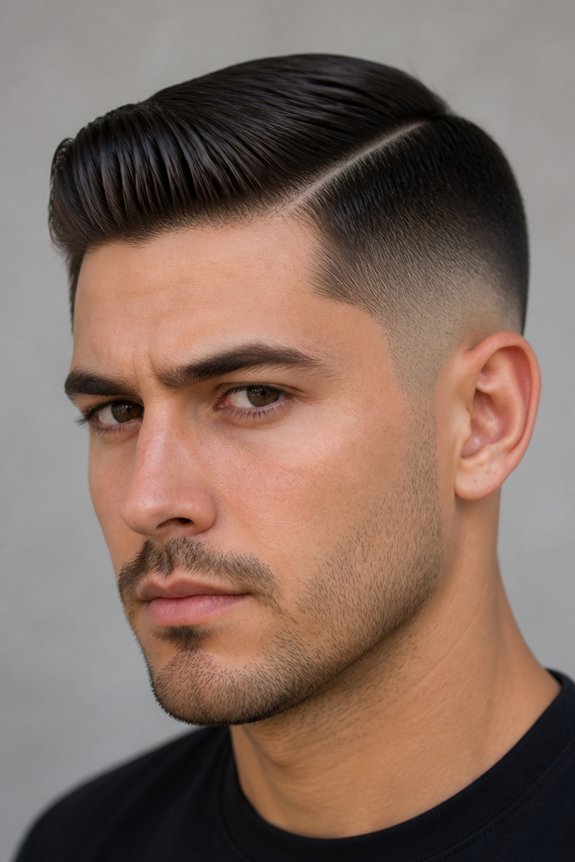
Want a haircut that looks sharp and polished without trying too hard? The side part with a mid taper fade is your answer. Your barber will create a clean line from your temple upward, then use that part as a design element that separates your longer hair on top from the gradually shortened sides.
Here’s what makes styling this cut easy. A medium-hold pomade or matte clay gives you textured definition without making your hair look greasy. Apply it to damp hair and direct your strands toward the part for movement that actually looks intentional. You’ll get crisp definition every time without the stiff, overdone appearance.
The fade is what ties everything together. Your barber blends from about half an inch on the sides up to fuller length on top, creating natural balance. Come back every three weeks to keep that part sharp and prevent the whole style from getting fuzzy and undefined.
Spiky Fringe for Edge
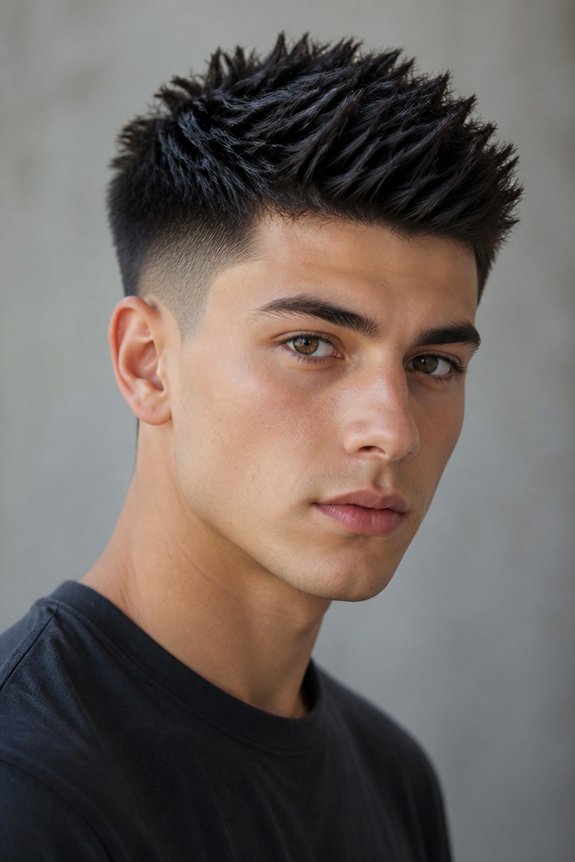
Spiky Fringe for Edge
Think the fade alone feels a bit safe? A spiky fringe brings attitude while keeping that clean, tapered foundation you love. You’re basically taking everything sharp about the fade and adding textured, upright bangs that move and demand a little product.
The secret is mixing up the lengths across your fringe. This creates depth and keeps your fade looking crisp at the same time. You want matte pomade or clay based products, not anything shiny. Work it through damp hair with your fingertips, pushing upward to get that natural separation you’re after. The real magic happens when you contrast the fade’s precision with the fringe’s intentional messiness.
Square or angular faces pull this off best. You’ll need a trim every three weeks to keep those spiky textures looking fresh and defined. It’s the perfect balance if you want edge without sacrificing versatility in different settings.
Long Top Short Sides
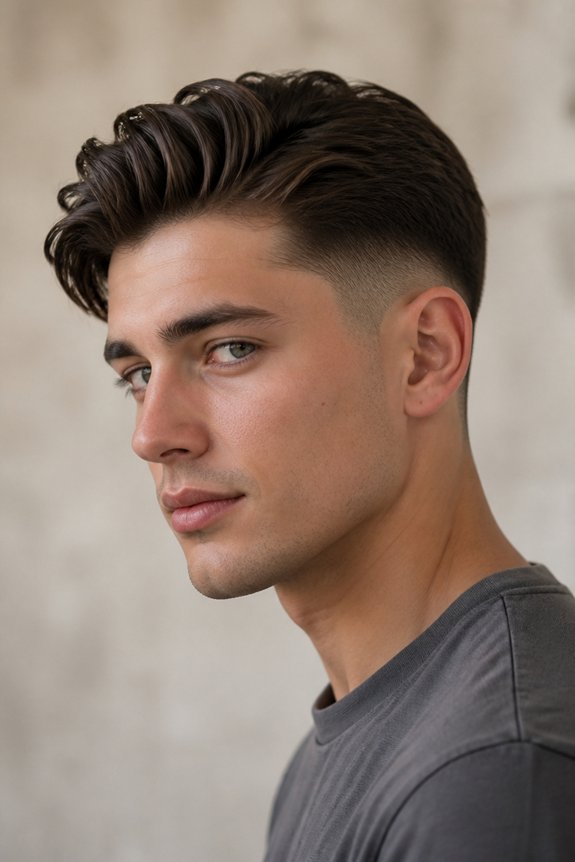
Want a look that’s sharp and modern? Try the long top short sides cut. You get length up front where it matters, while the sides stay clean and faded. It’s the perfect balance of style and edge.
Here’s what makes it work. Your barber tapers the sides carefully so they blend smoothly into the longer hair on top. There’s no harsh line, just a clean transition. Ask for clippers on the sides and scissors work on top for that polished finish.
Styling is where you make it your own. Grab a matte pomade or clay and work it through the longer sections. Push your hair forward, to the side, or mess it up a bit. The choice is yours. A light hold keeps everything in place without looking stiff or greasy.
Keep up with trims every three to four weeks. The fade fades back in, and you want to catch that before the top gets too long and loses its shape. Regular maintenance is what keeps this cut looking fresh and intentional, not just grown out.
Crew Cut Refined
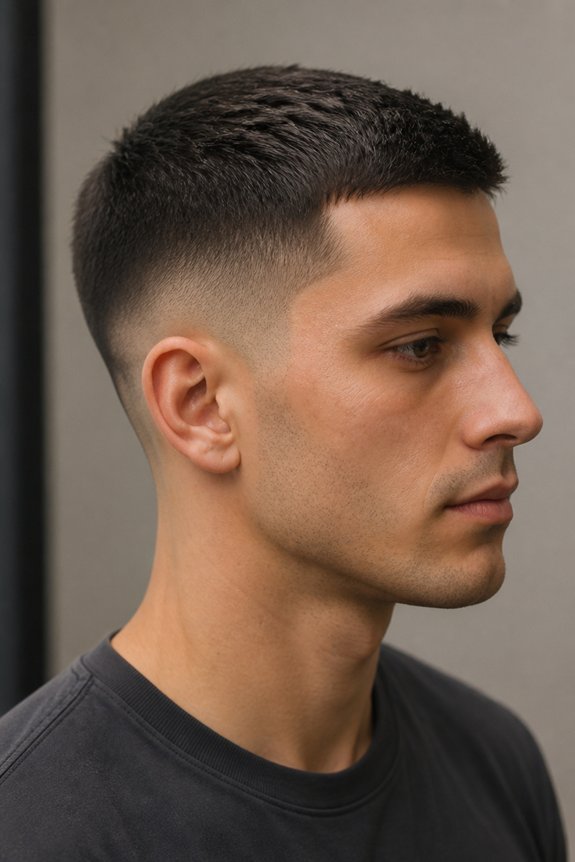
Want a haircut that works for your busy life? The crew cut refined is your answer. Your barber fades the sides down to a quarter-inch while keeping the top full and textured, usually one to two inches long.
You’ll need a trim every two to three weeks to keep those clean lines sharp. Grab a matte-finish pomade like American Crew Fiber and work it through damp hair, pushing everything back. The whole styling process takes about 30 seconds.
The key to nailing this look? A smooth fade. Your barber blends the sides and top so well that the transition flatters almost any face shape. This cut proves you don’t need complicated styling to look polished and put-together.
Textured Fringe Style
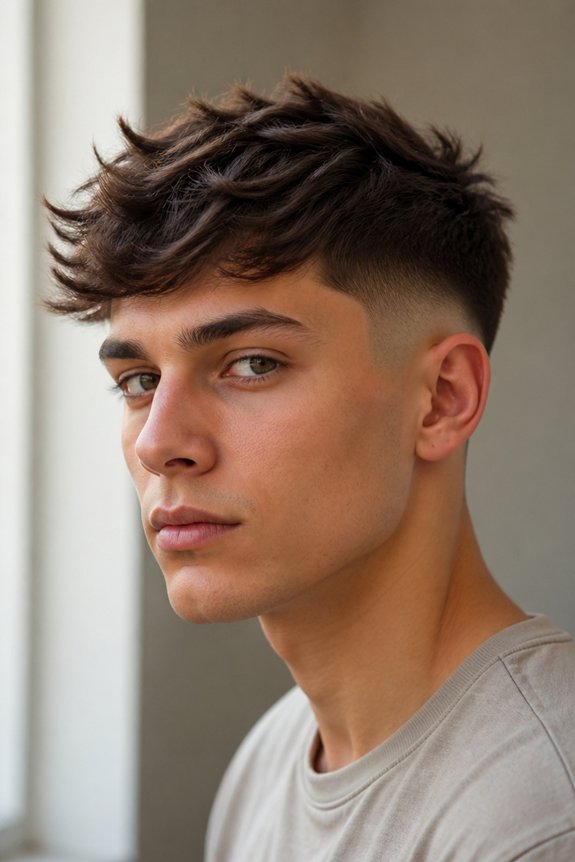
Want a haircut that looks polished but not overdone? The textured fringe is your answer. You get longer hair on top (around two to three inches) with a mid fade on the sides and back. The result feels modern and works with almost any face shape.
Here’s the key: ask your barber to use texturizing shears instead of blunt cuts. This gives you natural separation and movement. Your fringe will fall across your forehead in a way that feels intentional without looking forced. You’ll have plenty of ways to style it depending on your mood.
Keep your fringe looking fresh by trimming every three weeks. While your hair is still damp, work a matte-finish pomade or clay through it with your fingers. This creates that deliberate texture and keeps everything in place without looking stiff.
Sharp Lines and Patterns
Want your fade to stand out? Sharp lines and patterns turn a basic taper into something special. Your barber carves precise designs into the sides and back, creating visual interest that changes the whole look. Geometric shapes, checkerboard patterns, and lightning bolts give you bold options to choose from.
Here’s what matters: American Crew Pomade holds your style strong around detailed patterns. Layrite Super Hold gives you excellent control without the flaking. Clean edges around your ears and neckline frame the patterns perfectly. Touch up every two to three weeks to keep those lines crisp and your design looking intentional as your hair grows.
Tousled Top Fade
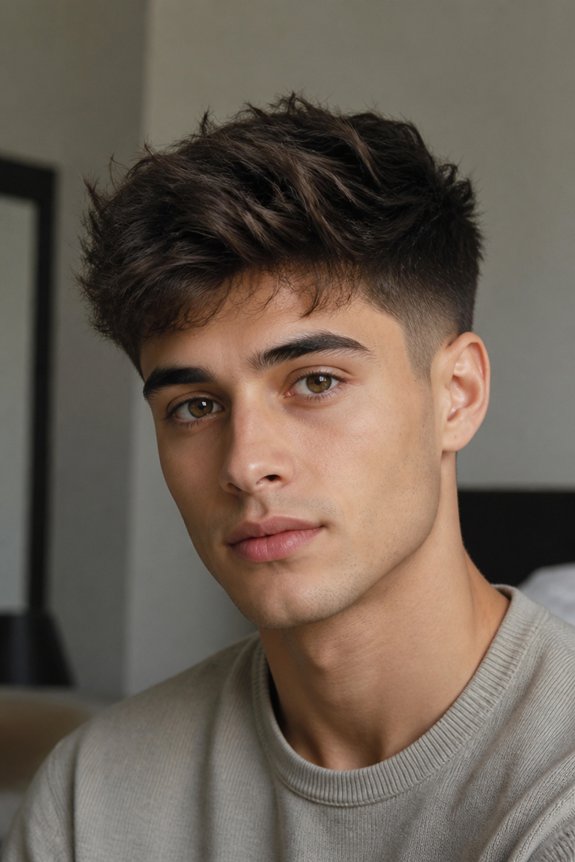
Want a hairstyle that looks effortlessly cool without trying too hard? The tousled top fade gives you that perfectly undone vibe with clean, sharp sides. You get natural movement on top while the fade keeps everything structured and intentional.
The real secret is using the right product. Skip heavy pomades that weigh everything down. Instead, grab a lightweight texturizing paste or matte clay. Apply it to damp hair and use your fingers to work it through. A comb will mess up that intentional messiness you’re going for.
Keep up with trims every three weeks to maintain that sharp fade on the sides. This also keeps your top length perfect for styling without looking scraggly. You’ll have the control and versatility you need to make this look work for you.
Low-Maintenance Fade Options
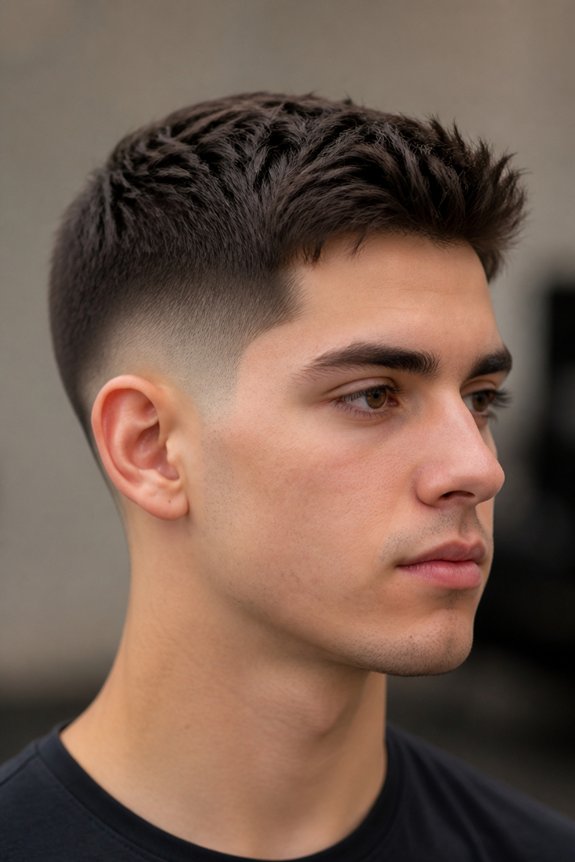
Want a haircut that actually works with your busy schedule? Fades are your answer. You get clean, sharp lines on the sides without needing to style them every morning.
Here’s what makes them so easy. Your barber clips the sides with a 1 or 1.5 guard, keeping everything tight and blended. The top stays around 2-3 inches, which means you can wear it textured and natural or add a light pomade when you feel like it. Either way, you’re good.
The real magic is how forgiving fades are. Shorter sides hide your growth between appointments, so you’re not stressed about looking messy. After a shower, just let your hair air dry and go. No complicated styling routines needed.
Frequently Asked Questions
How Often Should I Get a Mid Taper Fade Haircut Trimmed to Maintain Its Shape?
A mid taper fade haircut typically requires trimming every three to four weeks to maintain its crisp shape and clean lines. Regular maintenance guarantees the fade remains sharp and prevents the style from appearing overgrown or unkempt.
What Hair Products Work Best for Styling a Mid Taper Fade at Home?
A mid taper fade looks best with matte pomade or clay for texture and hold. Alternatively, hair wax or cream products work well for styling at home. Water-based formulas are recommended since they wash out easily without buildup.
Is a Mid Taper Fade Suitable for All Face Shapes and Hair Types?
Like a tailor fitting a suit, the mid taper fade requires customization. While versatile, it works best with straight to wavy hair and suits oval or rectangular faces. Those with curly hair or round faces may need styling adjustments for ideal results.
How Much Does a Professional Mid Taper Fade Haircut Typically Cost?
Professional mid taper fade haircuts typically range from $25 to $60, depending on the barber’s experience level, location, and salon reputation. Urban areas and high-end establishments generally charge premium prices compared to standard barbershops.
Can I Transition From a Different Haircut Style to a Mid Taper Fade?
Why wouldn’t one shift to a mid taper fade? Yes, individuals can switch from virtually any haircut style to a mid taper fade. A skilled barber assesses the client’s current hair length and gradually implements the fade over successive appointments for best results.
Conclusion
The mid taper fade has fundamentally conquered men’s grooming. This cut transforms ordinary hair into extraordinary style. Whether choosing sharp lines or textured chaos, men find their perfect match here. The versatility is genuinely unmatched—from boardroom polish to weekend casual. One barber notes, “It’s the Swiss Army knife of cuts.” Styling options multiply endlessly with proper products. The mid taper fade remains unstoppable because it works.