Models treat their hair like an investment, protecting it long before stepping in front of a camera. Regular trims every six to eight weeks stop split ends from creeping upward and causing further damage. It sounds simple, but consistency here makes a visible difference over time.
Professional treatments like Olaplex have become industry staples for good reason. They work at the molecular level to restore moisture and repair structural damage that everyday styling creates. Heat protection sprays fall into the same non-negotiable category before any tool touches the hair.
What separates truly healthy model hair often comes down to daily habits outside the salon. Silk pillowcases reduce friction overnight, while gentle detangling with wide-tooth combs prevents unnecessary breakage. These small choices quietly add up across weeks and months.
Nutrition plays a bigger role than most people expect. Biotin, omega-3 fatty acids, and adequate protein all contribute directly to stronger, shinier strands. Hydration works the same way, since hair reflects what happens internally just as much as what gets applied externally.
Also read: How to Fix Frizzy Hair: 12 Easy Tips for Smooth Shiny Locks
Professional Stylists and Regular Trims
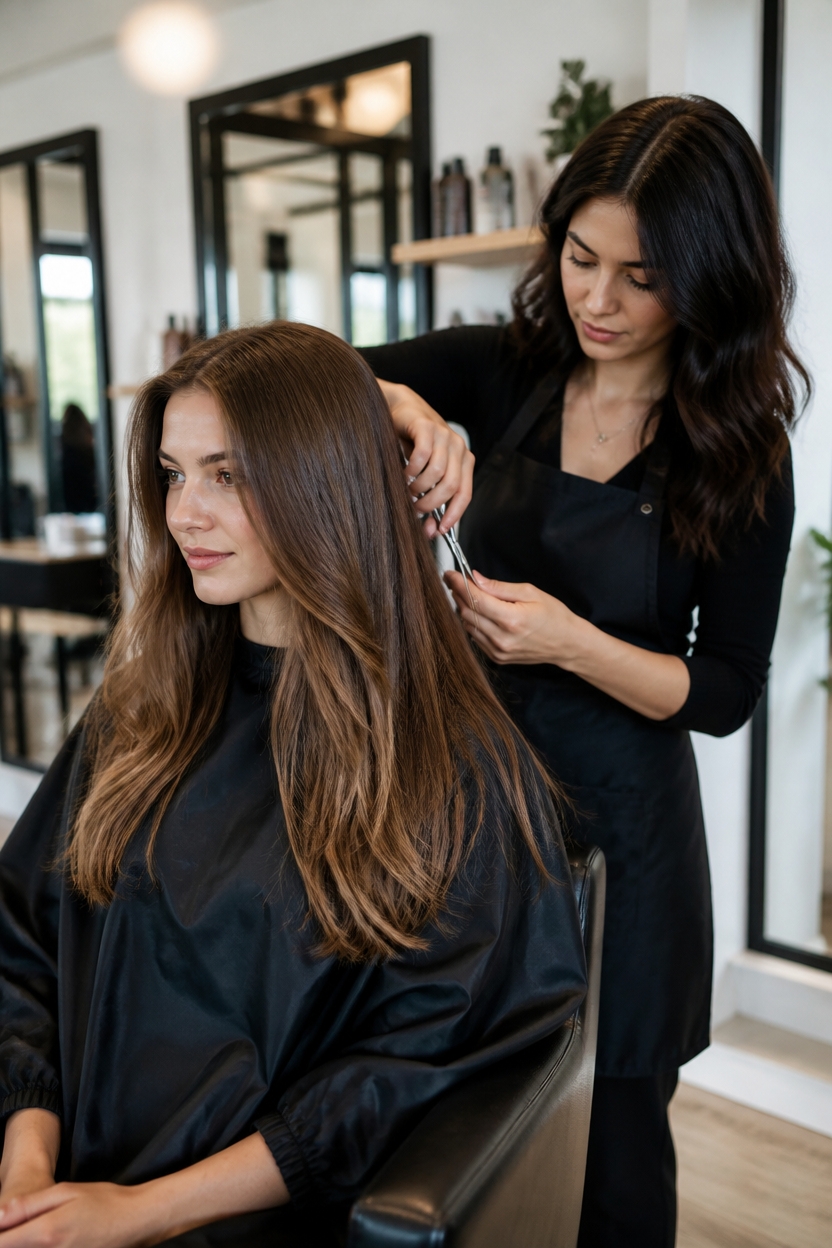
Regular trims every six to eight weeks form the foundation of any healthy hair routine. Professional stylists remove split ends that damage hair strands and prevent breakage from traveling upward. This maintenance keeps hair looking thick and vibrant.
Expert stylists understand dimensional cutting techniques that enhance natural texture and movement. They assess individual hair types, whether fine, coarse, or curly, and customize approaches accordingly. A skilled stylist uses precision shears to create clean lines and intentional layers.
Between appointments, models protect their investment with silk pillowcases and leave-in conditioners. These products reduce friction and maintain moisture balance.
Scheduling consistent appointments demonstrates commitment to hair health. This dedication separates polished, camera-ready styles from neglected appearance.
Professional-Grade Deep Conditioning Treatments
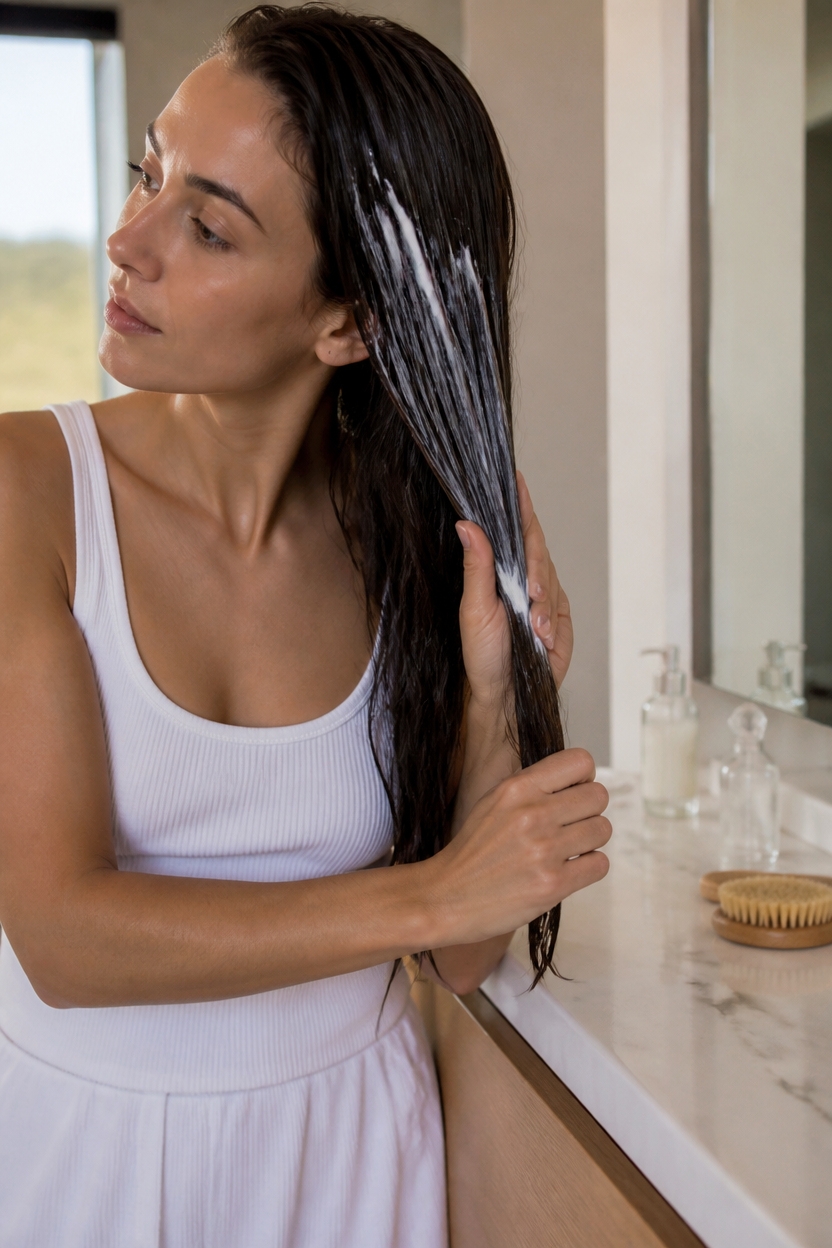
While consistent trims maintain hair structure, deep conditioning treatments restore moisture and repair damage at the cellular level. Professional-grade formulas penetrate deeper than drugstore versions, delivering concentrated nutrients directly where needed most.
Models rely on keratin-infused masks and protein treatments to strengthen weakened strands. Products like Olaplex and K18 have become industry standards, rebuilding broken bonds within hair fibers.
These treatments typically require 10-20 minute application periods, allowing ingredients time to work effectively.
Weekly deep conditioning sessions prevent breakage and enhance shine considerably. Stylists recommend applying treatments from mid-length to ends, avoiding the scalp area entirely.
Temperature matters greatly during treatment application. Warm scalp conditions activate ingredients more efficiently.
Results appear noticeably within 2-3 sessions, making this investment essential for anyone pursuing model-quality hair health.
Heat Protection: Styling Without Damage
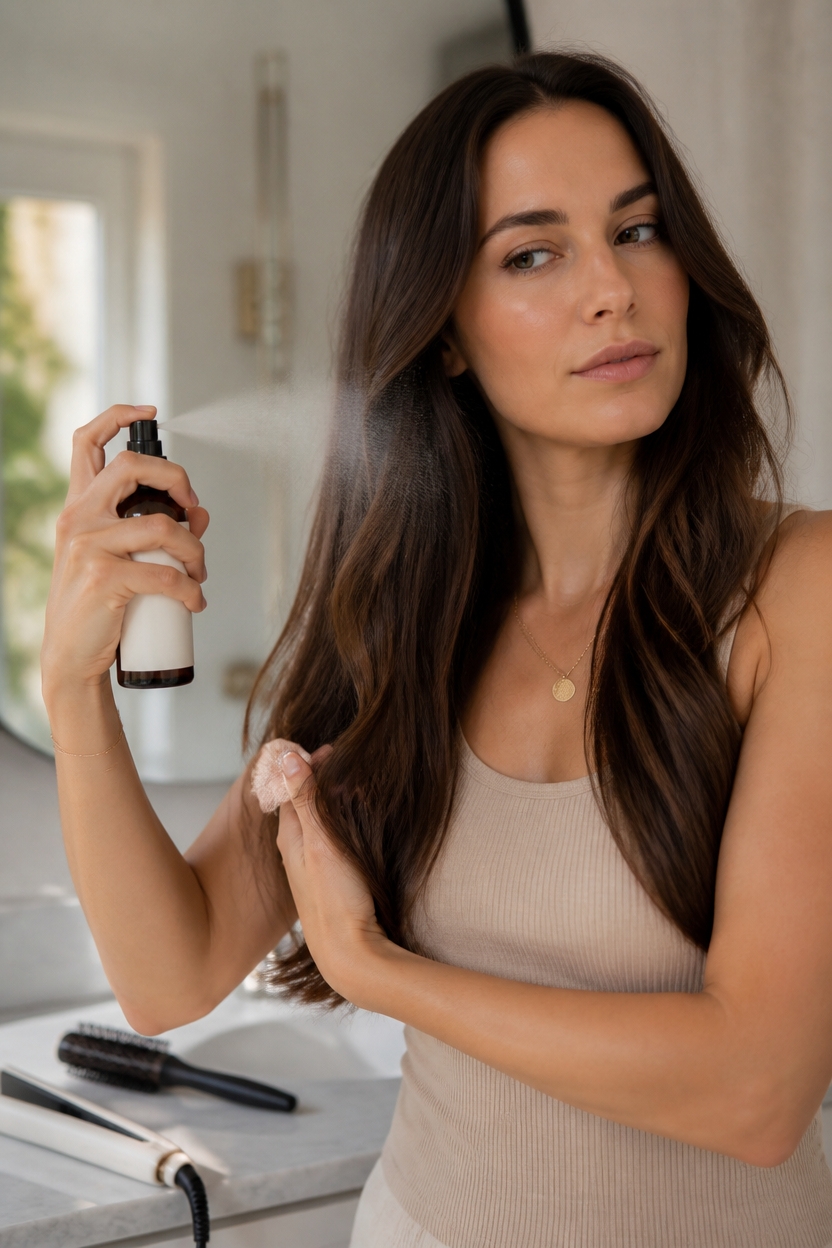
How can stylists achieve polished, voluminous looks without sacrificing strand integrity? Heat protectant sprays form invisible barriers against damage. Products containing silicones and keratin shield hair during blow-drying and straightening.
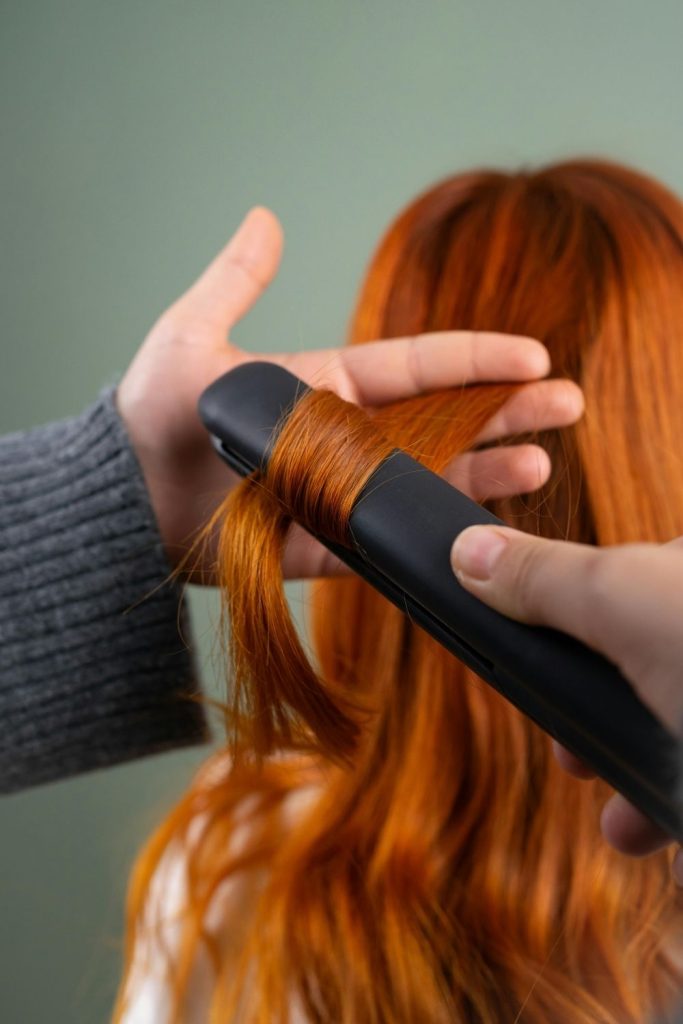
Lower heat settings preserve moisture better than maximum temperatures. Professional stylists recommend 350°F for fine hair, 400°F for thick textures. Ceramic and ionic tools distribute heat evenly, reducing hot spots that cause breakage.
Lightweight leave-in conditioners work alongside heat sprays for doubled protection. Models use quick-dry techniques, minimizing styling time overall. Ionic blow-dryers speed up the process while reducing frizz.
Strategic sectioning prevents repeatedly heating the same strands.
Finishing with cool shots seals the cuticle layer. This final step locks in shine and strengthens each strand.
Choosing Products Matched to Your Hair Type
The foundation of any successful hair care routine starts with understanding individual strand characteristics. Models identify their hair type, whether straight, wavy, curly, or coily, before selecting products.
Fine hair requires lightweight formulas that won’t weigh strands down. Thick hair benefits from rich moisturizing shampoos and conditioners containing nourishing oils.
Porosity matters greatly. Low-porosity hair repels moisture and needs protein-light products. High-porosity hair absorbs products quickly and requires deep conditioning treatments.
Scalp condition influences product choice too. Oily scalps need clarifying formulas, while dry scalps require hydrating options.
Professional models invest in salon-quality brands like Olaplex and K18, which address specific structural needs. Selecting products matching individual hair characteristics creates a foundation for consistent, healthy results.
Scalp Health Basics
A healthy scalp serves as the foundation for strong, vibrant hair growth. Models understand this essential principle. Regular cleansing removes buildup and excess oil without stripping natural moisture.
Weekly scalp massages increase blood flow to hair follicles, promoting growth and health. Gentle exfoliation using products like Briogeo Scalp Revival or Olaplex Intensive Scalp Treatment prevents dandruff and flaking.
Using sulfate-free shampoos maintains this delicate balance. Leave-in scalp serums with niacinamide or tea tree oil address inflammation. Many professionals recommend limiting heat styling near the scalp when possible.
Hydration matters too; drinking water supports scalp moisture from within. These fundamentals create the ideal environment for the glossy, resilient hair that cameras love capturing.
The Nutrition and Hydration Habits Models Prioritize
Nourishing hair from within requires the same discipline models apply to their skincare routines. Professional stylists consistently emphasize hydration as foundational.
Models drink a minimum of eight glasses daily, understanding water transports nutrients to hair follicles. They prioritize biotin-rich foods like eggs, almonds, and salmon, which strengthen keratin production. Collagen supplements have become industry standard for elasticity and shine.
Iron and zinc deficiencies directly cause hair thinning and breakage. Models incorporate spinach, lentils, and oysters strategically.
Omega-3 fatty acids from avocados and walnuts reduce inflammation at the scalp level.
Consistent protein intake, roughly 0.8 grams per pound of body weight, maintains structural integrity throughout growth cycles.
Sleep and Environment: How Models Protect Their Hair
While adequate nutrition fuels hair growth from within, external protection during sleep and daily life proves equally critical to maintaining model-quality strands.
Models invest in silk pillowcases, which reduce friction damage compared to cotton alternatives. This simple switch minimizes breakage and frizz overnight.
Environmental stressors like pollution and UV rays require daily defense. Protective serums with antioxidants shield hair from oxidative stress and color fading.
Models also limit heat styling frequency, spacing out blow-drys and flat-irons throughout the week. When styling becomes necessary, heat protectant sprays applied to damp roots and mid-lengths create invisible barriers.
Humidity control matters too. Humidifiers prevent excessive moisture loss in dry climates, while dehumidifiers combat frizz in humid environments.
These layered protective strategies maintain lustrous, resilient hair.
Frequently Asked Questions
What Specific Vitamins and Supplements Do Models Take for Hair Growth?
Models commonly incorporate biotin, vitamin D, iron, and zinc supplements into their routines. Many also use collagen peptides and omega-3 fatty acids to support hair strength and growth. Professional stylists recommend consulting dermatologists before beginning any supplement regimen.
How Often Should Models Wash Their Hair to Maintain Optimal Health?
Models typically wash their hair two to three times weekly to maintain ideal health. Frequent washing strips natural oils, causing damage and dryness. Less frequent washing preserves the scalp’s protective sebum layer, promoting stronger, shinier hair overall.
Do Models Use Any Natural Remedies or DIY Treatments for Hair Care?
Many models incorporate natural remedies into their routines. For instance, a fashion model might apply coconut oil masks weekly to strengthen strands. Others use apple cider vinegar rinses, honey treatments, and avocado-based conditioners to maintain shine and elasticity naturally.
What Hairstyles Do Models Avoid to Prevent Damage and Breakage?
Models typically avoid excessively tight hairstyles, such as severe ponytails and braids, which cause tension alopecia. They also minimize frequent heat styling, chemical treatments, and extensions that weaken hair structure, opting instead for protective, low-manipulation styles.
How Much Does Professional Hair Care Typically Cost for Models?
Professional hair maintenance represents a considerable investment for models, typically ranging from $200 to $800 monthly for treatments like keratin, conditioning, and styling services. High-end salon visits and specialized treatments can escalate costs markedly depending on individual needs.
Conclusion
Hair health isn’t magic—it’s architecture. Models treat their locks like prized investments, building foundations through consistent trims and deep conditioning. Every choice, from product selection to sleep position, becomes a brick in that structure. The secret? Viewing hair maintenance as non-negotiable routine rather than occasional indulgence. With professional guidance, quality products, and nutritional commitment, anyone can cultivate the glossy, resilient hair models showcase.