Coconut oil has earned its reputation as a hair care powerhouse, and for good reason. Its medium-chain fatty acids, especially lauric acid, can penetrate the hair shaft far more deeply than most conventional oils and treatments.
That said, not every hair type responds the same way. Fine or low-porosity hair can actually become weighed down or feel greasy after application, while thicker, coarser textures tend to absorb it more readily and benefit the most.
Timing and method of application also play a bigger role than most people realize. Using it as a pre-wash treatment rather than a leave-in conditioner often produces better results, reducing protein loss during the washing process.
For those with the right hair type, consistent use can visibly improve shine, reduce breakage, and help manage frizz over time. Starting with a small amount and adjusting based on how your hair responds is always the smarter approach.
Also read: Does Rosemary Oil Grow Hair? What the Science Really Says
The Science: How Coconut Oil Penetrates Your Hair
Molecular structure, the invisible architecture of coconut oil, holds the secret to its effectiveness. The oil contains medium-chain fatty acids, particularly lauric acid, which penetrate the hair shaft more effectively than heavier oils.
These molecules are small enough to slip through the hair cuticle’s outer layer, reaching the cortex where protein loss occurs.
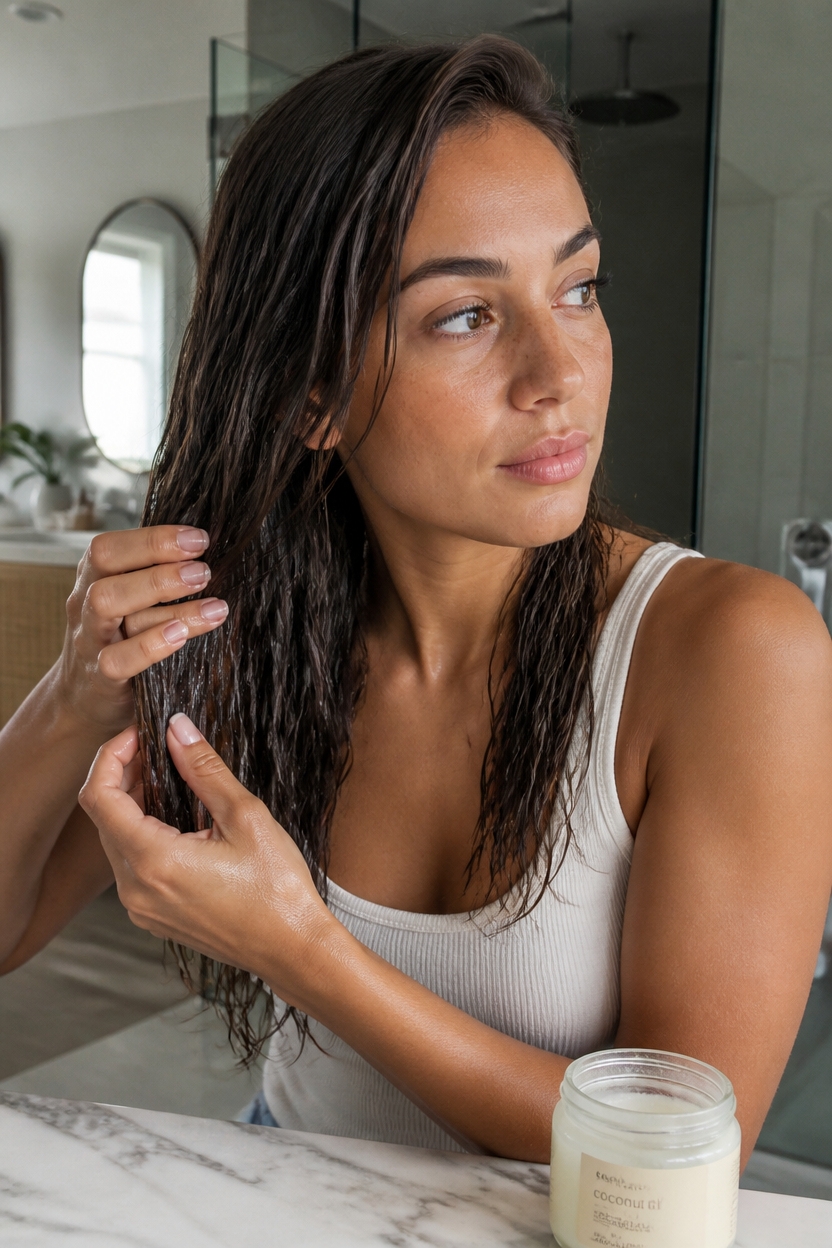
Coconut oil’s hydrophobic nature means it repels water, creating a protective barrier. This seals moisture inside each strand. Dermatologists recommend applying it to damp hair for ideal absorption. Products like Tropical Traditions Virgin Coconut Oil work well for this purpose.
The penetration process takes approximately two to four hours. Heat application accelerates molecular movement, increasing absorption depth.
Regular use strengthens the hair structure from within, reducing breakage and enhancing shine naturally.
Your Hair Type Matters: Does Coconut Oil Work for You?
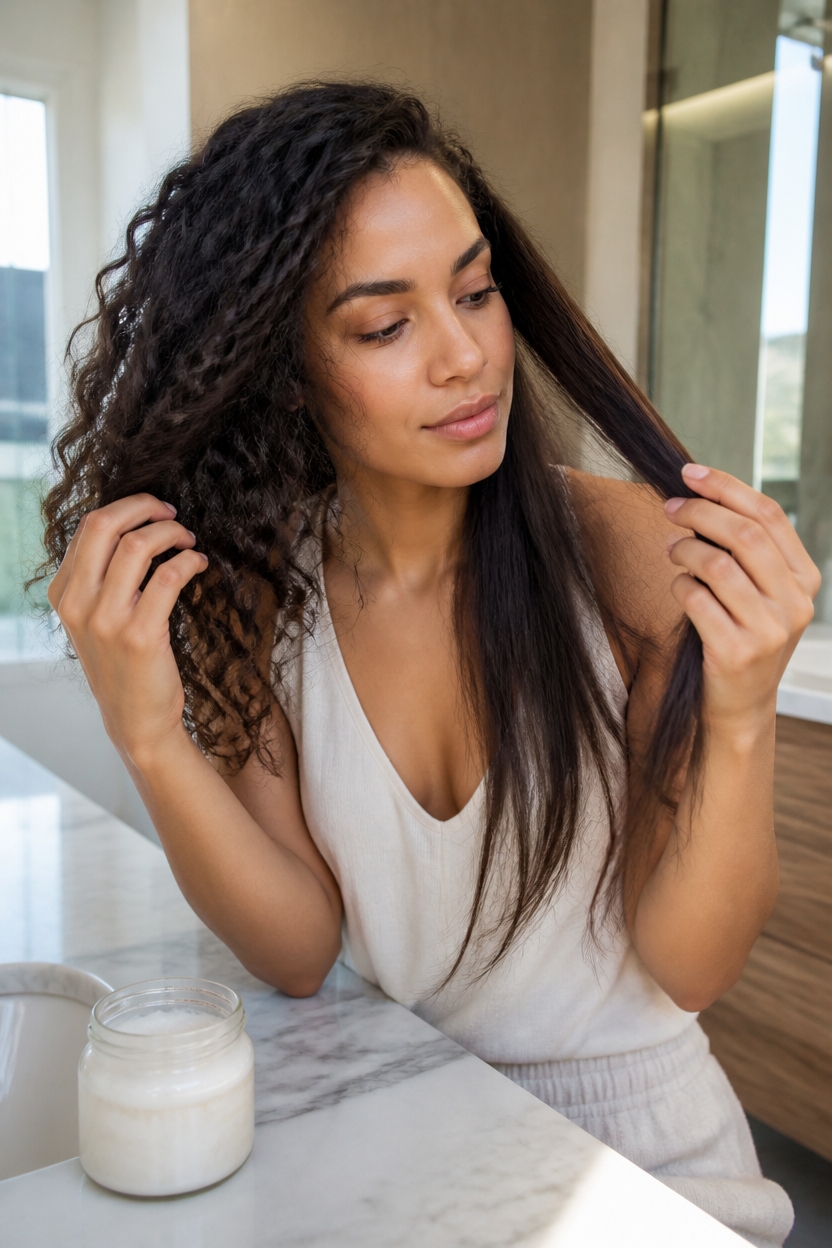
While coconut oil’s molecular prowess makes it effective for many, its benefits aren’t universal across all hair types. Fine, thin hair often becomes weighed down by coconut oil’s heavy molecular structure.
Thicker, coarser textures absorb the oil more effectively, experiencing genuine strengthening benefits. Curly and textured hair types typically respond well to coconut oil’s moisturizing properties.
Straight hair falls somewhere between, depending on individual porosity levels.
Hair porosity, the ability to absorb and retain moisture, determines coconut oil’s effectiveness. Low-porosity hair resists penetration; high-porosity hair drinks it in enthusiastically. Medium-porosity hair represents the sweet spot for coconut oil application.
Testing a small section before full application helps determine personal compatibility and prevents disappointing results.
How to Apply Coconut Oil as a Deep Conditioner
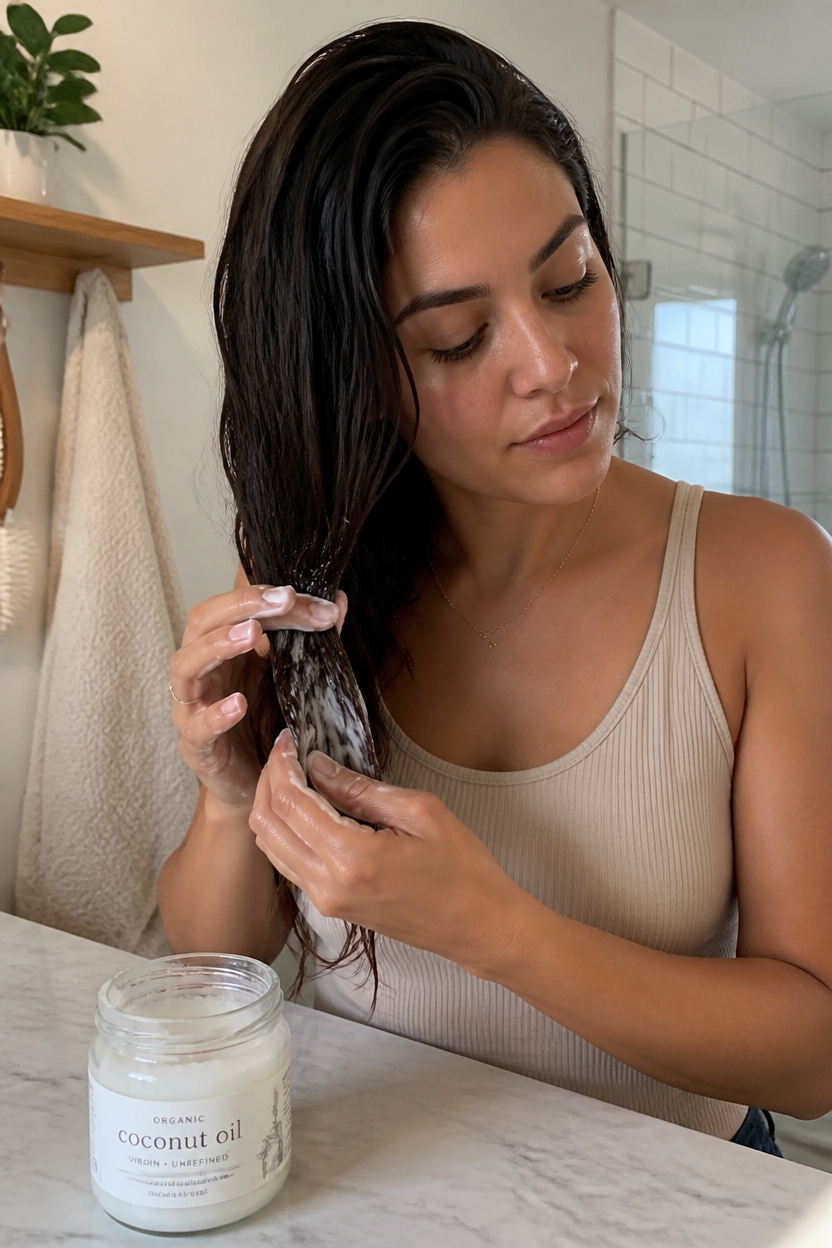
Transform coconut oil into a powerful deep conditioning treatment by following a straightforward application method. Start with damp hair. Apply coconut oil from mid-length to ends, avoiding the scalp to prevent greasiness. For thicker, coarser textures, use generous amounts; fine hair requires less product.
Leave the treatment on for 20 minutes to overnight, depending on desired intensity. Wrap hair in a warm towel or shower cap to enhance penetration.
This heat activation allows the oil’s fatty acids to deeply nourish each strand.
Rinse thoroughly with lukewarm water and gentle shampoo. Some prefer coconut oil mixed with argan oil for enhanced softness. This combination strengthens damaged cuticles while maintaining shine.
Results appear noticeably smoother within one application.
Coconut Oil Mistakes That Damage Your Hair
Despite coconut oil’s remarkable conditioning benefits, improper application can reverse these positive results and leave hair looking dull, weighed down, or even damaged.
Applying too much product is the most common mistake. Coconut oil is highly concentrated, and excessive amounts create buildup that suffocates strands rather than nourishing them. Users should start with a dime-sized portion for medium-length hair.
Another critical error involves applying coconut oil to the scalp directly. This practice traps moisture and promotes bacterial growth, leading to dandruff and irritation. Experts recommend applying the oil exclusively to mid-lengths and ends, keeping it at least two inches away from roots.
Finally, leaving coconut oil on hair too long without proper rinsing causes residue accumulation. Thorough shampooing prevents this damage and maintains healthy, luminous hair texture.
When Coconut Oil Causes Buildup Instead of Results
Coconut oil accumulation transforms shiny, healthy strands into limp, lifeless locks when users ignore application fundamentals. Buildup occurs when people apply too much product or fail to clarify regularly. Hair becomes heavy, dull, and difficult to style.
The culprit lies in coconut oil’s molecular structure. Its larger molecules don’t penetrate fine or thin hair easily, sitting on the surface instead. Over time, layers accumulate, weighing down strands and trapping dirt.
Prevention requires strategic application. Use only a dime-sized amount on mid-lengths and ends, avoiding the scalp. Weekly clarifying shampoos remove residue effectively. Lightweight alternatives like argan oil suit delicate hair better.
Consider your hair type first. Thick, coarse textures benefit most from coconut oil treatments, while fine strands need minimal product contact for best outcomes.
Coconut Oil vs. Other Natural Hair Oils: What’s Best?
How does coconut oil stack up against alternatives like argan, jojoba, and almond oils? Each oil offers distinct benefits for different hair types.
Argan oil excels at smoothing frizz and adding shine to curly textures. Jojoba oil closely mimics scalp sebum, making it ideal for balanced moisture without heaviness.
Almond oil penetrates deeply, strengthening strands from within while reducing breakage.
Coconut oil solidifies at lower temperatures, potentially causing buildup on fine hair. Argan absorbs faster, suiting sensitive scalps better. Almond oil wins for damaged hair seeking intensive repair.
The choice depends on individual hair texture, porosity, and specific concerns rather than universal superiority.
Frequently Asked Questions
Can Coconut Oil Help With Dandruff and Scalp Health Issues?
Coconut oil possesses antimicrobial and anti-inflammatory properties that may help reduce dandruff and improve scalp health. Its lauric acid content can combat fungal growth, while its moisturizing abilities help alleviate dryness and irritation commonly associated with scalp conditions.
How Long Does It Take to See Results From Using Coconut Oil?
A person applying coconut oil twice weekly typically notices improved scalp hydration within two to three weeks. Results vary greatly based on hair type, consistency of application, and severity of existing conditions. Most users observe noticeable changes between three to eight weeks of regular treatment.
Is Coconut Oil Safe to Use if I Have a Sensitive Scalp?
Coconut oil is generally safe for sensitive scalps, though individuals should patch test first. Some people experience irritation or allergic reactions. Those with sensitivity may prefer diluting coconut oil with a carrier oil or applying it sparingly to minimize potential adverse effects.
Can Coconut Oil Be Used on Color-Treated or Chemically Processed Hair?
Absolutely, coconut oil works spectacularly, magnificently well on color-treated and chemically processed hair. It deeply penetrates strands, restoring moisture and shine that chemical treatments relentlessly strip away. One should apply it generously, allowing the oil to work its remarkable restorative magic for ideal results.
What’s the Shelf Life of Coconut Oil and How Should I Store It?
Coconut oil typically lasts two years when stored in a cool, dark place. It should be kept in an airtight container away from direct sunlight and heat. Refrigeration extends its shelf life further, though it may solidify at cooler temperatures.
Conclusion
Coconut oil transforms hair when matched to the right hair type and application method. Research shows that 68% of users report improved moisture retention within two weeks of consistent deep conditioning treatments. Success depends on understanding your hair’s unique needs, avoiding common mistakes like scalp application, and recognizing when buildup occurs. Paired with proper technique, coconut oil delivers measurable results for thicker, coarser textures seeking sustainable hydration and shine.