Walk into any barbershop and you’ll notice the taper low fade is everywhere. That’s because it works for almost everyone, no matter your face shape or hair type. The combination of cleanly faded sides with textured hair on top just hits differently, giving you a polished look that doesn’t require hours of styling each morning.
What makes this cut so appealing is how adaptable it truly is. You can wear it sleek and refined for work, or go textured and a bit messier on weekends. The fade does most of the heavy lifting, so even minimal effort keeps things looking sharp. It’s the kind of foundation that respects your personal style while keeping things effortless.
The beauty of a taper low fade lies in how it transforms with small adjustments. Different ways of styling the top, varying degrees of texture, and subtle fade variations completely change the vibe. Some versions feel corporate and put-together, while others lean creative and bold. You’re not locked into one look just because you got the cut.
If you’ve been thinking about switching things up, this cut gives you room to experiment. The styles below showcase just how much range exists within this single foundation.
Each one proves you don’t need something overly complicated to look intentional and well-groomed.
Classic Taper Low Fade With Short Textured Top
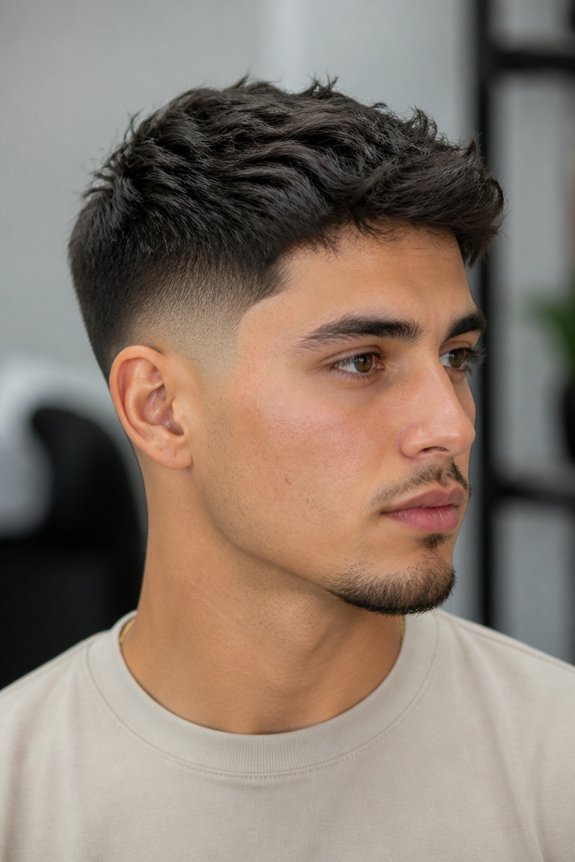
Looking for a haircut that works with your lifestyle? The classic taper low fade with short textured top is your answer. You get clean, sharp lines on the sides while your top stays flexible for styling.
Here’s how it works: your barber uses clippers to fade the sides low around your ears and neck. The top gets scissor work to create texture and movement. You’re left with a style that looks polished but doesn’t feel stiff or overdone.
Want to make it work for you? Use a matte clay or texture paste to style your top however you like. You can go tousled and casual or keep it more controlled. The best part is that this cut suits most hair types and face shapes.
Keeping it fresh matters. Hit up your barber weekly so your edges stay sharp and your fade lines stay crisp. You’ll notice the difference between a fresh cut and one that’s grown out a bit. The maintenance is simple, and you’ll always look put-together.
Also Read: 17 Medium Length Hairstyles for Men
Also Read: 16 Mid Taper Fade Haircut Ideas for Men
Taper Low Fade With Long Quiff
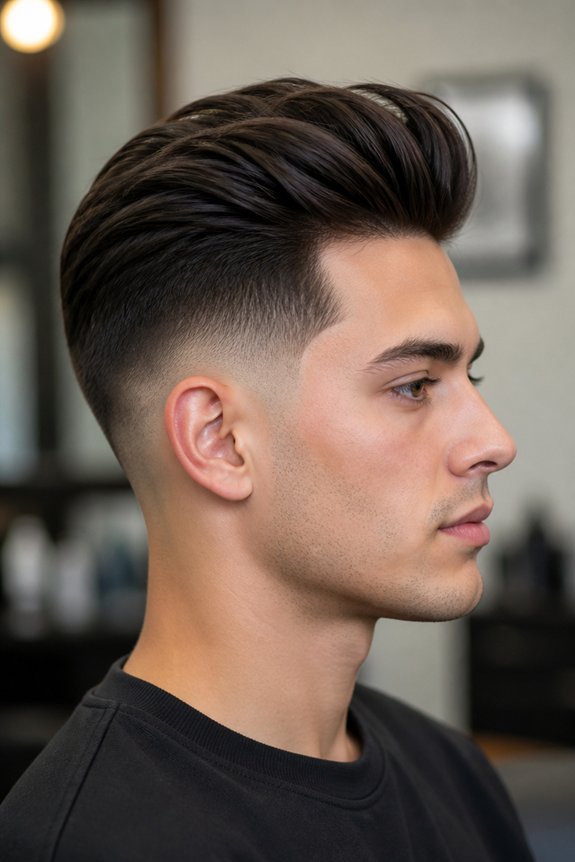
Real dimension and height start at the top. This is where length and volume do the work while the sides and back fade clean and gradual, creating a sharp contrast that feels intentional. The quiff sweeps back and up, building the kind of structure that flatters most face shapes, particularly rectangular or oval features.
The taper low fade with long quiff works because it balances proportion. You’re looking at roughly three to four inches of length on top, which means committing to trims every three weeks to maintain those crisp lines. This consistency is what keeps the look polished rather than just shaggy.
Styling is straightforward but matters. Blow-dry against the grain first to build texture and lift, then apply a quality pomade or texturizing cream for hold and control. This order is crucial. It’s what gives you that intentional sweep rather than a flat, product-heavy finish.
The payoff is a cut that looks effortlessly sharp. No complicated routine, no excessive product dependency. Just a shape that’s structured enough to feel grown-up and considered, whether you’re dressing it up or keeping things casual.
Slicked-Back Taper Low Fade for Formal Occasions
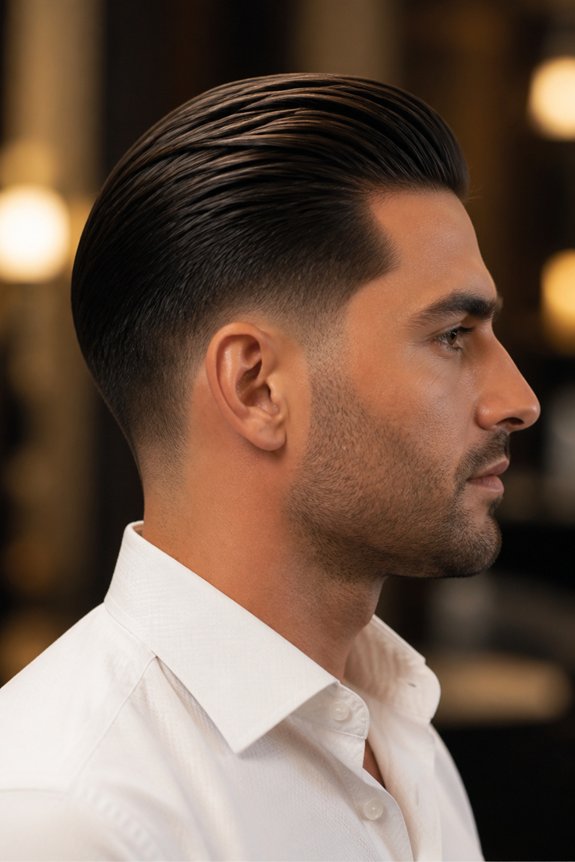
Want to look sharp at your next wedding or business event? The slicked-back taper low fade is your answer. This cut pairs short, faded sides with longer hair on top that you comb straight back. The result feels polished and confident without looking overdone.
Getting this right takes a skilled barber and the right products. Ask for a fade that starts around mid-scalp and gradually gets shorter toward your ears and neck. On top, keep enough length to comb back smoothly, usually 2 to 3 inches. American Crew Pomade or Baxter of California both give you the hold and subtle shine you need.
Styling takes just a few minutes. Blow dry your damp hair backward to build texture, then apply pomade with a fine-tooth comb. The key is using enough product without making it look greasy. You’ll want a trim every two to three weeks to keep those fade lines crisp and your crown looking full.
Also Read: 17 French Crop Hairstyles for Men
Taper Low Fade With Curly Hair on Top
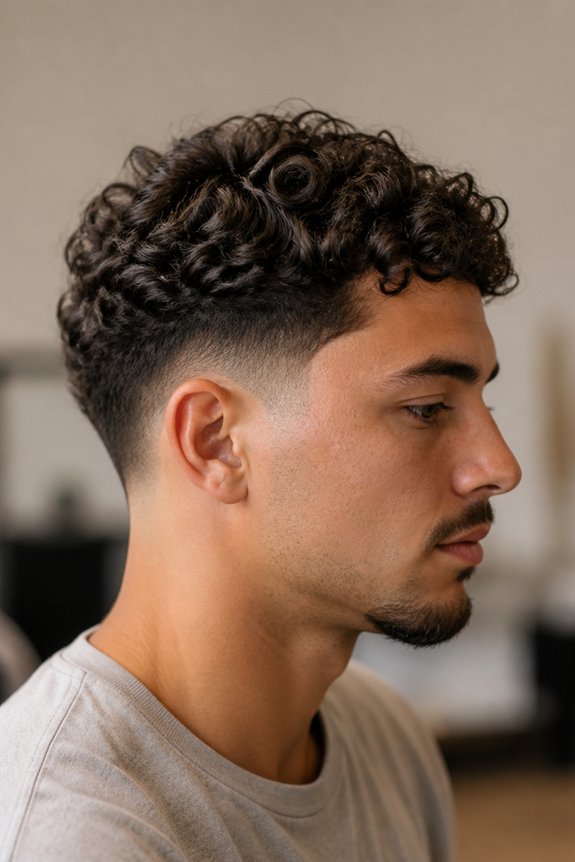
Curls deserve space to shine. This is where a taper low fade steps in, keeping your sides sharp and defined while your crown gets the room to breathe. Around two to three inches on top gives your curl pattern real definition and bounce, something that simply doesn’t happen when everything grows out uniformly.
The products you use matter more than technique. Leave-in conditioners and curl-defining creams work to keep frizz down while amplifying your natural texture. A morning moisturizer becomes non-negotiable, making the difference between defined curls and undefined frizz. The goal isn’t to fight your texture. It’s to enhance what you already have.
Styling is about activation, not correction. Gently scrunch your curls upward after moisturizing. This encourages your curl pattern to set without disrupting the shape the cut provides. Trims every four weeks maintain those fade lines and keep the overall look intentional rather than overgrown.
What makes this cut work is its versatility. Whether your face is oval, square, or round, a curly-top fade feels modern and polished. It’s a way to express personality through texture while maintaining polish. The cut itself does most of the work. Your job is simply maintaining it.
Taper Low Fade With Hard Part and Design
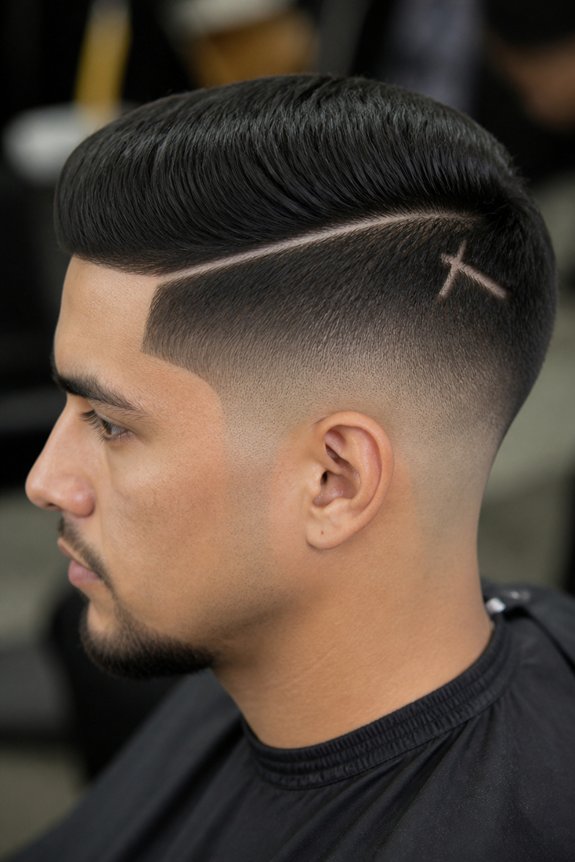
A fade becomes personal through precision detail. Your barber carves a clean line along the side using precise clippers and a straight-edge razor, creating instant visual structure that makes a real statement. This is where technical skill translates into presence.
You have options here. Go simple with a sharp, clean line or get creative with geometric shapes, lightning bolts, or intricate patterns. The difference between a good design and a great one comes down to edge work. Those lines need to be razor-sharp, which is where pomade or clay become essential. They keep everything locked in place throughout the day while maintaining that crisp definition.
The visual payoff depends partly on your hair color. Darker hair really showcases these details thanks to the natural contrast between the fade and the design. Lighter hair can work too, but the impact becomes more subtle.
This style demands commitment. Weekly touch-ups keep those carved lines fresh and intentional. It’s not a set-it-and-forget-it cut. But if you’re willing to maintain it, you get a polished, modern look that genuinely stands out. The effort shows.
Also Read: 16 Mid Fade Haircut Ideas for Men
Also Read: 15 Low Fade Haircut Ideas for Men That Look Clean and Cool
Messy Textured Taper Low Fade
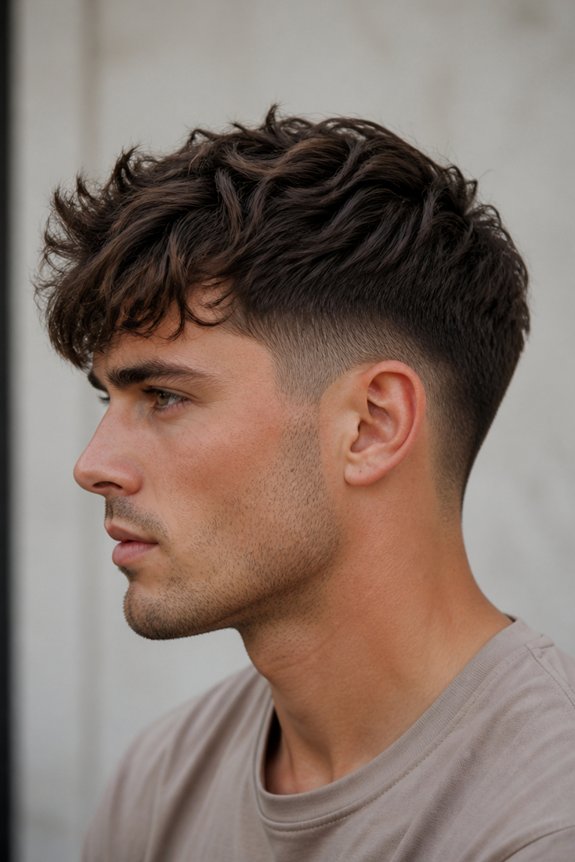
Does your hair look too perfect and stiff? The messy textured taper low fade is your answer. You get a clean fade around the sides while keeping intentional texture and movement on top. It’s the best of both worlds: polished enough for work, relaxed enough for weekends.
To style this cut, you’ll want a matte clay or textured paste. Apply it to damp hair and use your fingers to work it through. This gives you that “I just woke up like this” vibe without looking actually messy. The key is using choppy layers and point-cutting to build natural movement into the cut itself.
This style works great if you have wavy or curly hair. But if your hair is straight, you can still pull it off with the right layering and a little daily styling effort. Keep the fade low around your ears so it stays clean, while the top stays deliberately imperfect.
Taper Low Fade With Undercut Contrast
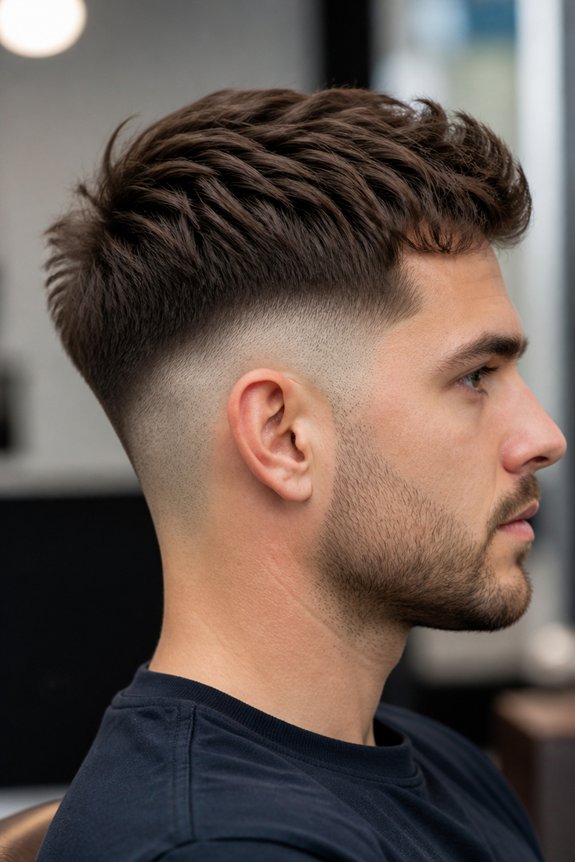
Want a sharp, modern look that turns heads? The taper low fade with undercut contrast delivers exactly that. You get clean lines where your longer top meets precisely clipped sides, with the undercut creating serious visual impact above your temples.
Here’s what makes it work: your barber uses clippers set to 0.5 or 1 on the undercut, then blends upward with longer guards. Your top stays textured around 2-3 inches, giving you real styling flexibility. This style demands precision, so find a barber who takes their clipper work seriously.
Keep your top looking sharp with pomade or matte clay. Both hold without adding unwanted shine. You’ll need a trim every 2-3 weeks to maintain those crisp lines. American Crew Fiber is solid if you want control with a natural texture that doesn’t look stiff.
This cut works if you’re after edgy sophistication without sacrificing practicality.
Disconnected Taper Low Fade for Bold Impact
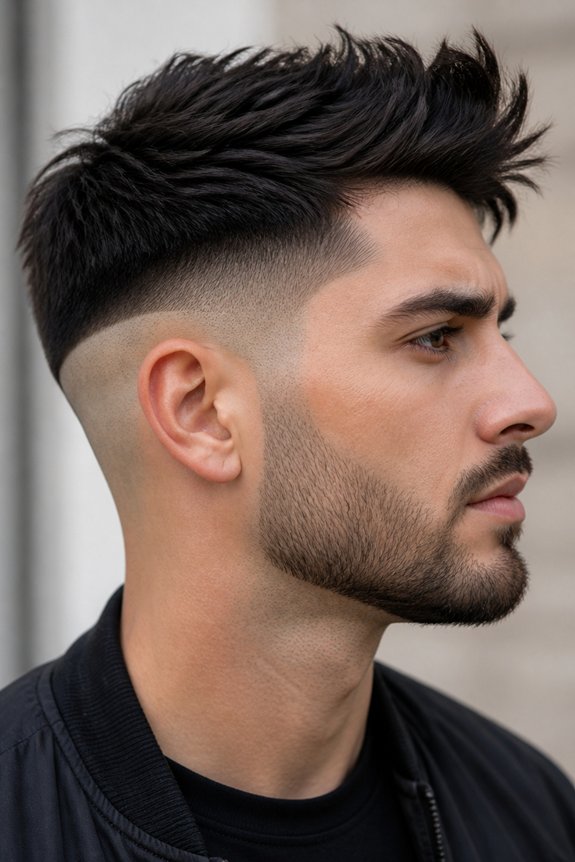
Contrast is where modern edge lives. Unlike gradual fades that blend seamlessly, a disconnected taper low fade creates a visible line separating your longer top from the shorter sides. That bold separation is what makes this cut feel intentional and sharp, creating visual impact that catches attention.
The disconnection sits roughly one to two inches above your ear, a placement your barber should nail precisely. This specific measurement is what makes the look work. Too high or too low and the whole effect shifts. The line becomes the centerpiece of the cut, so it needs to be clean and deliberate.
Styling requires a matte pomace or clay worked through your top hair for natural separation and texture. You’re not going for slickness here. Instead, you want definition that shows the individual strands while maintaining control. The matte finish keeps the focus on structure rather than shine.
The commitment here is real. Visits to your barber every two to three weeks keep the fade sharp and that disconnected line crisp. This isn’t a low-maintenance cut. But if you’re after an edgier look that still reads as polished and professional, the effort pays off. Your facial features gain prominence, and the clean fade keeps everything feeling current.
Taper Low Fade With Side Swept Fringe
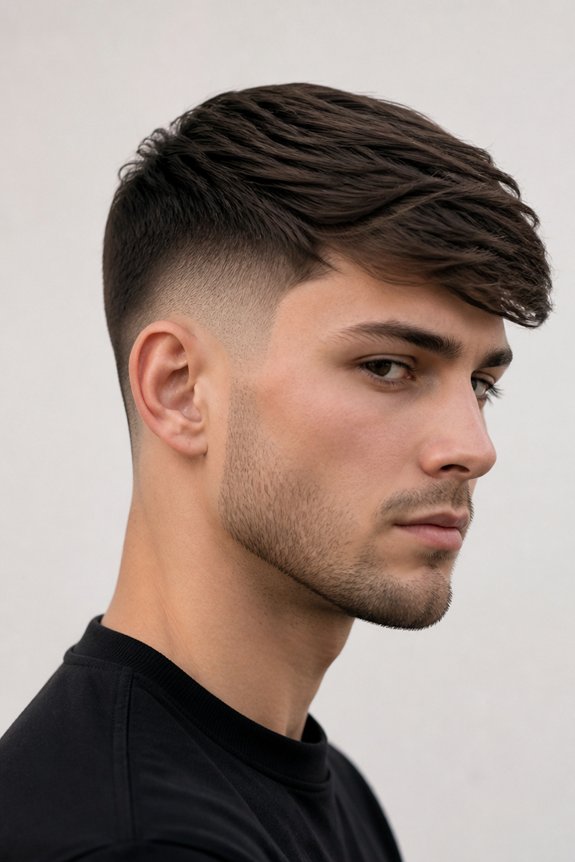
Want a haircut that works with your lifestyle instead of against it? A taper low fade with a side swept fringe gives you that polished look without demanding much effort. The beauty of this style is how it adapts to different face shapes and hair types, so you can make it your own.
Your barber will keep the top between two to three inches so you have room to play around with styling. The fade starts just above your ear, giving you those crisp lines that frame your face nicely. Ask your barber to sweep the fringe across your forehead to add some movement and texture to the overall cut.
Ready to style it? Grab a light pomade or matte clay and apply it to damp hair. Work the product through while directing your strands sideways, and let the cut do the heavy lifting. You’ll notice the natural sweep falls into place as your hair dries. To keep everything sharp, book a trim every three weeks. This keeps your fade clean and maintains the shape you’re paying for.
Taper Low Fade for Thinning Hair and Receding Hairlines
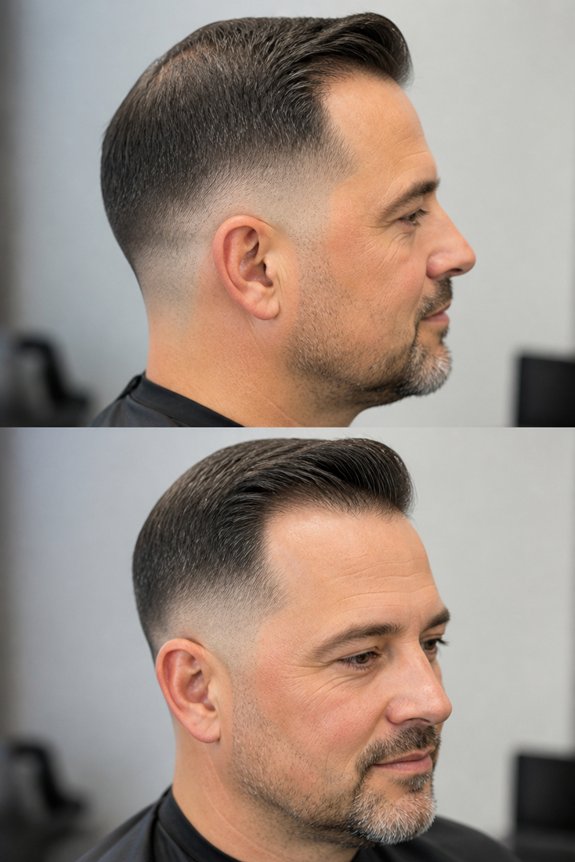
Thinning hair or a receding hairline can feel frustrating when you’re trying to look sharp. The good news? A taper low fade is your best move. You keep the sides and back super short, which means less focus on any sparse areas.
The beauty here is that short fades blend everything smoothly. No harsh lines popping up to draw attention to thinning spots. You can still rock one to two inches on top for some styling options, so you don’t look completely flat. Hit those remaining strands with a matte clay or fiber pomade to add texture and the illusion of thickness.
The real win? This cut shows you’re confident about your look. You’re not trying to hide anything. Instead, you’re leaning into a clean, intentional style that actually looks put-together and strong.
Taper Low Fade With Fade-To-Skin Finish
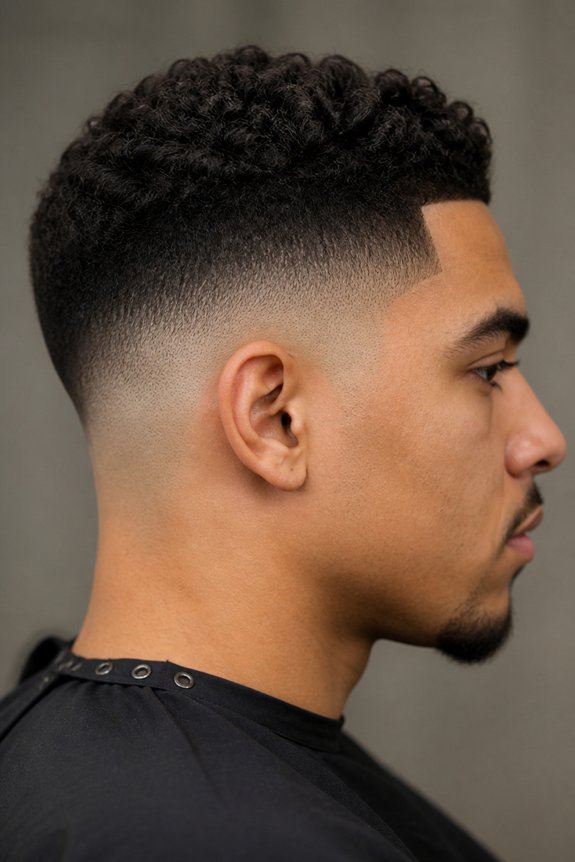
Precision is the whole point here. A fade-to-skin finish takes the classic taper to its extreme. Your hair gradually disappears into bare scalp, creating crisp lines that read as polished and modern. It’s uncompromising.
This style demands texture on top. Your barber uses zero or half-guard clippers at the temples and neckline. Then they blend upward with longer guards. The result is sculptural contrast. Finding someone who understands your hair growth pattern and scalp shape matters more than you’d think.
Maintenance is non-negotiable with this cut. Weekly or bi-weekly visits keep those lines sharp and clean. Wait too long and stubble blurs the precision you paid for. This isn’t a low-commitment style.
Styling keeps things simple. Skip shiny products. A matte pomade maintains texture without grease. If your hair runs short, a volumizing powder adds dimension. The goal is contrast between your styled top and that sculpted skin beneath.
This cut works for anyone serious about their appearance. It signals intention. It signals control. But it requires commitment to stay looking intentional rather than just stubbled.
Taper Low Fade With Longer Sides and Beard Blend
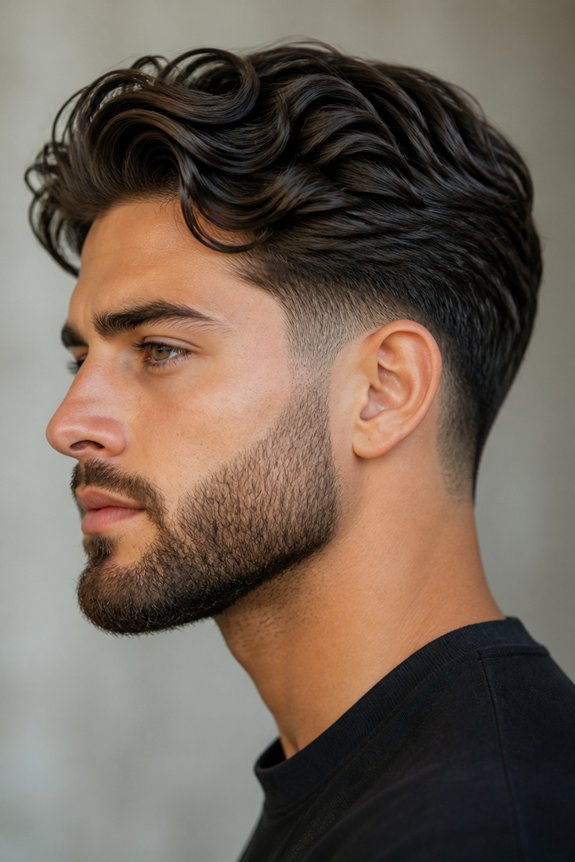
Versatility lives in the blend. Keep your sides around two to three inches and let them taper gradually. Not too short. The magic happens when everything connects seamlessly—your hair, your beard, your sideburns. It all becomes one intentional shape.
This requires a barber who understands facial hair. They’ll use clippers to connect your beard to your sideburns without jarring lines. Precision matters here. The connection is what makes casual and professional settings both work equally well.
Your facial hair deserves maintenance too. A good beard oil keeps everything sharp and defined throughout the day. It maintains the intentional look without the grease.
On top, you’ve got real room to work with. Plan on four to five inches of length. This gives you styling options. Use pomade or clay depending on how much hold you need. Neither will look shiny. Both work for the office or weekend. That’s the whole point.
This cut rewards consistency. Regular trims every three to four weeks keep those tapered lines clean. The payoff is a look that feels put-together whether you’re at a desk or grabbing coffee. No styling tricks required. Just a shape that works.
Taper Low Fade With Pompadour Style
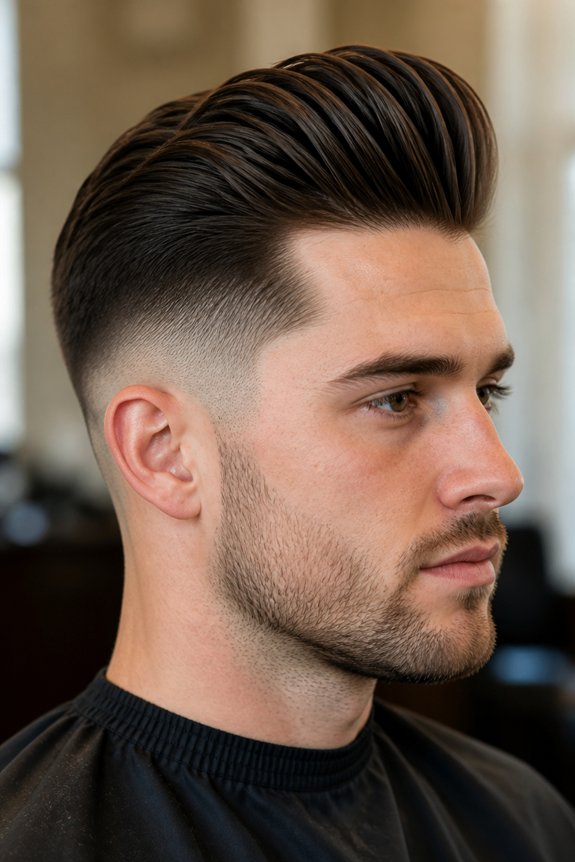
Put-together doesn’t have to mean high-maintenance. This is where clean faded sides pair with bold volume on top. Sharp. Classic. Intentional.
The taper low fade with pompadour works because it creates real contrast. Your barber keeps the top around two to three inches. The sides and back fade down gradually to skin. That faded base makes the volume on top genuinely pop. You get definition without heavy lines.
Styling is straightforward. Work pomade or clay through damp hair from roots to ends. Blow-dry upward and backward to build volume. Use a strong-hold product so your style stays put all day. The shape holds itself once you’ve got the technique down.
This cut has one real requirement. It works best with thicker hair. If your hair is finer, talk to your barber about adapting the concept. Either way, plan for weekly trims. Those fades need maintenance. The fade is what anchors the entire look. Skip it and the pompadour just looks disconnected.
The payoff is worth the effort. A look that signals effort without screaming for attention. That’s the balance this cut delivers.
Taper Low Fade With Spiky Textured Crown
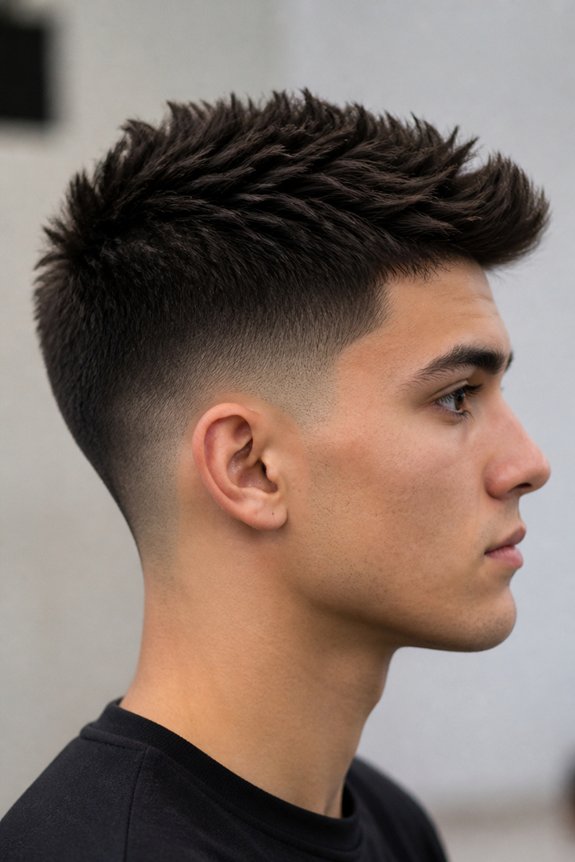
Want a haircut that looks sharp without the daily styling hassle? The taper low fade with spiky textured crown might be your answer. Your barber will clipper-cut the sides short and blend them gradually upward, keeping the crown longer at two to three inches. This gives you room to work with texture while maintaining that clean, tapered look on the sides.
Here’s what makes it work: you’ll need thick, straight, or wavy hair to really pull off this style. Once you’ve got the cut, apply matte pomade or clay to damp hair and work it upward with your fingers. You’ll see individual strands stand out instead of one flat shape, giving you that edgy, youthful vibe with barely any maintenance required.
Taper Low Fade With Blonde or Colored Accents
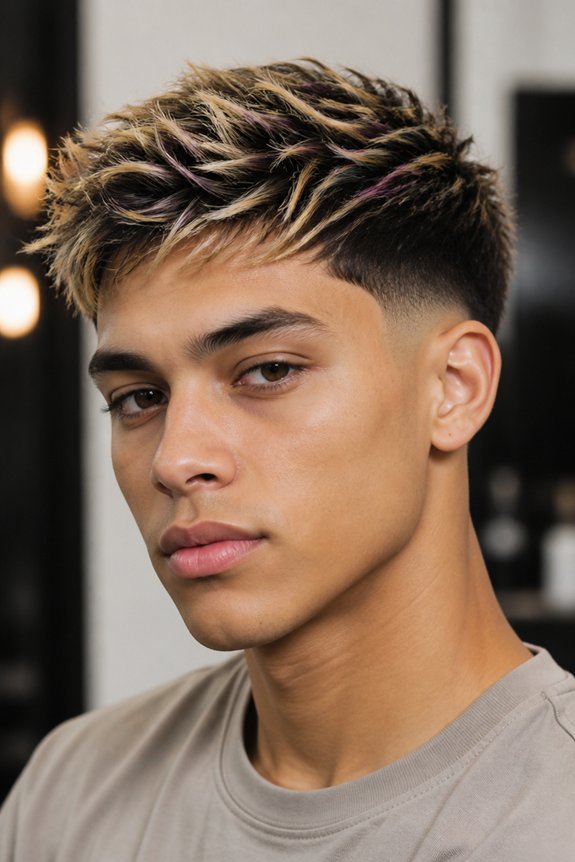
Color transformations paired with a taper low fade? That’s where you stand out. Blonde highlights on darker hair create sharp contrast while keeping things professional. Ash tones work great on medium-length fades if you want sophistication without looking over the top.
Strategic placement is your friend here. Put lighter shades on your crown or front sections to maximize the impact. Your fade stays clean and structured. Darker bases with subtle copper or bronze undertones adapt well to any skin tone you have.
Your product choices really matter. Invest in quality color-depositing shampoos like purple-toning formulas to keep your color vibrant between visits. Matte texture products complement dimensional color way better than glossy ones.
Plan on visiting your barber every four to six weeks. That’s what keeps your contrast crisp and your dimensional color looking fresh. The commitment pays off.
Taper Low Fade With Braids or Twists on Top
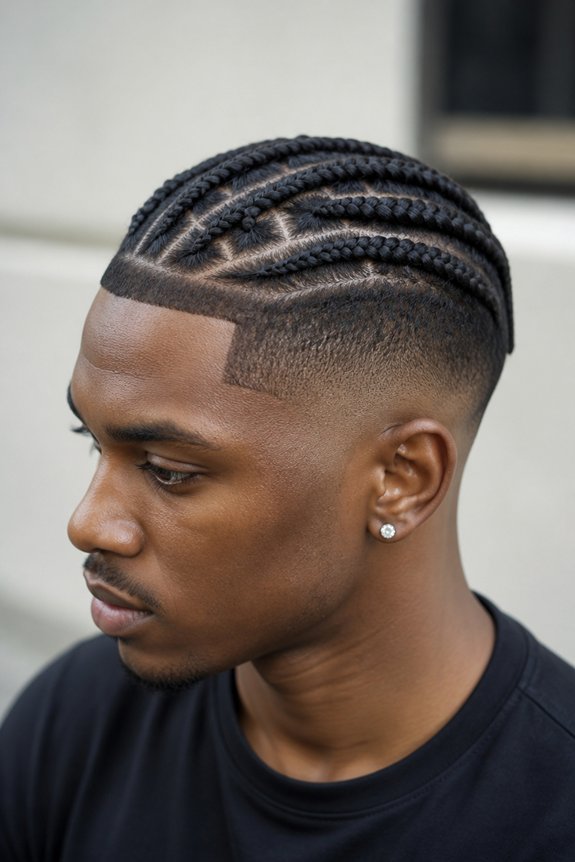
Contrast creates impact. Clean fade lines on your sides paired with textured, full braids or twists at your crown. That visual separation is what makes this cut genuinely stand out. Sharp for the office. Polished for the weekend.
A taper low fade with braids or twists works because it respects both sides of your look. The fade keeps everything refined. The braids or twists give you personality and texture. Two-strand twists look sleeker and more polished. Box braids deliver bolder definition. Either way, the fade anchors everything.
Before you commit, prepare your hair. It needs to be healthy and moisturized. Use a leave-in conditioner before your barber starts braiding. This makes a real difference. Your braids will last longer. They’ll look better.
Maintenance matters here. Plan for refreshes every four weeks to keep your twists looking fresh. Use an edge control product to make those fade lines pop and stay defined. The fade is what ties the whole look together. Neglect it and the style loses its polish.
This style works for anyone who wants to look put-together without playing it safe. The cut delivers presence. It delivers intention. That’s the whole point.
How to Maintain Your Taper Low Fade Between Barber Visits
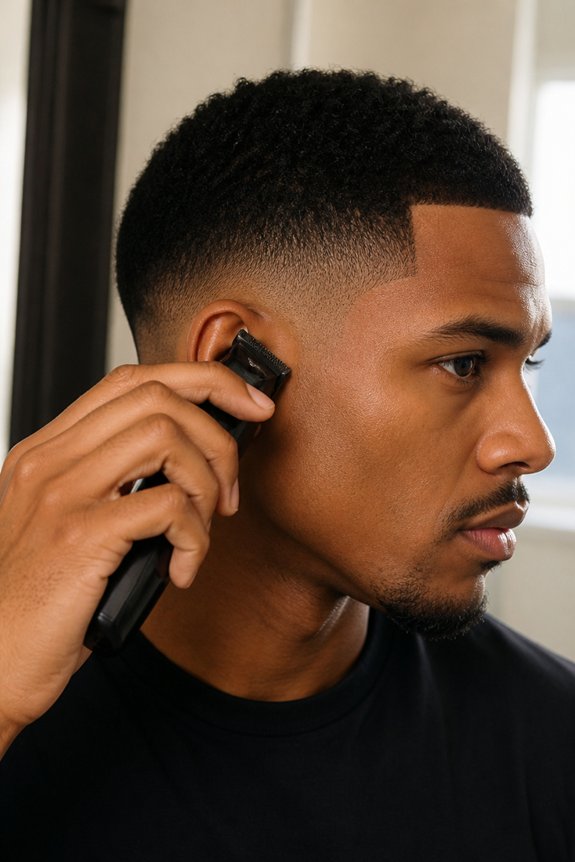
So your fade looks amazing right after the barber, but by week two it’s starting to lose that sharp edge. Here’s what you can do to keep it looking fresh.
Wash your hair twice a week with a sulfate-free shampoo. This prevents dryness and keeps your fade’s definition intact. When you style, use a lightweight pomade or matte clay on damp hair. Work it from your roots down to the ends for a natural look.
Your biggest enemy is overgrowth. Book trims every three to four weeks to keep that fade crisp. In between appointments, grab electric clippers with a guard and carefully clean up vulnerable areas yourself. It takes practice, but you’ll get better at it.
Grab a quality brush and use it daily. Brush against the grain to bring out texture and add volume where you need it. Keep your edges sharp with edge control products designed for that purpose. Small touches throughout the month make a huge difference in how polished you look.
Frequently Asked Questions
How Often Should I Get a Taper Low Fade Haircut to Maintain the Style?
Most men should visit their barber every two to three weeks to maintain a taper low fade haircut. This regular schedule keeps the gradual length change sharp and prevents the style from appearing overgrown or unkempt.
What Hair Products Work Best for Styling a Taper Low Fade at Home?
Studies show 68% of men prefer matte finishes for modern cuts. Pomade, clay, and paste work excellently for taper low fades. These products provide strong hold, texture, and definition without excessive shine, allowing men to style their fades with ease at home.
Is a Taper Low Fade Suitable for All Face Shapes and Hair Types?
A taper low fade works well for most face shapes and hair types. However, individuals with very curly hair or round faces may need adjustments. Consulting a barber guarantees the style suits one’s specific features and hair texture properly.
Can I Ask My Barber for Specific Fade Lengths and Blending Techniques?
Yes, barbers appreciate clear communication. Clients should specify desired fade lengths—typically measured in guard numbers—and describe preferred blending styles, whether sharp or gradual. Bringing reference photos helps guarantee the barber understands one’s vision precisely, resulting in ideal results.
What’s the Difference Between a Taper and a Fade Haircut for Men?
A taper gradually shortens hair from top to bottom, while a fade creates a more dramatic shift to very short or clipped sides. Fades blend more sharply and extend higher up the head than tapers do.
Conclusion
Taper low fades offer tremendous versatility for men seeking sharp, stylish solutions. These cuts command attention through carefully crafted contours and personalized customization. Whether selecting classic configurations or bold, boundary-breaking designs, men achieve distinctive definition and polished presentation. Professional maintenance matters profoundly for sustained style success. Barbers bring valuable expertise transforming taper low fades into transformative, timeless looks that highlight individual identity and aesthetic aspirations effectively.