Frizzy hair is one of those frustrating problems that can feel impossible to manage, but it really does not have to be. A few simple changes to your routine can make a bigger difference than any expensive salon treatment ever could.
Moisture is almost always the root cause of frizz, and most people are unknowingly stripping it away with harsh shampoos and rough towel drying. Switching to a sulfate-free shampoo and gently squeezing hair dry with a microfiber towel are two of the easiest first steps to take.
Small overnight habits also play a surprising role in how your hair looks each morning. Sleeping on a silk or satin pillowcase reduces friction significantly, keeping strands smoother and less prone to puffing up overnight.
From leave-in conditioners to cold water rinses, there are twelve practical tips covered here that work together to calm frizz for good. None of them require a major time commitment, and most make a noticeable difference within just a few washes.
Wash With Sulfate-Free Shampoo
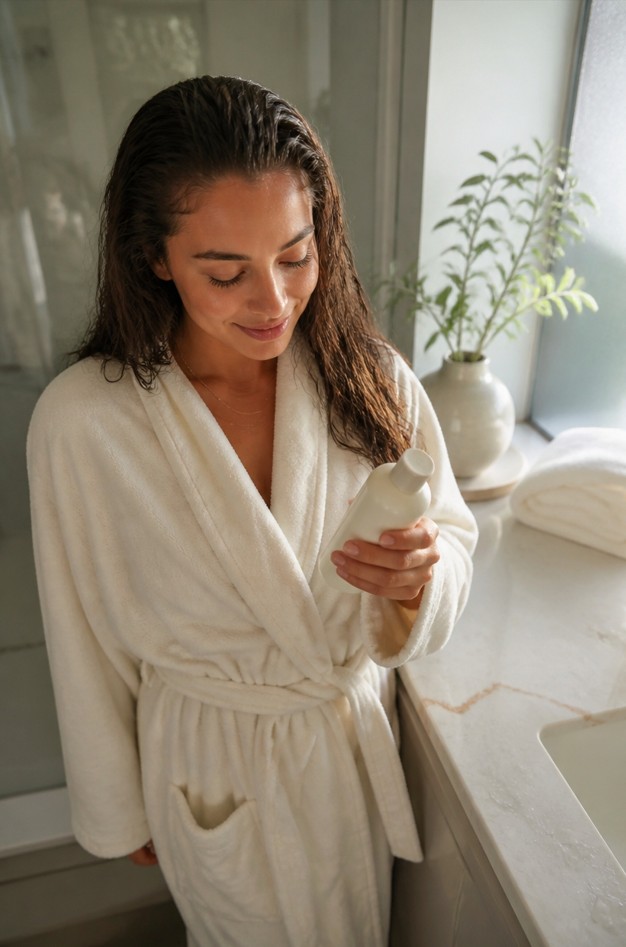
Many frizz battles begin in the shower, long before a single styling product enters the picture.
Sulfates strip natural oils, leaving the cuticle rough and prone to flyaways. Switching to a sulfate-free formula, like Briogeo Curl Charisma or Olaplex No. 4, helps preserve moisture without weighing hair down.
Lukewarm water also matters here; hot water opens the cuticle further, inviting frizz to creep in.
We can’t get enough of gentle, low-lather cleansers that respect the hair’s natural barrier while still leaving strands genuinely clean.
Skip the Daily Hair Wash
Because washing every day depletes the scalp’s natural oils, hair often overcompensates by producing more oil while the strands themselves grow drier and frizz-prone.
Cutting back to two or three washes weekly lets the scalp’s oils redistribute along the shaft, smoothing the cuticle naturally.
On off days, a dry shampoo like Batiste absorbs excess grease without stripping moisture.
Braiding hair overnight also helps preserve style between washes.
It’s a small habit shift, but the frizz-taming payoff is real. Honestly, we can’t get enough of low-maintenance routines that still deliver salon-smooth results.
Condition From Mid-Length to Ends
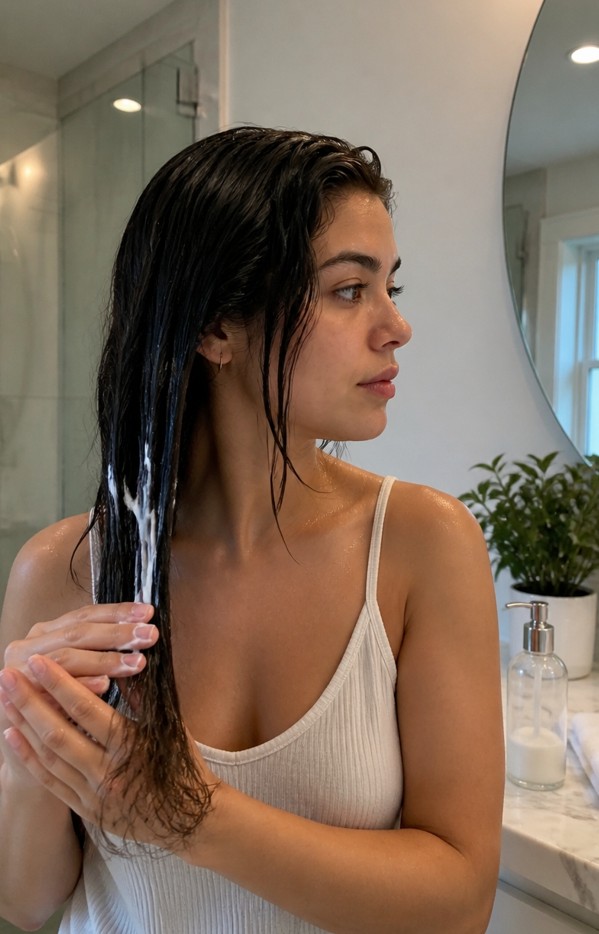
A few strategic inches make all the difference when it comes to conditioner placement. Roots produce natural oils that keep them balanced, so slathering conditioner there only weighs hair down.
Focus instead on mid-lengths to ends, where dryness and frizz actually live. Ends are the oldest, most damaged part of your hair, so they need the most moisture.
Try Ouai Fine Conditioner or Living Proof Restore for lightweight hydration that smooths without greasiness. Work it through with fingers, letting it sit for two minutes.
This small shift creates noticeably softer, shinier strands; honestly, we can’t get enough.
Add a Weekly Deep Conditioning Mask
Think of a deep conditioning mask as a weekly reset button for frizz-prone strands. Once a week, swap regular conditioner for something richer, like Briogeo’s Don’t Despair, Repair! Mask or Olaplex No. 8.
These formulas penetrate the cuticle, replenishing moisture and smoothing rough patches that cause frizz. Consistency matters more than product price point.
Leave the mask on for ten to fifteen minutes, ideally with a shower cap to boost absorption through gentle heat.
The result: softer, glossier hair that resists humidity longer. Honestly, we can’t get enough of that post-mask shine.
Rinse With Cool Water to Fight Frizz
After the mask has done its job, the final rinse deserves just as much attention.
Cool water seals the cuticle, locking in moisture while smoothing the hair shaft to reduce frizz. Hot water, by contrast, lifts the cuticle and invites dryness, undoing all that conditioning work.
It’s a small habit, but the payoff is noticeable shine and softness; honestly, we can’t get enough.
For extra polish, follow with a leave-in like Living Proof No Frizz Serum, applied to damp lengths before air-drying or diffusing.
Detangle With a Wide-Tooth Comb
Once hair is soaked in conditioner or mask, that’s the moment to reach for a wide-tooth comb, not a brush. Brushes tug at strands, roughing up the cuticle and inviting frizz. A wide-tooth comb glides through instead, separating knots gently while keeping the hair shaft smooth.
Start at the ends, working upward in small sections toward the roots. This method, often called detangling from the bottom up, reduces breakage considerably.
Stylists frequently recommend tools like the Tangle Teezer Wet Detangler for this step. Patience here pays off, smoother strands, less frizz, honestly, we can’t get enough.
Apply a Leave-In Conditioner First
With detangling complete, damp strands are primed for a layer of hydration that locks in smoothness before styling even begins.
A leave-in conditioner acts as the foundation, coating each strand and sealing the cuticle against humidity. Try Living Proof No Frizz Leave-In Conditioner, a lightweight formula that absorbs quickly without weighing hair down.
Distribute product evenly, starting mid-shaft and working toward ends, where dryness concentrates. Roots need less product; oversaturating them causes limpness.
This step, simple, effective, honestly we can’t get enough, sets the stage for lasting frizz control.
Seal in Moisture With Hair Oil
A few drops of oil lock the leave-in’s hydration inside the cuticle, creating a barrier against humidity.
Lightweight formulas work best. Argan oil, like Josie Maran 100% Pure Argan Oil, smooths without weighing strands down, while a few drops of Moroccanoil Treatment add shine we can’t get enough of.
Warm the oil between palms first, then smooth over mid-lengths and ends, avoiding the roots to prevent greasiness.
Applied correctly, this simple step keeps frizz controlled and hair glossy for hours.
Blot Hair Gently With a Microfiber Towel
Before oil ever touches strands, the towel routine sets the stage for frizz control. Cotton towels rough up the cuticle, creating friction that leads to frizz and breakage.
A microfiber towel, like the Aquis Original Hair Turban, absorbs water gently without disrupting hair’s outer layer.
Blot, don’t rub, this small shift makes a measurable difference. Friction is the enemy of smooth hair, and strands look noticeably calmer afterward.
Twist hair loosely into the towel for a few minutes, allowing excess moisture to lift away before applying any products.
Air Dry or Diffuse on Low Heat
Once hair is towel-dried, heat becomes the next variable to control. Air drying remains the gentlest option, preserving the cuticle and minimizing frizz-inducing friction.
For those short on time, a diffuser attachment on low heat works nearly as well, distributing airflow evenly without disturbing curl pattern.
A lightweight cream, like Ouidad’s Curl Immersion Featherlight Deep Conditioner, applied beforehand helps lock in moisture.
We can’t get enough of this low-effort, high-reward step, smooth, defined strands without the frying pan effect.
Sleep on a Silk Pillowcase
Countless hours of tossing and turning can undo all that careful drying and styling. Cotton pillowcases absorb moisture and create friction, roughing up the cuticle overnight.
Silk, by contrast, lets strands glide smoothly across the surface. This reduces breakage and helps hair retain its natural oils.
Switching to silk is one of the simplest changes you can make, and honestly, it’s hard to get enough of how low-effort this fix is.
Try Slip’s Pure Silk Pillowcase or Blissy’s version for a budget-friendly option. Either way, mornings should mean smoother waves, not a frizzy surprise staring back in the mirror.
Trim Split Ends Every Few Months
Split ends fray outward like tiny frayed threads, catching light and scattering it in every direction, which reads as frizz even when the rest of the hair looks smooth. Regular trims keep this texture in check.
Stylists recommend cutting every eight to twelve weeks, even when length is the goal. Split ends travel up the shaft if left alone, doubling the damage.
A blunt cut, paired with Olaplex No. 7 Bonding Oil for in-between maintenance, keeps strands looking polished. It’s a small sacrifice for smoother results.
We can’t get enough of how healthy ends transform overall shine.
Frequently Asked Questions
Does Humidity Cause Frizz Even With a Good Hair Care Routine?
Yes—moisture creeps in, swelling each strand invisibly. Even the most disciplined routine faces this quiet invader; humidity penetrates hair’s outer layer, disrupting smoothness. Anti-humidity serums, protective styling, and lightweight sealants help minds and strands stay calm despite the air’s betrayal.
Can Diet or Hydration Levels Affect How Frizzy My Hair Gets?
Yes. Diet and hydration considerably influence hair’s moisture balance and structural strength. Insufficient water intake or poor nutrition, lacking essential fatty acids, vitamins, and proteins, can weaken hair strands, making them more prone to dryness, brittleness, and frizz.
Is Frizzy Hair Caused by Genetics or Damage From Styling?
Both, it turns out—though the truth surprises many. Genetics determine hair’s natural texture and porosity, while heat styling, chemical treatments, and rough handling worsen frizz over time. Often, one’s frizz stems from an unavoidable blend of inherited traits and daily habits.
Will Changing My Hairbrush Help Reduce Frizz Over Time?
Yes, switching to a boar-bristle or wide-tooth brush can help. These distribute natural oils evenly and reduce breakage, minimizing frizz. Plastic bristles often create static, worsening frizz, so natural materials are generally recommended for smoother results.
Can Hard Water Make Frizz Worse Regardless of Products Used?
Indeed, hard water can be frizz’s silent accomplice. Mineral deposits coat strands, blocking moisture absorption regardless of product quality. No serum or cream fully compensates when calcium and magnesium build-up leaves hair perpetually parched, rough, and resistant to smoothness.
Conclusion
Frizz fades when patience meets the right routine. Picture strands catching light like silk thread instead of static-charged straw—that’s the payoff of sulfate-free shampoo, cool rinses, and a silk pillowcase working in tandem. Small shifts, like swapping a terry towel for microfiber, ripple into visible change over weeks. “Consistency matters more than any single product,” one stylist notes. Smooth, shiny hair isn’t about perfection; it’s about steady care. We can’t get enough of that quiet transformation.