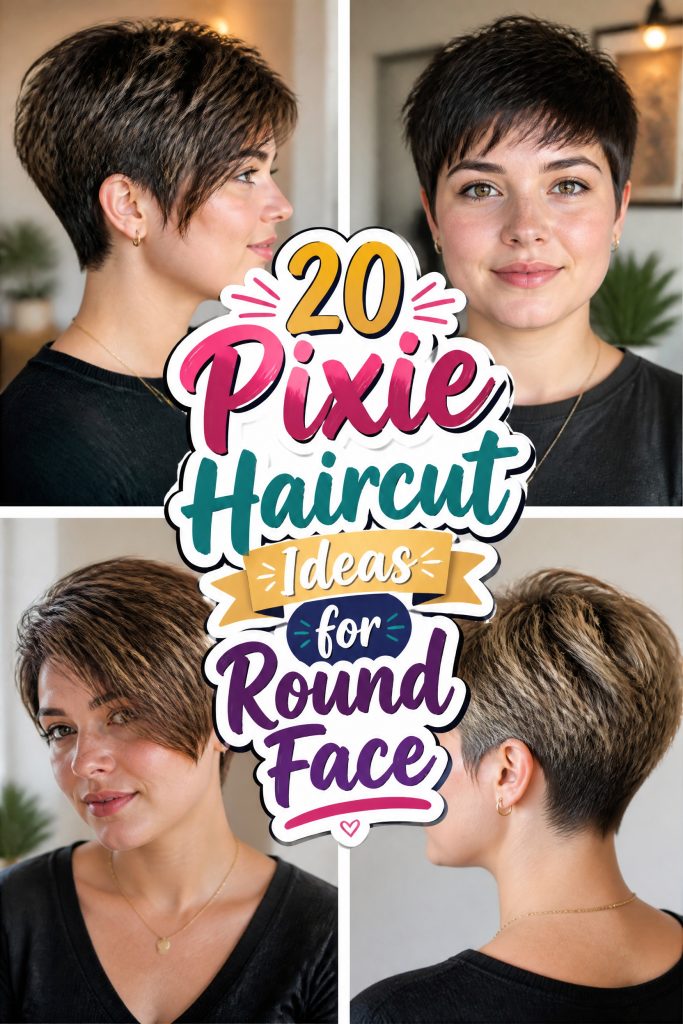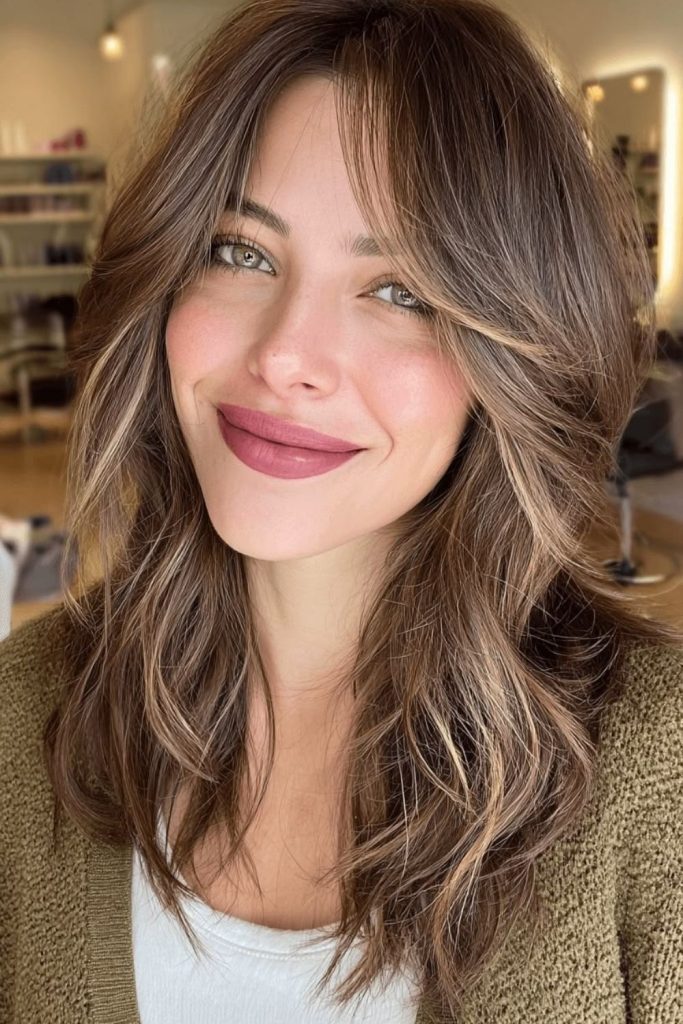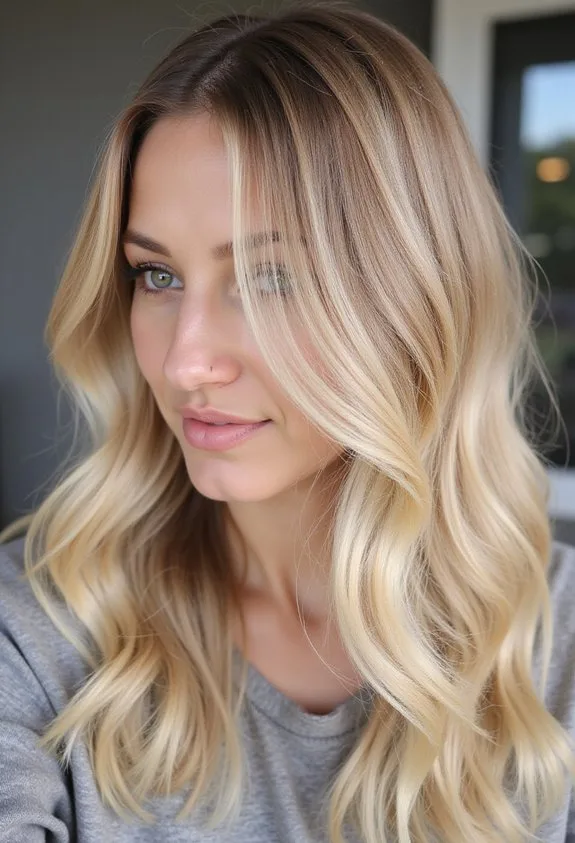
Thin hair over 50 gets a bad reputation it does not deserve. The narrative is usually about what you have lost. The real story is about what short hair can give you back.
Length weighs thin hair down. It spreads volume across too much surface area and creates an overall flatness that no product can fix. Cut it short and suddenly you have density, movement, and a silhouette that actually looks intentional.
This is not about working around your hair type. It is about finally working with it in a way that makes thin hair look like a choice rather than a limitation.
The best cuts for thin hair are the ones that create the illusion of fullness through shape and texture, not through trying to hide anything. Strategic layers, precise tapers, the right length on top. These tools do the heavy lifting.
What matters most is finding a stylist who understands thin hair and knows how to cut it so it sits with body rather than drooping from its own weight.
These styles prove that thin hair over 50 can be stylish, current, and genuinely flattering when the cut is right.
The Pixie Cut: Timeless Volume and Texture
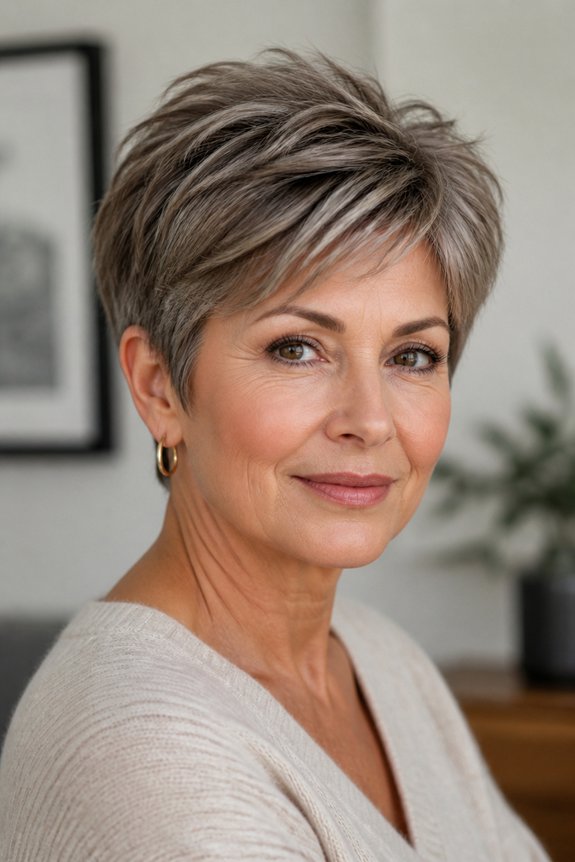
Fine hair doesn’t need length. It needs strategy. A pixie cut removes weight and creates the illusion of fullness through textured layers. Your crown stays slightly longer than your sides. Volume appears exactly where you need it most.
Texturizing shears break up your hairline so it never looks severe. Volumizing mousse or lightweight pomade on damp roots gives lift that holds all day without heaviness. Style it sleek for work or tousled for weekends. One cut. Multiple looks.
Trim every four to six weeks. Keep the shape crisp. Prevent that thin, grown-out appearance.
Also read: 16 Short Hairstyles for Women Over 40
The Layered Bob: Dimension Without the Length
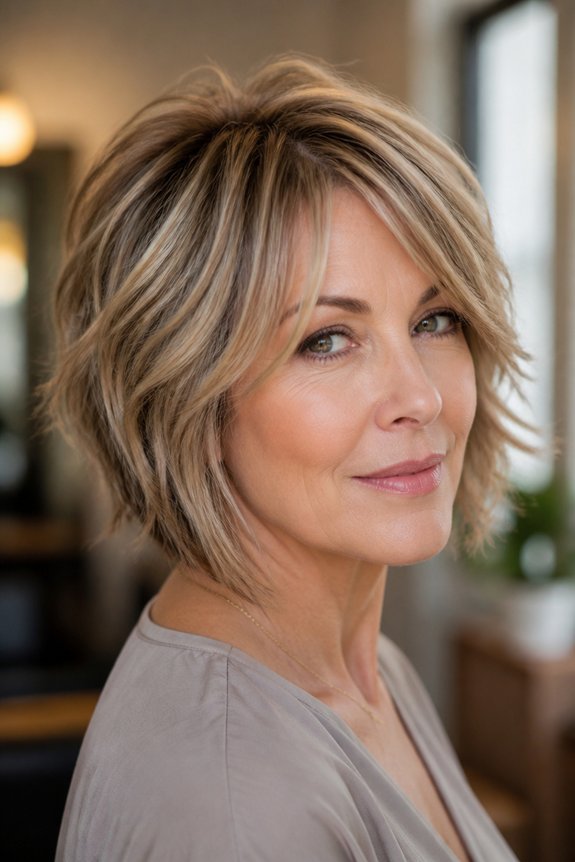
Want a hairstyle that looks polished without demanding an hour at the mirror each morning? A layered bob is your answer. You get the best of both worlds: shoulder-length ease with built-in texture and movement.
Here’s the magic: short layers at your crown lift hair away from your scalp, instantly adding volume right where thin hair needs help. Longer pieces around your face soften your features while keeping the rest from looking heavy. It’s a smart strategy that works especially well as you get older.
When you style it, apply volumizing mousse to damp roots before blow-drying. Use a round brush to direct everything upward for maximum lift. You’ll be surprised how little effort this actually takes once you get the hang of it.
Side-swept bangs are a nice bonus too. They soften forehead lines and add to the overall texture you’re creating. Just commit to a trim every six weeks so the shape stays fresh and your layers don’t start looking wispy or thin.
The Shaggy Crop: Movement That Flatters Thin Hair
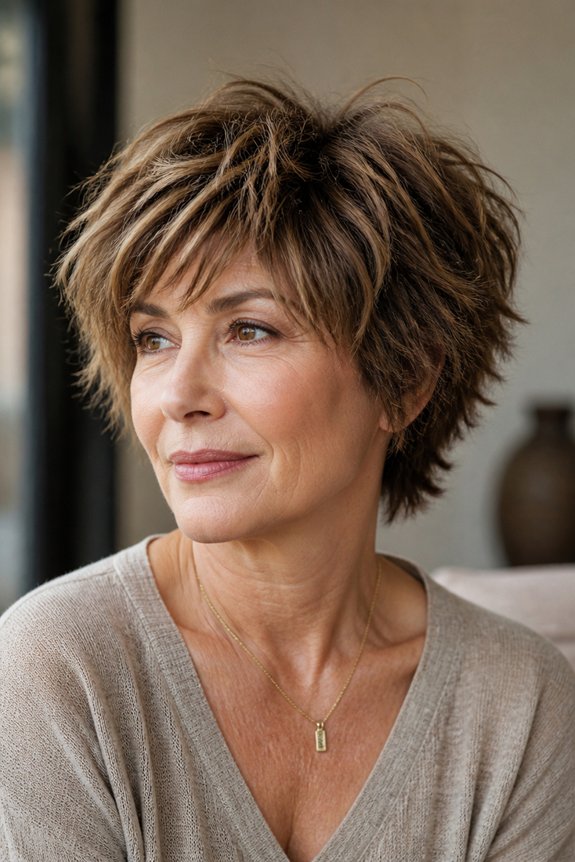
Choppy layers create volume. Point-cutting techniques add texture where you need it most. Your crown. Your sides. This is calculated design, not accident. A shaggy crop delivers fullness without demanding length you don’t want.
Skip the brush. Your fingers are the right tool. This keeps the style naturally textured instead of stiff. Volumizing mousse on damp roots gives lift without weight. Texturizing spray between appointments maintains that tousled, undone look.
Less time styling. More polished appearance. That’s the whole equation.
The Textured Pixie-Bob: Maximum Volume With Feminine Softness
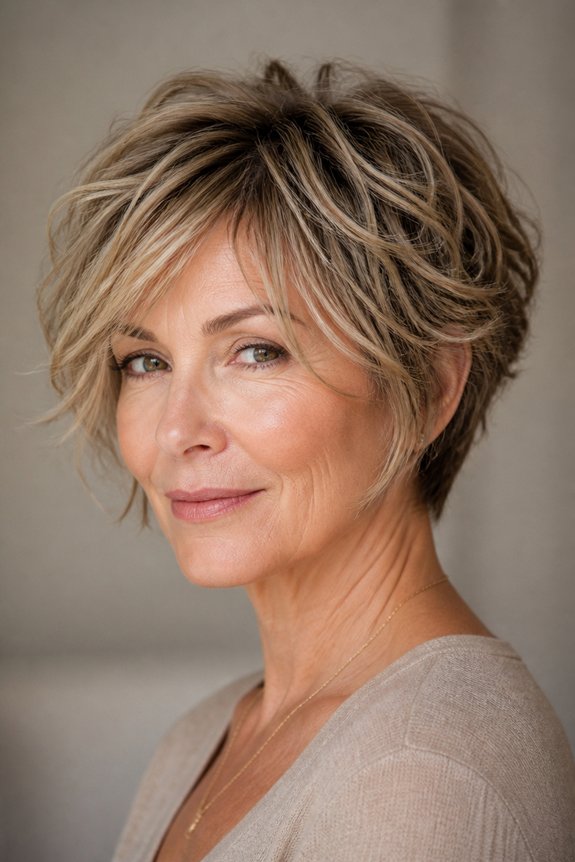
Worried a short cut won’t give you enough hair? The textured pixie-bob proves it can. This style blends the cropped, face-framing edges of a pixie with a bob’s slightly longer length, giving you dimension and movement without that heavy feeling.
Your stylist will add choppy layers throughout your hair. These layers work with texturizing shears to separate each strand, letting light bounce through instead of sitting flat. You get that full, airy look even with thinner hair.
Ready to style it? Start with volumizing mousse on damp roots. Blow-dry with a round brush focused on your crown to lift the hair where you need it most. Once dry, a lightweight texture spray gives you grip and hold without dragging everything down.
This cut keeps you looking polished and feminine while solving the real problem: getting volume that actually lasts through the day.
The Side-Swept Layers: Instant Face-Framing Fullness
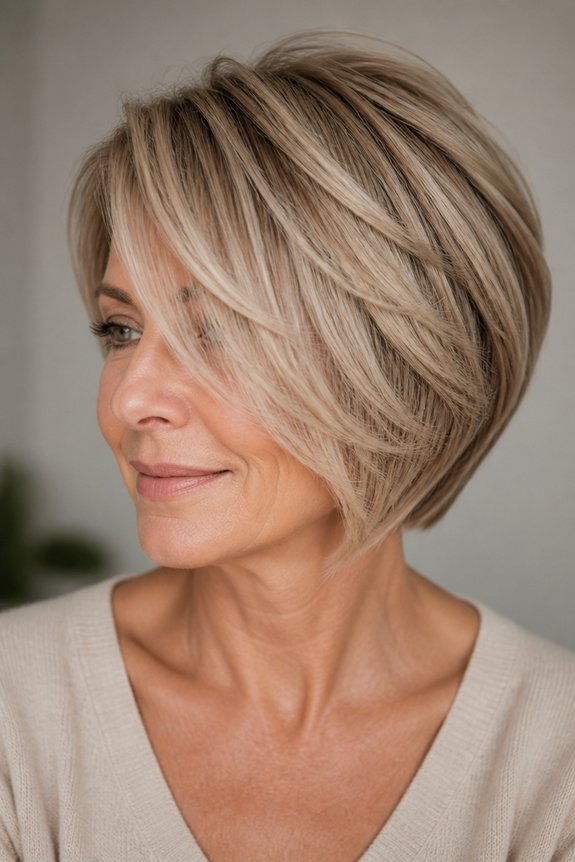
Want your hair to look noticeably thicker without waiting months for it to grow? Side-swept layers are your answer. They work by catching light and creating movement that makes thin hair appear fuller and more dynamic.
Ask your stylist for choppy, textured layers instead of blunt cuts. Shorter layers around your crown boost volume at the roots, while longer pieces beautifully frame your cheekbones. Before blow-drying, apply volumizing mousse to damp roots for extra lift that lasts.
A side part naturally encourages fullness on one side and softens your face at the same time. Pair this cut with a volumizing shampoo and texturizing spray to enhance the layered effect throughout your day. Trim every four to six weeks so your style stays shaped and moves the way it should.
The Choppy Crop: Edgy Style With Strategic Texture
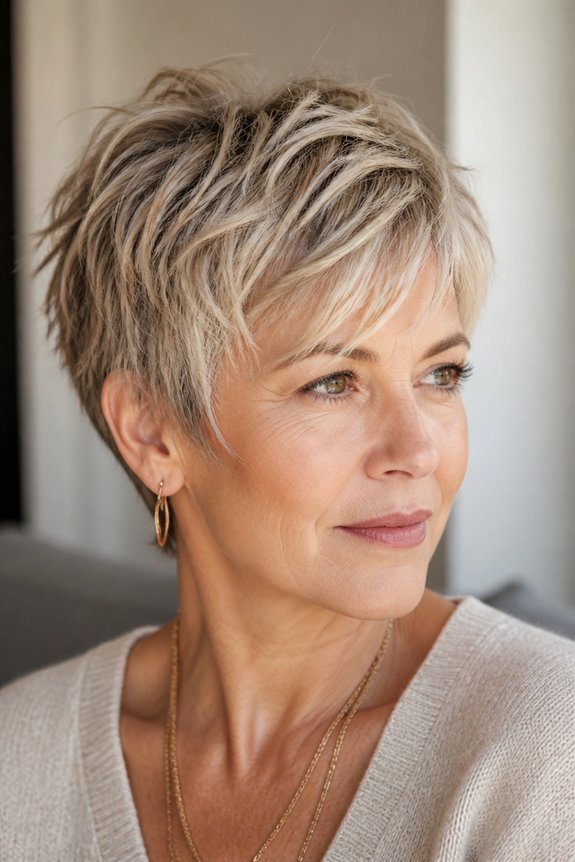
Are you tired of flat, limp hair that won’t hold any shape? A choppy crop might be exactly what you need. This cut works wonders for thin hair because it creates texture and movement without relying on density you don’t have.
Ask your stylist for choppy, disconnected layers around your crown. These shorter pieces add dimension and make your hair look fuller instantly. The key is working with your natural hair patterns, not fighting them.
Now for the products. Texturizing sprays and thickening mousses separate your strands so hair appears thicker. Dry shampoo at the roots gives you instant volume where you need it most. These tools make a real difference in how your cut looks day to day.
You can rock this style as a modern pixie or a shag variation. Either way, the choppy layers let your stylist remove weight strategically while drawing attention to your face. The texture placement does the heavy lifting for you.
The Tapered Nape: Sleek Sophistication With Subtle Volume
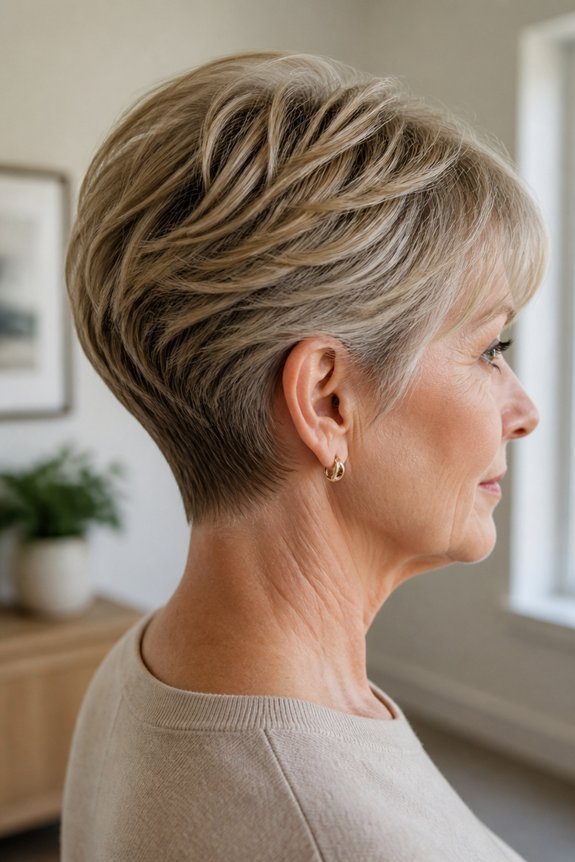
Worried your fine hair looks too wispy at the back of your neck? A tapered nape is your answer. It creates the illusion of thicker, denser hair through smart layering right at your hairline. You get length where you want it, but the back looks polished and full.
Ask your stylist for a gradual fade instead of harsh lines. This keeps everything soft while still shaping your neck area nicely. Add a volumizing mousse like Bumble and bumble Thickening Full Form Mousse to boost the effect even more.
This technique pairs perfectly with longer pixie cuts or bobs. The key is layering through your crown to add movement without making your hair feel heavy. Book maintenance appointments every four to six weeks to keep that sophisticated look intact.
How Shorter Cuts Create the Illusion of Thickness
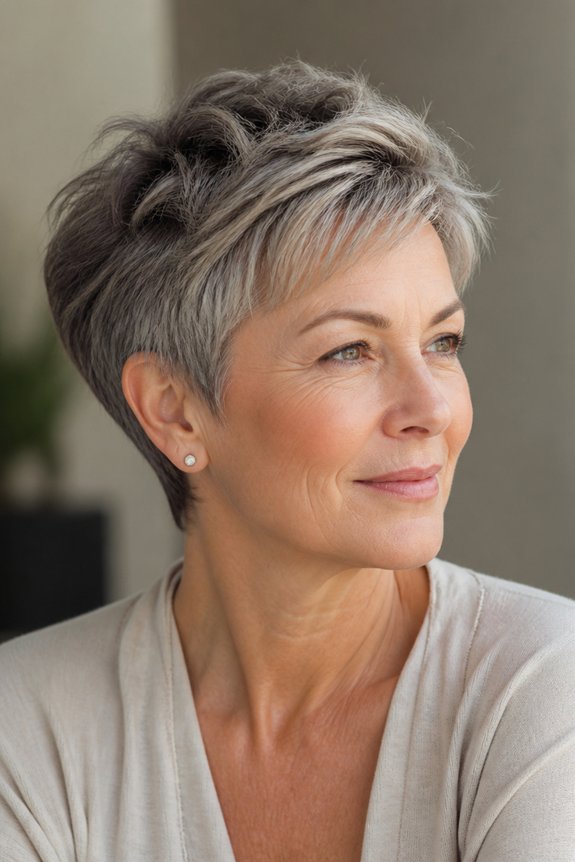
Thinning hair looks thinner when it’s long. That’s physics, not fashion. Shorter styles remove the weight that pulls strands down and creates that sparse appearance. Choppy bobs and textured pixies create density through angles. Blunt layers stop that wispy, see-through look.
Volumizing mousse on damp roots before blow-drying keeps lift all day. Side-swept bangs draw eyes upward. Face-framing layers do the same. Subtle highlights near your face create depth and movement. The shadows and light make each strand feel intentional.
Shorter doesn’t mean you’re giving up. It means you’re finally working with what you have instead of against it.
Strategic Layering: The Secret to Fuller-Looking Hair
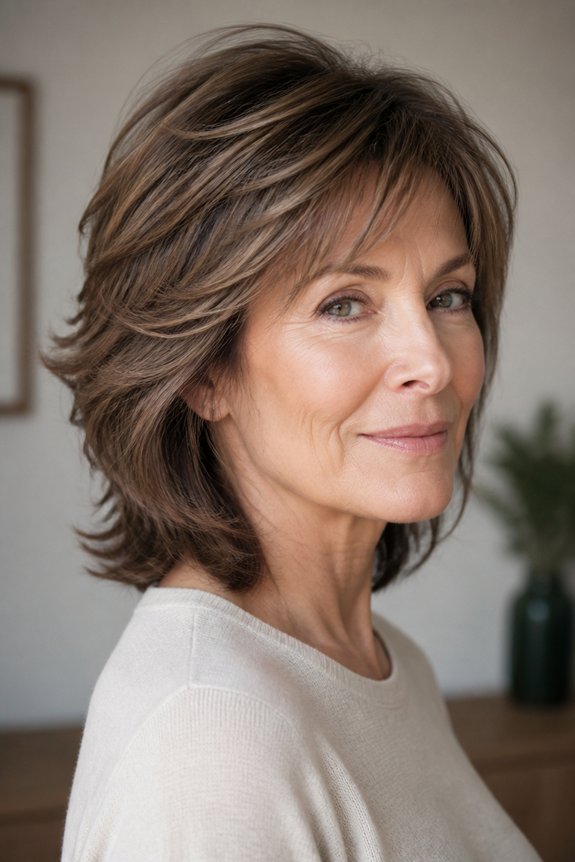
Want your thin hair to actually look thick? Layering is your answer. Instead of cutting blunt lines, your stylist removes weight strategically so each section can move on its own. This stops that flat, stuck-to-your-head feeling and gives you real volume.
Ask your stylist for choppy, textured layers. They catch light in different ways, which tricks the eye into seeing more density. Then grab a lightweight volumizing mousse or spray to boost the effect without weighing things down.
The magic happens when shorter layers sit on top to lift your crown while longer layers underneath keep your length. You get instant lift plus structure that holds its shape between appointments.
Match Your Cut to Your Face Shape
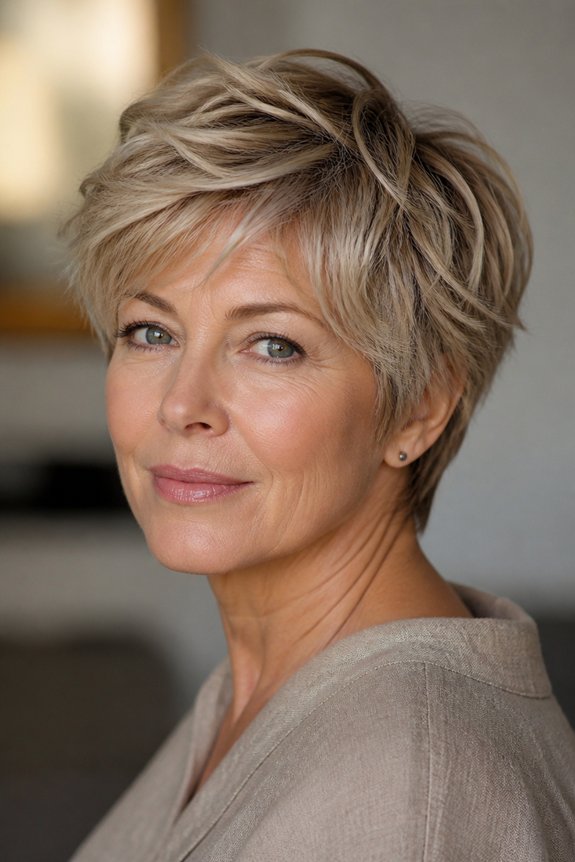
Does your current haircut actually work for you? The truth is that your face shape should guide everything. Round faces need angular, textured cuts that add definition and lift at the crown. Oval faces are lucky because you can pull off almost any style without worry.
Have a square jaw? Wispy layers and side-swept bangs soften your angles by drawing the eye upward. Heart-shaped faces benefit from volume at the chin to balance out a wider forehead.
What about thin hair? This requires smarter styling choices. Shorter pixie cuts work great for fine textures when your stylist cuts them close to the scalp with precision. Skip dense layers that make thin hair look scraggly instead. Ask your stylist for textured crops that highlight your bone structure. Use volumizing mousse on damp roots to create lift and movement that lasts.
Color Tricks for Thin Hair: Strategic Highlights
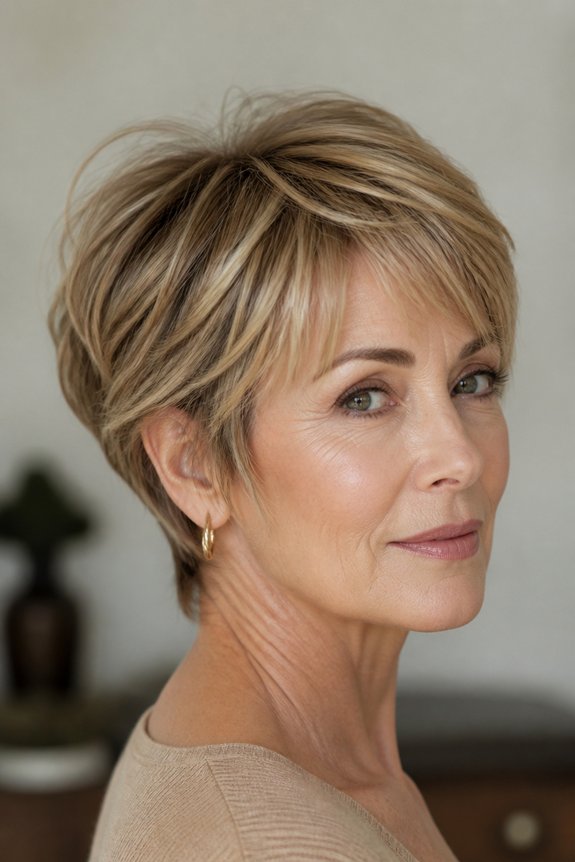
Want your hair to look instantly thicker? Color is your secret weapon. Strategic highlights around your face create depth and dimension that thin hair really needs. Lighter tones near your hairline fool the eye into seeing more volume and movement.
Balayage is your best friend here. This technique blends beautifully without harsh lines, and it works especially well if you have mature hair. You can try low-commitment options like Clairol Natural Instincts or L’Oréal Paris Colorista to experiment before committing to anything permanent. Consider asking your colorist to place lighter pieces throughout your crown to make your texture look thicker.
Root shadowing is another game changer. Keep darker tones at your base while lightening the midlengths. This creates contrast that makes your hair appear denser. The best part? It barely needs maintenance and looks flattering on most skin tones. You’ll be amazed at how much fuller your hair looks with this simple trick.
Lightweight Products for Short, Thin Hair
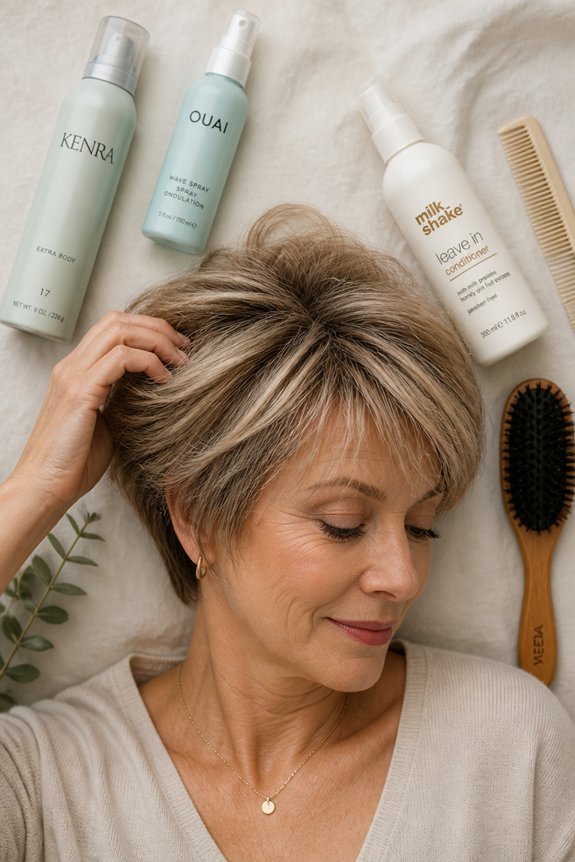
Tired of your short hair looking flat and lifeless? The right products can totally change that. Volumizing mousses and lightweight sprays add fullness without dragging your strands down. Sea salt sprays boost texture and hold without the crunch factor.
Skip the heavy serums and thick oils. Instead, grab mist-based products and styling creams that give you control without weighing things down. Volumizing powders at your roots create instant lift, while dry shampoos extend your style between washes. Leave-in conditioners in cream form nourish without adding bulk. Silicone-free shampoos and conditioners help keep your natural oils intact, which is key for delicate hair.
Quick Styling Tricks for Short, Thin Hair
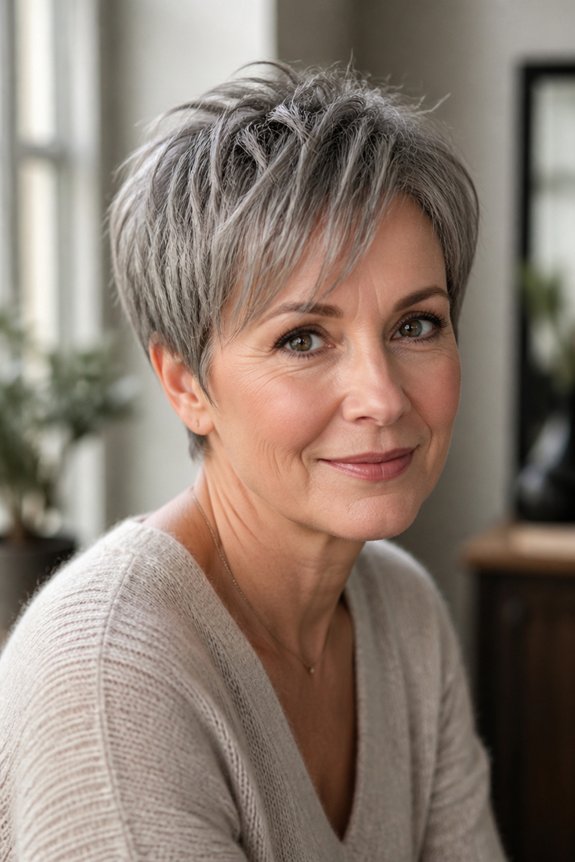
Master these simple techniques to transform flat, delicate strands into voluminous styles. Try blow-drying your hair upside down for instant lift at the roots. Use a round brush to curl sections away from your face and build movement naturally.
Want thicker-looking hair? Apply volumizing mousse to your damp roots before you style. Gently tease at your crown for strategic fullness without causing damage. Micro-layering works better than blunt cuts if you’re after the illusion of density.
Finish with texturizing spray or dry shampoo to enhance grip and keep your style locked in all day. Side-parting flatters thin hair much better than center parts. When applying products, use your fingers to comb them through instead of brushing, which reduces breakage and keeps your strands healthier.
How Often to Trim (and Why It Matters)
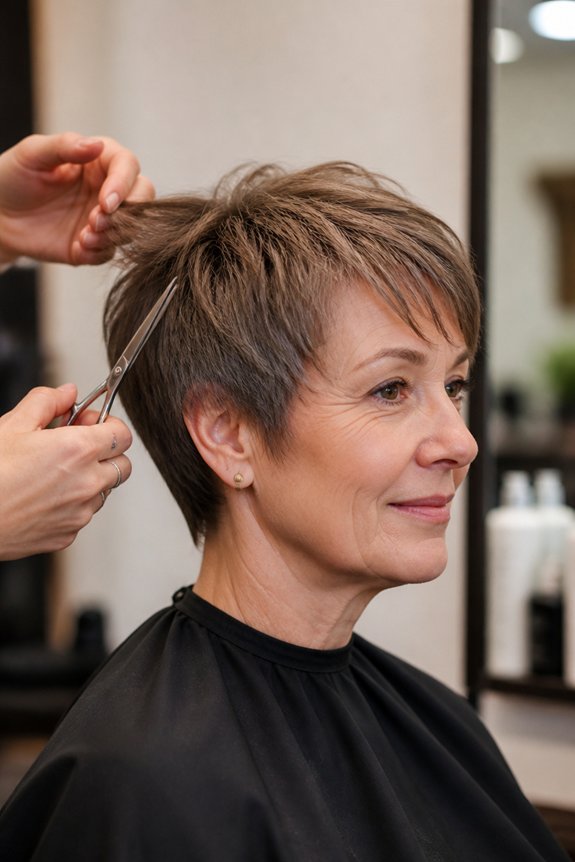
Does your thin hair feel like it breaks off faster than it grows? Regular trims every six to eight weeks are your secret weapon. Each cut removes those damaged ends that split upward and make your hair look even thinner.
Here’s what happens when you skip trims: breakage compounds, and you end up needing a bigger chop later. Even a half-inch trim makes a real difference in how your hair frames your face and moves. Think of it as maintenance that keeps your strands looking stronger and denser overall.
Between appointments, strengthen your ends with serums like Olaplex or Keratin treatments. Texturizing products add grip and movement to compensate for natural volume you might be missing. Consistent trims are truly the foundation of keeping thin hair healthy and full-looking.
Healthy Scalp, Fuller Hair: Simple Care Tips
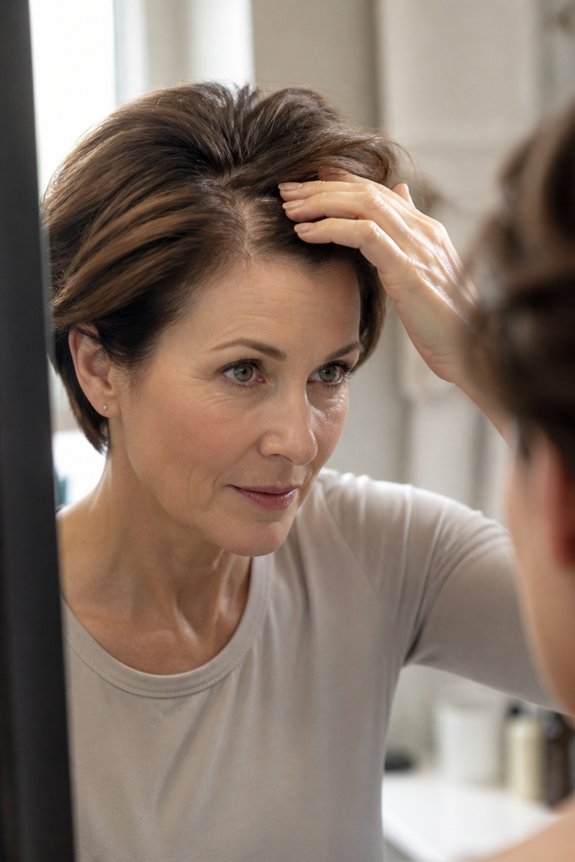
You probably focus on your hair itself, but your scalp is where everything begins. Think of it like soil for a plant. A clean, healthy scalp grows stronger, fuller hair.
Start by washing away buildup that makes your hair look flat and thin. Use a sulfate-free shampoo that won’t strip your natural oils. Once a week, gently brush your scalp with a soft brush to wake up blood flow to your follicles. Better yet, spend a few minutes massaging your scalp with your fingertips. You’ll feel the difference, and your hair will too.
Look for shampoos and serums with niacinamide and peptides. These actually strengthen your hair from the inside out. Scalp serums with caffeine can help boost density over time without any hassle.
Avoid thick oils that weigh down thin hair. Instead, choose lightweight leave-in treatments that nourish without dragging your strands down. Skip conditioning your roots entirely. Just focus on your mid-lengths and ends where hair needs the most help.
You don’t need expensive products to win this battle. What matters most is doing these steps regularly, week after week. Small, consistent actions build the healthier hair you’re looking for.
Brief Your Stylist: What to Bring and How to Ask
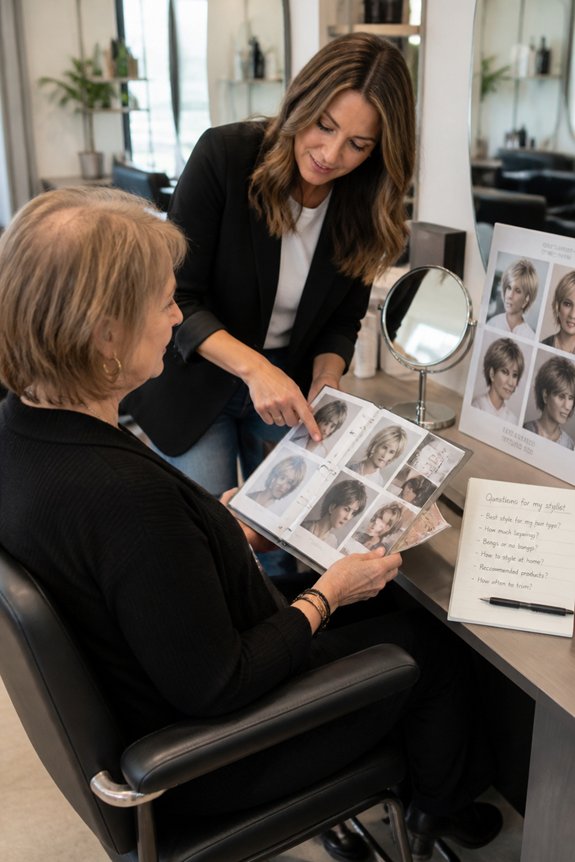
You’re nervous about asking for the wrong thing, right? Start by bringing photos from different angles, not just one magazine picture. Show your stylist the texture and length you actually want, and mention how thick or thin your hair naturally is.
Tell your stylist how much time you’re willing to spend styling each day. Ask if layering around your face will give you the softness and movement you’re after without making your hair look puffy. This honest conversation saves you from a cut you’ll hate at home.
Bring a photo of a celebrity who has hair like yours, not just someone with your dream length. Chat about the products you currently use since some work better on fine hair than others. Your stylist can suggest mousses or lightweight sprays that actually make a difference.
Ask your stylist to show you how to blow-dry your new cut. Different tools like round brushes and diffusers do different things, and knowing which one works for your hair makes styling way easier. This small tutorial is the difference between loving your cut and struggling with it every morning.
Frequently Asked Questions
Can Hair Extensions Work for Thin Hair, and Are They Safe to Use?
Hair extensions can work for thin hair; however, they require careful consideration. Professionals recommend lightweight options and proper application methods to minimize damage. Safety depends on using quality products, skilled stylists, and appropriate maintenance routines to protect fragile strands.
Does Hair Loss Increase After Age 50, and When Should I See a Doctor?
Hair loss often accelerates after age 50 due to hormonal changes and decreased hair growth cycles. One should consult a dermatologist if experiencing sudden excessive shedding, noticeable thinning, or scalp changes affecting appearance.
Will Growing Out My Pixie Cut Damage My Thin Hair Permanently?
Like a garden changing seasons, growing out a pixie cut won’t permanently damage thin hair. The adjustment period may appear awkward, but patience allows natural regrowth. Regular trims, deep conditioning, and gentle handling protect hair integrity throughout the process.
What Vitamins or Supplements Can Naturally Improve Thin Hair Growth Over Time?
Biotin, iron, zinc, and vitamin D are commonly recommended supplements for hair growth. Consulting a dermatologist guarantees proper dosing and determines whether deficiencies exist. Results typically appear after several months of consistent supplementation.
Is It Better to Cut Wet or Dry Thin Hair for Accuracy?
Like a house built on a shifting foundation, wet hair presents an unstable canvas for precision cuts. Professionals recommend cutting thin hair dry, as moisture masks the true texture and weight, resulting in uneven lengths once the hair dries completely.
Conclusion
Short hairstyles transform thin hair over 50 into voluminous, face-framing styles. Regular trims every four to six weeks maintain shape and fullness. Volumizing mousse and sea salt spray create effortless texture and movement. Strategic highlights add dimension and depth. What if the right cut could instantly boost confidence and simplify daily styling? Professional consultation guarantees personalized recommendations. Healthy scalp care supports stronger hair growth. These techniques deliver polished, vibrant results.